EU seeks to reassure farmers over Mercosur deal
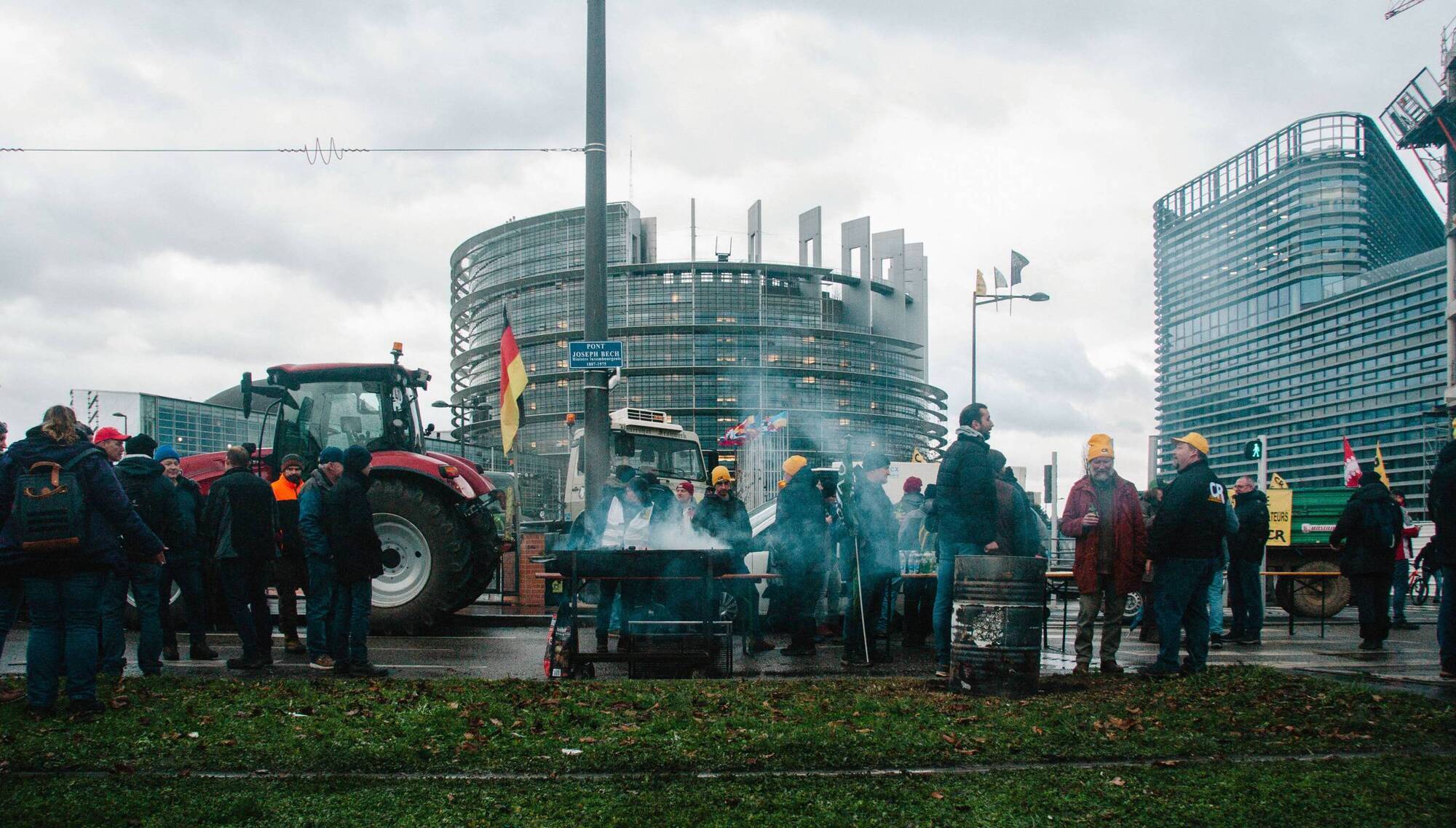
Farmers from the Coordination Rurale union campaigning against Mercosur outside the European Parliament in Strasbourg in December. Picture: Tobias Canales / Hans Lucas / AFP via Getty Images
New sales tactics have been adopted by the European Commission, as it bids to overcome European farmer opposition to the EU-Mercosur Partnership Agreement.
Newly appointed Commissioner for Trade and Economic Security Maroš Šefčovič said: "In the unlikely event that the agricultural sector in Europe is negatively impacted, following the implementation of the agreement, we intend to set up a reserve worth at least €1bn.
"We see this like giving a warranty for a product — a producer gives a warranty exactly because it considers that its product is faultless. Likewise, we trust that the agreement will work correctly, and not cause market disruption. Still, we wish to guarantee that there will be no negative repercussions for farmers and rural areas."
He said this additional "warranty" served as a contingency plan, ensuring stability for EU sectors even in exceptional circumstances.
"While unlikely to be needed, this safety net underscores the EU's commitment to protecting its agricultural sector," the commissioner said.
However, EU farmers are not assured, and they mounted a protest last week outside the European Parliament in Strasbourg, which was attended by several MEPs who said they will vote against the trade agreement.
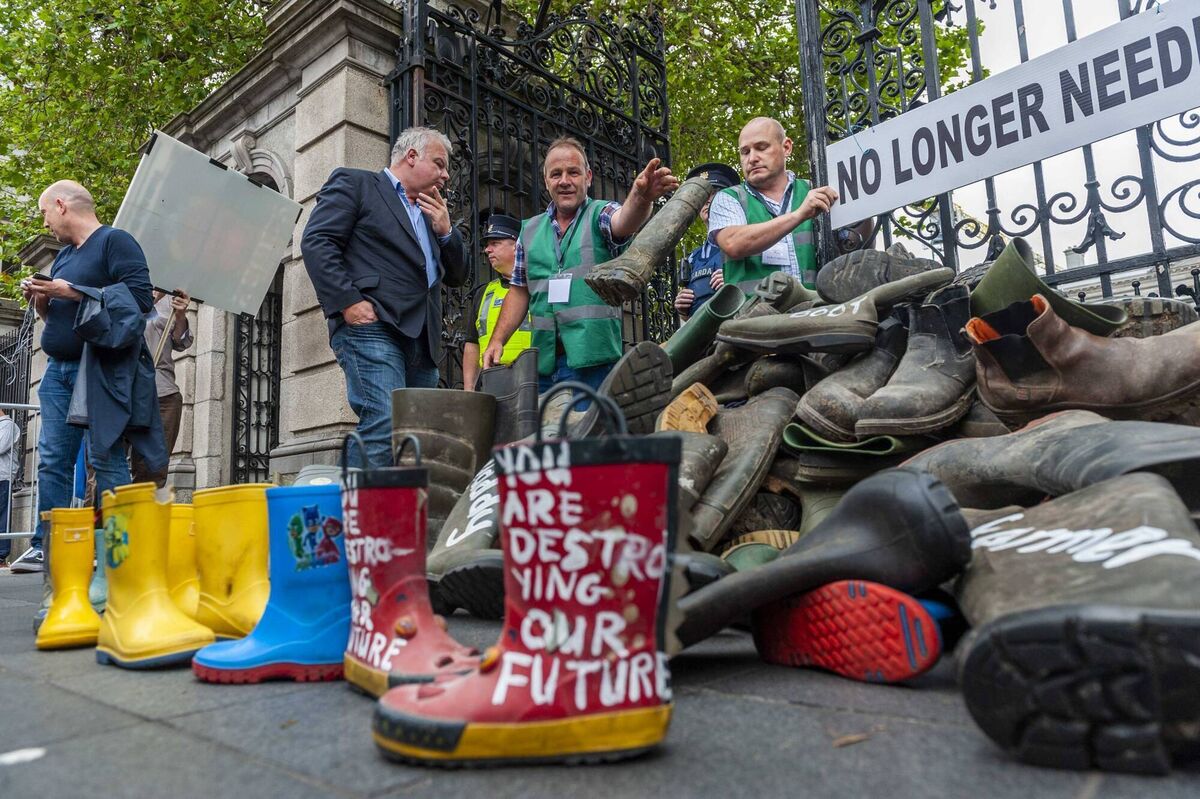
In Ireland, at last week's Irish Farmers Association AGM, leader Francie Gorman said: "We have a fight on our hands to get the deal blocked. But it is a fight we are up for."
"We don’t want vague promises of compensation," he said.
Irish farmers' fears of the trade deal deepened after Meat Industry Ireland said the Irish beef sector was on course to lose up to €130m in revenue if the deal is ratified.
The EU's €1bn warranty was revealed by Mr Šefčovič when he addressed the European Parliament Committee on International Trade.
But it was made clear to him there were sharp regional and political divisions within the EU over the Mercosur deal.
French, Polish and Irish MEPs from across the political spectrum oppose the deal, while Germany, Spain and Portugal are staunch supporters. In the Netherlands and Austria, criticism of the deal is widespread, but MEPs are divided.
Renew MEP João Cotrim de Figueiredo said the liberals were “the staunchest believers of free trade”; however, his Irish party colleague Barry Cowen questioned the European Commission's ability to protect EU farmers from market disruptions.
In the parliament last November, debate on an amendment that can be read as a plebiscite against the deal was not backed by a majority of MEPs, but was supported by French, Polish and Irish members of the centre-right European People’s Party, and by Irish MEPs in the liberal Renew group. The ECR group voted overwhelmingly against the trade deal.
Mr Šefčovič told MEPs the big picture behind the trade agreement was not just about economics, but a way to build and strengthen communities of shared values, which was of "overarching geopolitical importance".
He said the agreement would bring benefits to all sectors of the EU economy, including agri-food. However, debate on the agreement is expected to rage in all the EU institutions all this year and well into 2026.
Along the way, debate will be re-ignited in mid-2025 when the official commission proposals are expected, following legal revision and translation of the political agreement on trade reached in Uruguay last December.
First, the commission must officially adopt its own proposals, even if this will require some commission members to go against their nominating countries.
There will then be an eagerly awaited and controversial decision: will the commission spin off the trade part of the agreement? This could enable fast-tracking the trade deal as an ‘EU-only’ agreement not requiring the approval of all national legislatures. But a decision to split the agreement needs unanimity in the council of member states.
If that goes ahead, the split deal could be agreed by the Council of Member States in the autumn of 2025, and the agreement sent to the European Parliament for assent.
Meanwhile, expect the commission to use every trick in the book to win support for the agreement.
Already, much is being made by the commission of claimed gains for the EU agri-food sector in a modernised trade agreement with Mexico, concluded by Mr Šefčovič and Mexican economy secretary Marcelo Ebrard.
But it is markedly different from the Mercosur deal. For example, if ratified, the deal would greatly reduce maximum import volumes from Mexico to Europe of sensitive products like beef and ethanol.
Apparently in return for the EU's loss of access to the Mexican electricity market, Brussels limited quotas on imports from Mexico of certain sensitive agricultural products.
For beef, the originally negotiated quota was 10,000 tonnes at a 7.5% tariff, the modernised agreement halves this to 5,000 tonnes. The poultry quota has been reduced from 10,000 tonnes to 6,667 tonnes. Exports of duty-free ethanol for energy uses have been cut from 18,000 tonnes to 5,500 tonnes.
EU farmers will ask: "Why couldn't the Mercosur deal be like the Mexico deal?"
Presented by Brussels as the EU and Mexico linking arms to fend off the impact of tariffs threatened by US president Donald Trump, the deal modernises an original trade agreement reached in 2000, under which the EU-Mexico trade in goods had reached €82bn in 2023.
If the deal is ratified, Mexico will completely remove its high tariffs and allow duty-free access for EU pasta (currently subject to tariffs of up to 20%), chocolate and confectionery (tariffs exceeding 20%), blue cheeses (tariffs up to 20%), potatoes (up to 20%), apples and canned peaches (up to 20%), eggs (current tariff of 45%), pork products (up to 45%, with the exception of pork loins) and some poultry products (up to 100%). The 20% tariff on yoghurt falls to zero.
And tariff-rate quota will be gained for 88,000 of EU dairy products for which the current Mexican duty rate is up to 50%. An additional tariff-rate quota will be gained for 2,500 tonnes of EU butter, on which the current Mexican duty rate is 20%.
A tariff-rate quota will be gained for 30,000 tonnes of EU beef, for which the current Mexican duty rate is 20%.
EU poultry legs currently face a 100% Mexican duty, a tariff-rate quota will be gained for 20,000 tonnes.
A tariff-rate quota will be gained for 13,000 tonnes of pork loin, currently tariffed at up to 45%.
"The EU always ensures that the interests of EU farmers and food producers are reflected in all trade negotiations, by helping them to export their products abroad while protecting their interests and sensitivities at home," the commission said.
It said more EU pig and poultry meat companies will be able to export without undue delays to Mexico.