Average Irish dairy farm requires part-time help - but skilled workers are in short supply
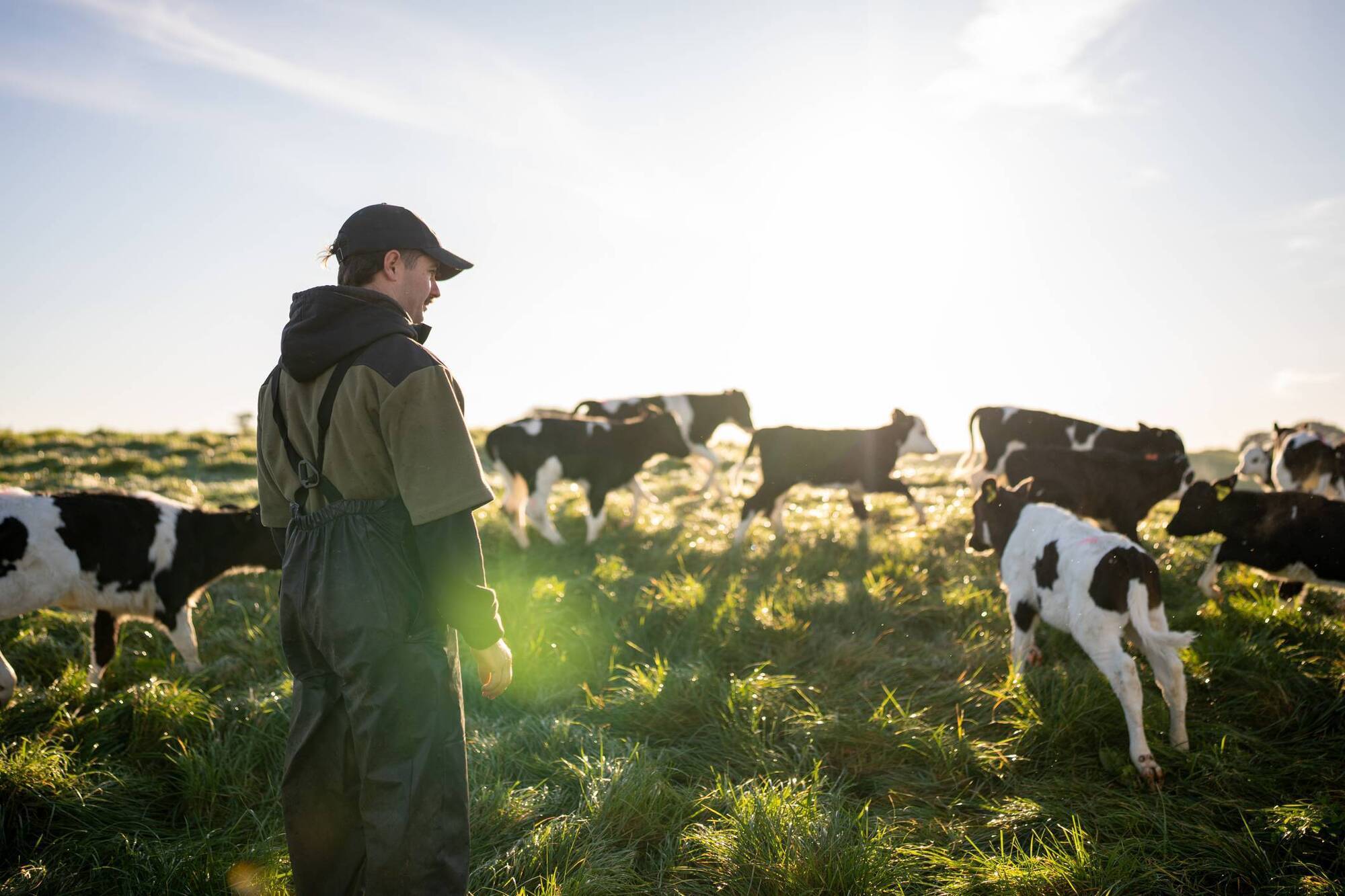
The most efficient farm in the 100-cow average size bracket requires an estimated 25 hours per cow, according to Teagasc advisors.
The average dairy farmer needs at least one part-time helper, suggested Teagasc Dairy Specialist Martina Gormley in a recent Teagasc podcast on hours of work per cow and how to reduce labour demands.
She said the average herd in Ireland has 100 cows. “What we’re seeing for the average herd size is the farmer plus two or three part-time people doing some relief milking, three or four milkings a week," she said.
She said having access to more than one part-time labour is decidedly advantageous, in case one becomes unavailable for whatever reason.
"If you have just yourself, and one part-time person for the spring, it is highly likely that you’re going to end up on your own, every second or every third spring. There are about 1.6 million dairy cows and, roughly speaking, about 18,000 dairy farmers in Ireland”, explained Martina.
Approximately 60-65% of dairy farmers are milking 100 cows or less.
“A lot of the help there can be part-time help,” Martina said. “The most efficient farm out there in the 100-cow average size bracket would require about 25 hours per cow”.
That comes to 2,500 hours of annual labour input needed for a 100-cow dairy herd, but most dairy farmers do not reach this level of labour efficiency.
“We have a handful, I would say a maximum of 10 farmers we could find, if we’re lucky, that would be hitting that sort of a metric, or that sort of an efficiency figure. By and large, the majority of farmers in the 100-cow herd size bracket, would be at probably 3,000 hours plus”, Martina said.
“If you look at a farmer doing 50 hours a week or maybe a little bit with it, over 50 weeks in the year, that’s 2,500 hours”, she said.
“Particularly in spring when it’s quite intense and busy for the first six weeks, it’s just not physically possible or sustainable for a farmer to calve down 100 cows on their own and do all the tasks”, Martina said.
“Plenty of farmers have done it and tried it, and got caught in the past, where people let them down, and that’s where we’re seeing burnout happen on farms”.
Some new technologies, such as Bobman machines, can both reduce labour demand and make farm work more attractive.
“For example, the Bobman is a piece of equipment that farmers are buying. Liming cubicles with a bucket and lime is probably not in fairness the nicest job out there. Far nicer to hop up on a Bobman”, Martina said.
There also seems to be an increasing uptake of once-a-day milking in the early spring. “We are seeing an uptake, particularly in the first six weeks, just to reduce the number of tasks and reduce that evening milking”, Martina said.
Many farmers are interested in improving labour efficiency and making the farm as easy as possible to work in, and they believe that effectively managing the calving pattern is crucial, and very rewarding. “By having compact calving, yes, it’s intense, busy, but the farmers say you can plan it, and it’s blocked, so it simplifies the system that you’re not constantly calving cows, milking, breeding, and drying off at the same time”, Martina said.
“It’s easier then to rear your calves, because there’s the compactness of them”, she said. “While some of the practices or technologies physically cost money, others are a matter of tightening up things, like the calving pattern”, she said.
Most hired farm labour people also prefer an intense six weeks of calving to a system where calving is spread out over a prolonged period. “They would say, nine times out of ten, the compact calving all the way”, Martina said.
Is training available to people who are interested in working on farms?
Martina said the Farm Relief Services (FRS) offer a variety of training programmes, the details of which can be found on their website. “They have in-house training for their milking operatives. Some may come to them with a little experience, some may not, and they will train them up”, she said.
“They have other courses from a machinery point of view, for those interested in learning how to drive tractors and different machinery. They also launched a programme a couple of weeks ago, a new training programme for people who think that farming might be a career they might like to get into but have limited experience”, she said.
“There’s also a milking course with Teagasc. That course is not for beginners. The person would need to have around 100 hours of milking experience, which isn’t that much really; it’s probably 50 milkings done on a few farms before they do that course. That course has been there for the last ten years”, she said.
On-farm training, where the farmer takes on a worker with little or no previous experience and trains them into how they wish tasks to be undertaken, is also very significant.
She said more farm apprenticeships are needed. “This is the first year of the new apprenticeship course. Obviously, they’ve made modifications to that course to try and make it more appealing, to attract more people”.
“There was research done 20, 30 years ago, and when you look at the practices and the hours worked and the hours required to run a farm and you look at the most recent studies, you can see a massive improvement.
"The investments and the training and the discussion groups and the farm walks, all combined together, we are seeing that there’s less time and less effort and less physical work on average required to run farms now”, Martina said.
While new tasks such as measuring grass growth or analysing soil and so forth have been added to farming routines nowadays, farmers have the satisfaction of knowing that such practices contribute to improved profitability. Such newer practices are very positive in terms of return on the time invested by the farmer.