September summit to explore bioeconomy solutions for the agriculture sector 
September summit to explore bioeconomy solutions for the agriculture sector 

Research related to the bioeconomy has ramped up since Ireland’s first national Bioeconomy Action Plan 2023-2025 was published last year. 

An all-island summit taking place in September will discuss the solutions available for bioeconomy challenges in agriculture. 

Major organisations in farming and agri-food across Ireland are currently scouting for collaborators with circular and bioeconomy innovation, technologies and products to address their challenges.


The Ulster Farmers' Union, Dawn Meats, ABP Food Group, and Donegal Yarns are among those who have identified their specific circular and bioeconomy challenges recently. 

The bioeconomy is the production, utilisation, and regeneration of biobased materials to provide sustainable, nature-based and biobased solutions across all economic sectors.

It is a rather new approach to utilising the products, services, primary resources and wastes and side-streams from different sectors, but particularly agri-food and forestry, more sustainably.

It offers opportunities to reduce emissions in the agri-food system by replacing non-renewable, non-sustainable and fossil-based resources and processes with biological ones, from biofertilisers and biopesticides, to new food and feed sources, bio-based plastics and textiles, and biological waste management, to name just a few. 

It can also support enhanced resource and energy efficiency in the agri-food processing sectors aiding their decarbonisation.

All-island project

BioDirect, an ongoing all-island project funded by the InterTradeIreland Synergy Programme, is aiming to accelerate the adoption of circular biobased products and technologies in agriculture, and also construction, packaging and textiles. 

The project is led by the Circular Bioeconomy Cluster South-West, which is based at the Munster Technological University in Co Kerry, working with other research partners across the island.

This year, the project team worked with over 70 companies and 30 public sector stakeholders to identify challenges in agriculture and other sectors that require circular and biobased solutions to help reach sustainability and climate targets. 

Ten key challenges across the four sectors of agriculture, construction, packaging and textiles were launched this summer, and there is an online process now open until the first week of August for the innovation community (start-ups, SMEs, researchers) to share their solutions, whether that be products or technologies. 

In mid-August, those whose ideas have been selected for showcase will be notified, with a summit taking place on September 4 in Belfast where attendees can learn about the circular solutions available for the agriculture sector. 

Challenges

The Ulster Farmers' Union is looking for collaboration on its challenge relating to fertiliser usage in the sector, and the development of a 'Fertiliser Decision Support Tool'.

A prototype is ready for demonstration in an appropriate operational environment, aligning with existing tools like the CAFRE nutrient calculator.

"Farmers face significant challenges in reducing fertiliser usage due to the need to balance crop yield with environmental sustainability. Fertilisers are essential for providing nutrients to crops, ensuring high yields and food security," the union explained.

"However, excessive use leads to environmental issues such as soil degradation, water pollution, and greenhouse gas emissions.

"One major challenge is the variability in soil types and crop requirements, making it difficult to apply a one-size-fits-all approach to fertilizer reduction. Today, most farmers apply fertilisers using a blanket application approach. 

"Farmers need precise knowledge and technology to assess soil health and nutrient needs accurately, and then apply fertilisers using an as-required approach."

The union said that another difficulty is the price of fertilisers, and "reducing their use without compromising yield can risk farmers’ incomes, especially in the absence of reliable alternatives". 

"Balancing productivity, economic viability, and environmental stewardship makes reducing fertiliser usage a complex challenge for farmers."

The union said that for this challenge, "a successful outcome is achieved when farmers have had input to the technology development and some real-field testing of a prototype solution has taken place". 

Biodigestate

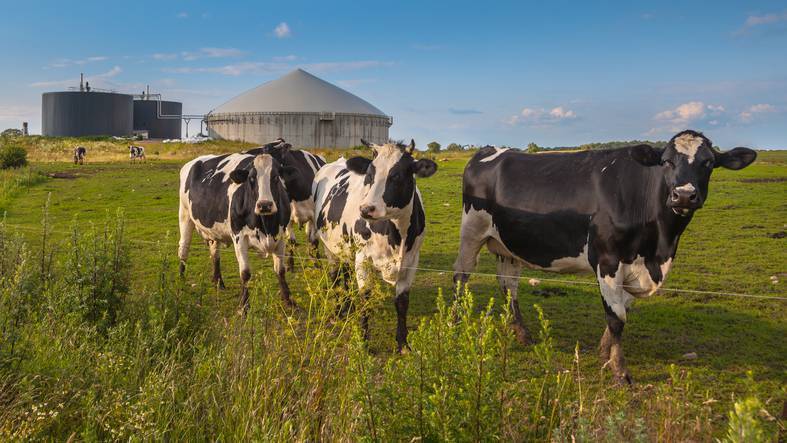
ABP Food Group said it faces "several challenges in the higher value valorisation and market development of biodigestate", including the transportation of large volumes of by-products of sludge, paunch or slurry to biodigestion facilities, which can be costly and inefficient, particularly if the facilities are far from the source.

Storage solutions for the by-product before processing are also needed, and ABP Food Group also cites economic viability as another significant challenge with "current tariffs and government incentives for producing and selling biodigestate not high enough to make the process economically sustainable".

To address these challenges, it "could enhance logistics efficiency by investing in specialised transportation and storage solutions to reduce costs and improve handling", and also "developing partnerships with local farms and facilities to minimise transportation distances and costs would also be beneficial".

Meanwhile, Dawn Meats is looking for solutions to challenges it faces sourcing "high-barrier flexible films for food packaging made from recycled and recyclable materials".

National Bioeconomy Action Plan

Research related to the bioeconomy has ramped up since Ireland’s first national Bioeconomy Action Plan 2023-2025 was published last year. 

The plan includes 33 actions to accelerate support for the development of the bioeconomy. 

The plan has a high focus on bringing sustainable scientific practices, technologies and biobased innovation and solutions into use on farms and by biobased industries in Ireland.

According to Agriculture Minister Charlie McConalogue, the plan aims to "support our farmers, foresters, fishers and agri-food companies to embed themselves in the circular regenerative bioeconomy". 

"The bioeconomy offers a vast range of new opportunities, new business models, new value chains, and is a key element in the diversification of the sector," Mr McConalogue said. 

A key commitment in the plan was the development of a National Biomethane Strategy, which was published in May and welcomed by industry. 

Government has committed to supporting the delivery of up to 5.7TWh of indigenously produced biomethane by 2030.

The strategy sets out the necessary policy and regulatory measures, and provides a roadmap, to developing a biomethane industry of scale in Ireland.

Green biorefinery demonstration initiative

James Gaffey, a director of the Circular Bioeconomy Research Group at Munster Technological University, told an Oireachtas committee session this summer that primary producers who supply the raw materials for Ireland's food sector face "significant environmental targets and the challenge of remaining profitable in a world competing for resources and markets". 

"Through adoption of circular bioeconomy models, Ireland's primary producers can achieve more sustainable food production, including waste reduction and valorisation, nutrient recycling and renewable energy production, diversifying farm incomes and reducing imports and farm emissions," Mr Gaffey said.

Munster Technological University is leading a new first-of-its-kind decentralised green biorefinery demonstration initiative funded under the Circular Bio-based Europe Joint Undertaking.

The €8.7m 'Rural BioReFarmeries' project will advance the development of farm-centred bioeconomy approaches through the deployment of green biorefineries across grassland regions of Europe.

Two primary green biorefinery and anaerobic digestion demonstration sites in Ireland and Denmark will optimise the conversion of grasses, clover and green biomass residues sourced from local farms into value-added products such as human and animal grade protein, biobased food packaging, flavours, antimicrobials, fertiliser and energy, in collaboration with upstream research and industrial sites in Netherlands, Ireland, Denmark and Poland.

"Grassland valorisation and emerging grass-based value chains represent a major strategic opportunity for the EU bioeconomy," according to Mr Gaffey. 

Bioeconomy funding

This month, Minister of State at the Department of Agriculture Martin Heydon announced funding to "help equip the Irish agriculture, food, forest and bioeconomy sectors with the science and technology they need to become even more sustainable and competitive into the future".

Funding of €22.3m was confirmed for 21 new research projects arising from the 2023 Department of Agriculture thematic research call.

In addition, last month, applications closed for the €9m Shared Island Bioeconomy Demonstration Initiative.

This new funding initiative is to support the development of the all-island bioeconomy.

More in this section

Farming

Newsletter

Keep up-to-date with all the latest developments in Farming with our weekly newsletter.

Cookie Policy Privacy Policy Brand Safety FAQ Help Contact Us Terms and Conditions

© Examiner Echo Group Limited