EU to ditch requirement for geotagged images
The photos could avoid on-the-ground visits by inspectors to farms, and could reduce costs for national administrations. However, the photo system has been perceived as cumbersome and complex to implement.
Use of geotagged photos by farmers to support their EU payment claims is to be downgraded by the EU Commission from obligatory to voluntary for member states.
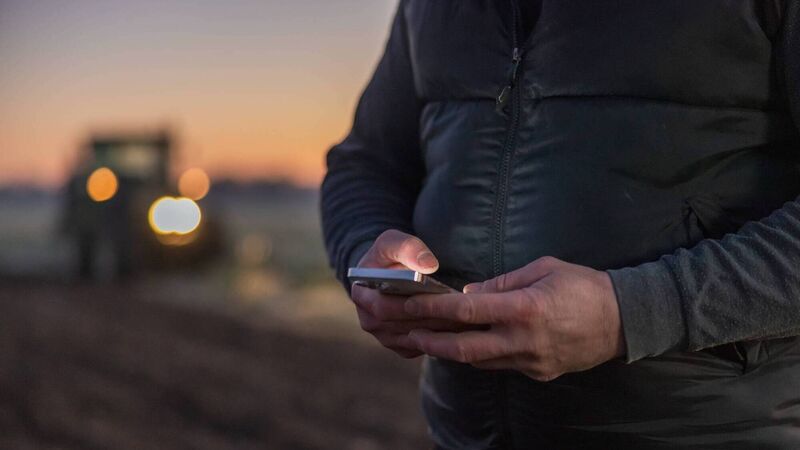
This follows a thumbs-down from farmers across Europe for the system of smartphone photographs which contain the GPS location of where the photo was taken.
In Ireland, the Department of Agriculture, Food and the Marine (DAFM) may request these photos from farmers, to resolve queries that may arise for certain schemes, or to support farmers' applications for payments.
The EU Commission has noted these concerns, and as part of its efforts to simplify the CAP for farmers, it proposes to remove obligations for Member States to use geotagged photos in the Area Monitoring System.
But it is proposed that Member States will keep the flexibility to ask farmers to use geo-tagged photos, or any other data deemed equivalent.
According to the Commission, the proposal has got a positive opinion from national representatives, paving the way for its adoption.
Geotagged photos complement the EU's Area Monitoring System, based on automated analysis of satellite imagery, utilised in order to reduce farm inspections, to help farmers avoid errors and penalties, and for administration and control by Member States to check CAP payment applications and compliance with eligibility requirements.
The photos could avoid on-the-ground visits by inspectors to farms, and could reduce costs for national administrations.
However, the photo system has been perceived as cumbersome and complex to implement by farmers and Member States.
Copa and Cogeca, representing EU farmers and agricultural co-operatives, has welcomed voluntary basis for use of geotagged photos, if they bring clear benefits to users, and are workable.
In Ireland, geotagged photos were introduced by the DAFM in 2018 as an option for applicants to support scheme application, for example, with regard to the eligibility status of a land parcel.
Some farmers or their representatives successfully used geotag photos last year to request an increase in their eligible area.
The DAFM's AgriSnap geotagged photograph application has also been used by ACRES advisors to score parcels electronically, For this purpose, AgriSnap was launched in early June, 2023. It was updated in mid-June, 2023, to resolve issues identified by users, and the DAFM has stayed in regular contact with users to resolve any issues as they arise.
In order to use AgriSnap to submit geotagged photographs securely to the DAFM, farmers must be registered on agfood.ie for online services, and must download the AgriSnap app (for free) from the App Store for IOS Apple devices and from the Google Play Store for Android devices. There are a number of other steps, such as registering for two-factor authentication, which adds a second layer of security while using AgriSnap.