Biomethane strategy 'needs to work' for farmers - 'or else it will fail'
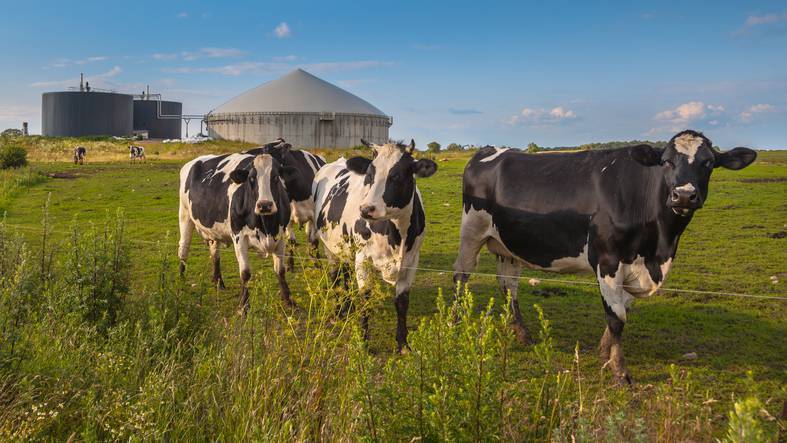
A conference this week heard how €1bn is needed to reach the 2030 biomethane target and deliver unique benefits of decarbonisation and bioeconomy.
The new National Biomethane Strategy "needs to work" for farmers - "or else it will fail", the leader of a farm organisation has said.
A conference this week heard how €1bn is needed to reach the 2030 biomethane target and deliver unique benefits of decarbonisation and bioeconomy.
The event, organised by the Renewable Gas Forum Ireland (RGFI), discussed the practicalities of implementing the recently announced biomethane strategy, Ireland's first major policy statement on biomethane.
President of the Irish Creamery Milk Suppliers Association Denis Drennan said that biomethane has the "potential to deliver a possible diversification option for farmers while making a valued contribution to climate change and other environmental priorities".
However, Mr Drennan said the biomethane strategy "needs to be reviewed and deliver a long-term pricing guarantee, a planning system that works for farmers and clarification and reality around the Government's various land use targets".
"Farmers won’t be fooled, the strategy needs to work for them - or else it will fail," he warned.
Environment Minister Eamon Ryan at the conference confirmed the Irish Government's commitment to industry growth to achieve Ireland’s biomethane target of 5.7TWh by 2030.
"Achieving the target will require concerted cross-government action and continued engagement with key stakeholders and industry experts," Mr Ryan said.
"Only through ongoing collaboration will we be in a position to realise this level of ambition and develop a successful, sustainable Irish biomethane sector."
According to PJ McCarthy, CEO of the RGFI, biomethane has the "potential to progressively reduce emissions and reliance on fossil gas supplies both at a European and national level".
"We estimate that with adequate Government support, biomethane can provide up to 9.5TWh of the required Irish gas within 15 years," Mr McCarthy said.
"Our members are ready to develop 10x40 GWh anaerobic digestion plants within the next 18 months, supported by capital funding.
“While wind and solar power play crucial roles in our renewable energy portfolio, biomethane uniquely offers additional benefits such as significant decarbonisation and contributions to the circular bio-economy unmatched by other renewables.
"Anaerobic digestion-producing biomethane is capital-intensive and therefore if Ireland is to achieve the 2030 target for biomethane and emissions reduction, this requires €1bn in future support to ensure the development of the additional plants needed.”
RGFI chairman JP Prendergast said the strategy, published in late May, is an important milestone in the development of an indigenous sector, "heralding a new era where the production of farmer-centric, AD biomethane and its co-products, are placed at the heart of our national decarbonisation and nutrient management efforts".
The role of farmers, and the rural economy, will be critical to the development of biomethane in Ireland, he said.
“This is a crucial first step to meet Ireland’s biomethane target, supported by the Government’s initial €40m in capital funding and underpinned by a renewable heat obligation, plus Government investment of up to €30m in biorefinery piloting facilities over the next two to three years," Mr Prendergast said.
"We welcome the inclusion in the strategy of other non-financial supports, as proposed by RGFI, such as non-contestable gas grid connections, the AD charter to guide sustainability, as well as a communications strategy to socialise the socioeconomic benefits of biomethane and biorefinery potential.”
John Brosnan, bioeconomy executive with the Irish Co-operative Organisation Society, said that "new and innovative joint venture structures and how we finance and de-risk innovation" has to be thought out.
"We can develop and integrate several innovative high value market opportunities. Extracting high value proteins from feedstocks, processing digestate into biofertilisers, utilising captured CO2, incorporating biochar and preparing for the hydrogen era are all opportunities that we should be looking at, not just energy in isolation," Mr Brosnan said.
"From an agri-food perspective we need to see value created locally remaining in local regions, and a fair share in the hands of the farmers who provide the feedstocks. We also need to see the environmental benefits accrue to farmers and their co-operatives through related carbon farming or green sustainability certification.”
Other speakers at the conference included beef farmer Brugha Duffy from Co Meath who was granted permission for an agricultural anaerobic digester in 2022 and expects to inject biomethane into the national gas distribution grid and has potential to pursue the supply of CO2 to consumers and incorporate a digestate nutrient recovery facility.