Dairy-beef demonstration farm in Tipperary launched
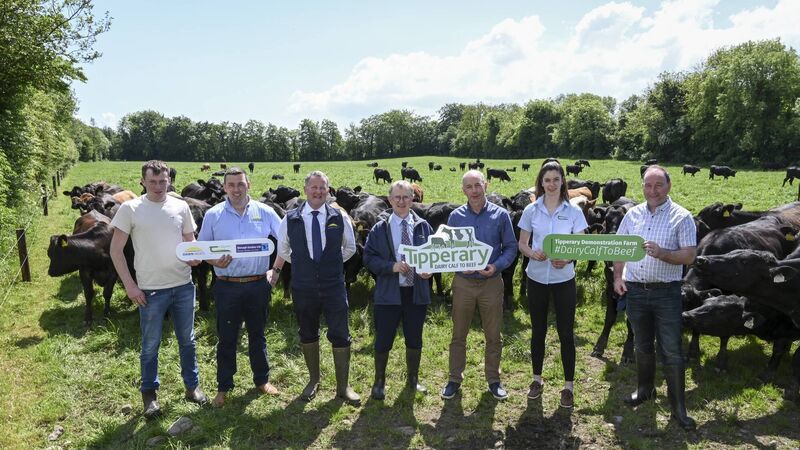
This new farm will demonstrate profitable dairy calf-to-beef systems using the best available dairy-beef genetics coupled with best practice in animal husbandry with a particular focus on pasture and silage management.
A dairy calf-to-beef demonstration farm in Co Tipperary has been officially launched.
This joint initiative between Dawn Meats, Shinagh Estates and Teagasc was established to demonstrate best practice in breeding, rearing, and finishing dairy-beef animals.
Building a sustainable outlet for dairy-beef calves coming from the dairy industry is a priority for both the dairy and beef industries, Teagasc said.
This new farm will demonstrate profitable dairy calf-to-beef systems using the best available dairy-beef genetics coupled with best practice in animal husbandry, with a particular focus on pasture and silage management.
This 112-hectare farm is rearing over 300 dairy-beef calves to finish each year.
Strong message
Speaking at the launch in Co Tipperary this week, Teagasc director Frank O'Mara said: "There are more dairy-beef animals coming from the dairy herd now than before, and a demonstration farm like this one is important for Teagasc in the dissemination of information and to communicate best practice to other farmers."
Dawn Meats chief executive Niall Browne said that this project will "send a strong message to the supply chain".
"This farm can demonstrate the importance of using the best genetics to produce a beef calf, operating high animal health standards, getting the feeding right both at grass and indoors, and achieving the levels of finish required by the marketplace.”
The key demonstration actions set out for the farm include:
- Demonstrate the significant advantage of strong collaboration between beef and dairy farmers in the breeding and transfer of healthy calves;
- Operate a financially sustainable farm business using excellent pasture management, early age at slaughter, and high animal health and welfare;
- Minimise both nitrogen and phosphorus losses to the environment;
- Incorporate a proportion of the farm into high diversity landscape features;
- Implement mitigation strategies to reduce GHG and ammonia emissions to the environment;
- Reduce the use of antibiotics and anthelmintics.