Stephen Cadogan: The new fertiliser gaining traction
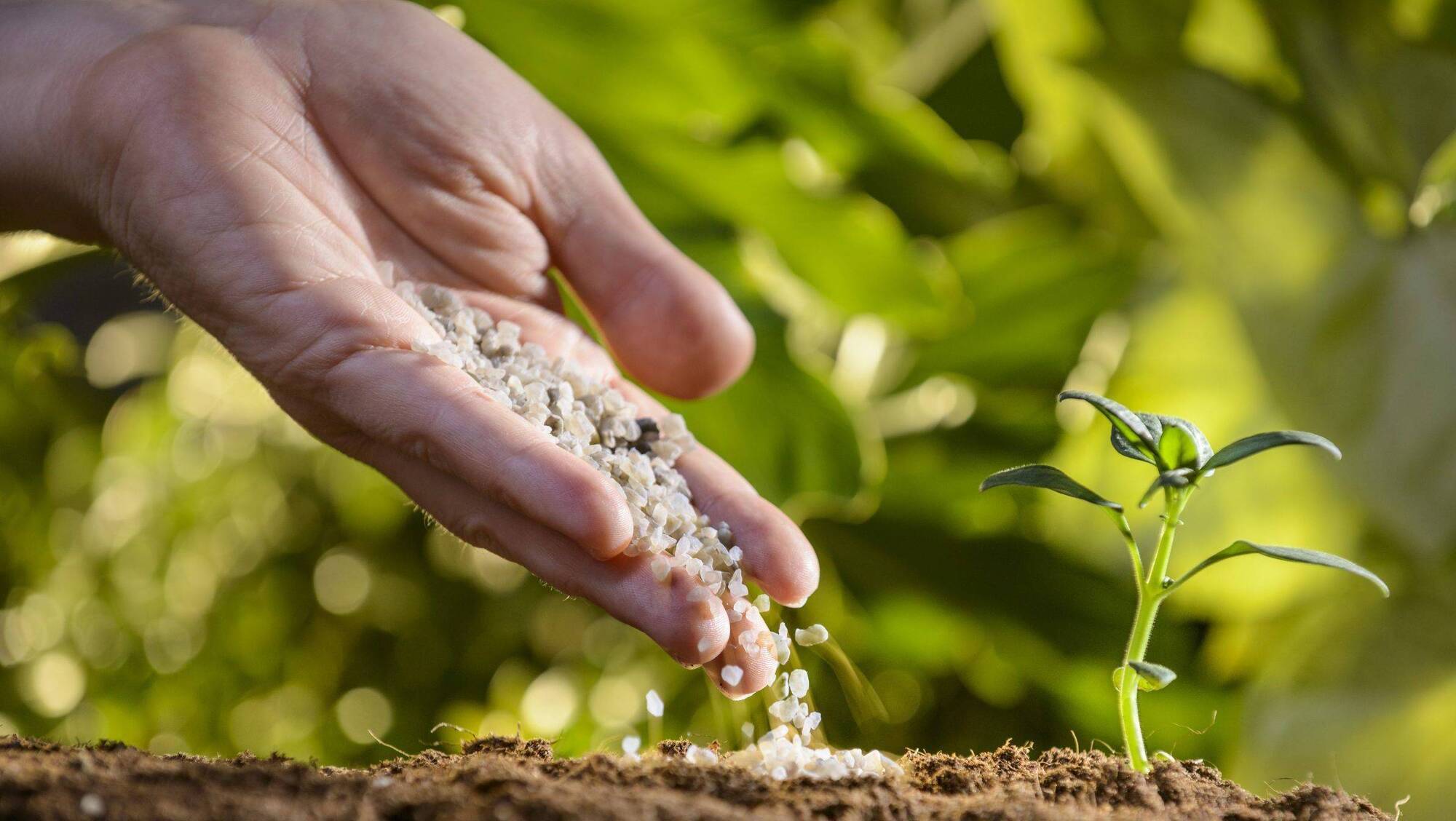
ICL says polysulphate can be used in combination with other fertilisers, or the naturally occurring combination of sulphur, potassium, magnesium, and calcium can often be applied directly to the soil. Picture: ICL
More and more Irish farmers are using a new fertiliser which is mined only a few hundred kilometres away in Yorkshire, England.
It is a welcome change from dependence on non-European sources. The EU has traditionally depended on imports from around the world for 30%, 68%, and 85% of its consumption of inorganic nitrogen, phosphates and potash nutrients, respectively.
And this dependence on non-EU sources escalated drastically since 2021, with up to 90% of the variable production cost of nitrogen fertilisers within the EU accounted for by mostly imported natural gas.
This fuel, coming mostly from Russia, has been the main raw material for nitrogen fertilisers. When it became too expensive, especially after Russia invaded Ukraine, many of the EU's ammonia and fertiliser production sites closed down.
The new polysulphate fertiliser from Yorkshire was discussed in a recent Teagasc podcast.
Teagasc head of the crops knowledge transfer department Michael Hennessy asked Peter Scott, technical director of the fertiliser division at Origin Enterprises, to describe polysulphate fertiliser.
“It’s a newish product", said Peter Scott. "It’s been on the market in Ireland for about the last six or seven years. I tend not to think of it so much as a potash fertiliser, as a multi-nutrient product.
"It’s a natural mineral, the mineral is called polyhalite and there’s a seam of it in Yorkshire. It’s the only commercially mined seam in the world.
"It contains four key nutrients, it’s rich in potash, sulphur, calcium and magnesium. Each crystal of the mineral contains all four of those nutrients.
"It’s 11.6% potash, 19% sulphur, 12% calcium and 3.6% magnesium”.
"So, it’s got about a 50-day release pattern. It’s releasing each of the four nutrients little and often across those seven weeks.
"We’re increasingly looking at incorporating it in NPK compounds, so it’s being applied a little and often throughout the season and is giving a source of potash and sulphur that is less liable to be washed out of the oil.”
Michael Hennessy asked if it would not be more advantageous for potash to be applied on cereals closer to the fast-growth stages 30 and 31, rather than extended over a seven-week period.
Mr Scott responded: “In a tillage situation, I would be looking to apply polysulphate as early as possible in the season, for the reasons you mention.
"In a grassland situation, little and often. Where we’ve incorporated it into for example, a NPK compound, applied little and often, you’ve got that continual release."
Mr Hennessy asked if a farmer would use polysulphate to apply all of their K requirements, and if that were the case, would there not be too much sulphur in the system.
“In a tillage situation, I wouldn’t use it to supply all of the potash," said Mr Scott. "I would work out my application rate based on the sulphur requirements.”
He suggested only a small proportion of the potash requirements of the tillage crop would be met using polysulphate.
Mr Hennessy asked Gouldings managing director Liam Dunphy if Gouldings was planning to incorporate polysulphate in compound fertiliser.
“There are a number of farmers using polysulphate as a straight fertiliser, predominantly on the east coast, and the majority of those are cereal farmers,” Mr Dunphy said.
“We have a range of grass products where polysulphate is put in, covering most of the potash. We actually have protected urea products with polysulphate in there also. You’re replacing your 27-2.5-5 product with a new protected urea compound with the polysulphate in there.
Mr Hennessy asked if polysulphate would be incorporated in popular mixes such as 16-4-20.
“On the grass products, we have a range on-the-shelf. On the cereal products, it tends to be a special ask,” Mr Dunphy said. "Some farmers have their own unique mixes, recorded by Gouldings under the farm name."
How spreadable is polysulphate, on its own or in a compound?
“There’s been a lot of work done on spreading of polysulphates,” Mr Scott said. “All of the major spreader manufacturers would have settings for polysulphate.”
Considerable research has been undertaken also on calibrating spreaders for polysulphate as a component of compounds, not only on the spreader settings, but also on whether there is any segregation during spreading.
“It doesn’t segregate and it spreads well,” Mr Scott said.
Polysulphate is mined from under the North Sea by the ICL global minerals company, and extracted at Boulby, Yorkshire. ICL says the 260-million-year-old polyhalite beds facilitate easy raw material extraction and an abundant supply of the mineral.
ICL says polysulphate can be used in combination with other fertilisers, or the naturally occurring combination of sulphur, potassium, magnesium, and calcium can often be applied directly to the soil.