Forestry restrictions between Scotland and Ireland increased
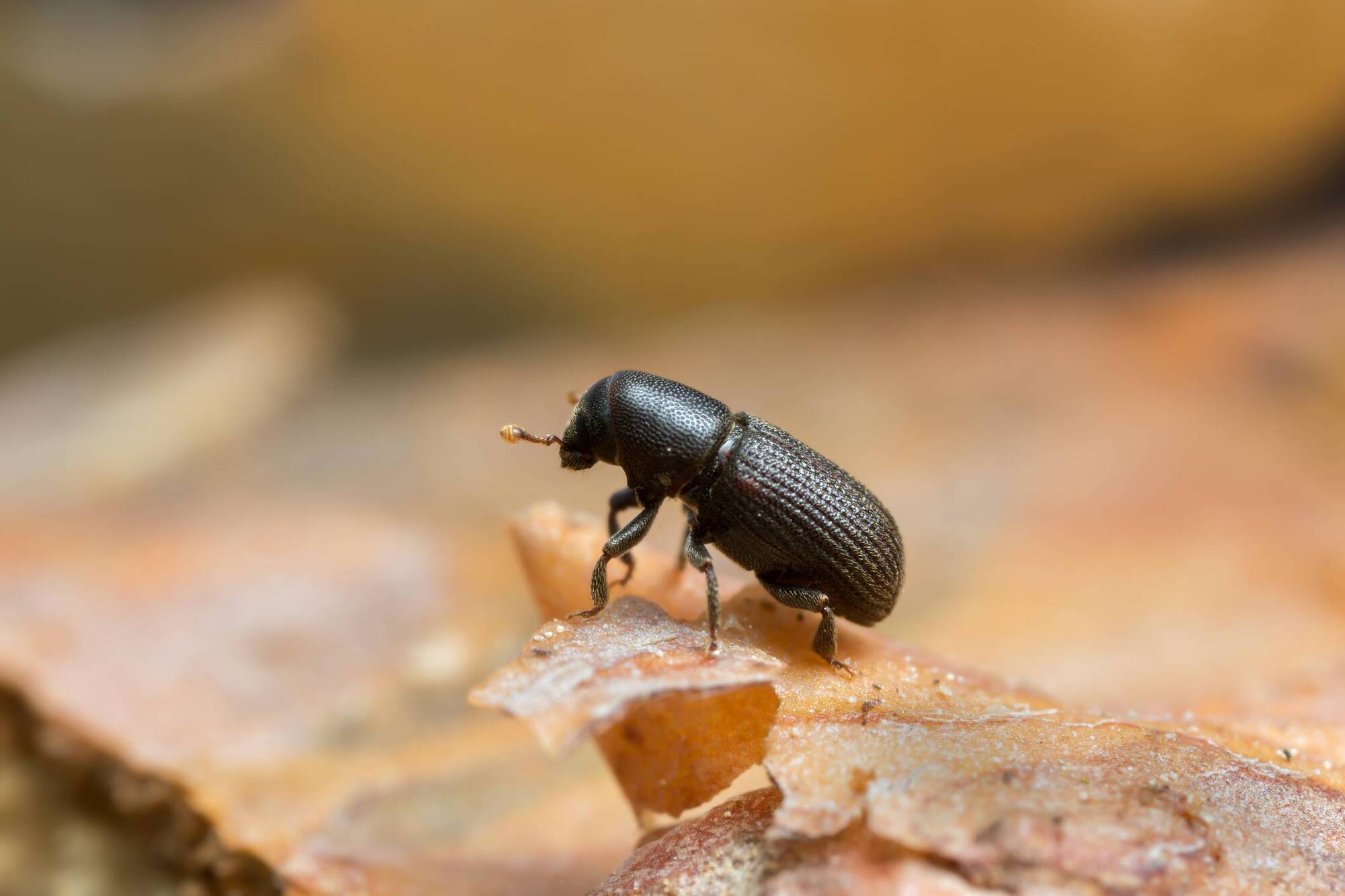
The beetle tunnels into the bark of living trees to lay its eggs. Its larvae then feed and develop, forming galleries that weaken or kill parts of the tree.
Scottish Forestry has increased restrictions on moving spruce logs with bark to the island of Ireland from some of the west of Scotland’s pest-free area.
The restrictions are designed to reduce the risks posed by the great spruce bark beetle, Dendroctonus micans.
The island of Ireland has pest-free status for this very damaging beetle. Found in England and Wales since 1982 and in Scotland since 2011, it is now found in the south of and some central areas of Scotland, and is slowly spreading north.
The beetle tunnels into the bark of living trees to lay its eggs. The larvae then feed and develop, forming galleries that weaken or kill parts of the tree. If it is not managed, the tree only has a 20% chance of survival.
Frosts stop the beetle's reproduction cycle, but global warming is thought to have allowed multiple reproduction cycles, resulting in rapid European spread.
It, therefore, poses a threat to the spruce trees which predominate in Irish forests. Growers fear this threat to nearly 200,000 ha of forestry, if D. micans becomes established here.
They say it would reduce the commercial value of infected trees, and bring increased management and replanting costs.
Irish forestry growers, represented by the IFA, have called for a temporary suspension of timber imports from Scotland, pending a full review of spruce bark beetle biosecurity measures.
They say timber could also be de-barked and kiln-dried before import, to kill pests.
It is not possible to eradicate the great spruce bark beetle, but effective biological control can be achieved by releasing the predatory beetle Rhizophagus grandis into areas of forest where the pest has been found.
The West of Scotland also has D. micans pest-free status, and Scottish Forestry says its new restrictions will help to maintain that status, thus allowing trade to continue, including exports to Ireland.
However, James Nott, Head of Tree Health at Scottish Forestry, said: "If the beetles continue to spread, the longer-term prospect is for the area of the west of Scotland pest-free area to reduce and ultimately close.” That could end the trade of conifer roundwood with bark to Ireland. According to the Central Statistics Office, about 300,000 cubic metres of coniferous roundwood is imported annually into Ireland, predominantly from Scotland.
In the meantime, spruce timber with bark moving under a phytosanitary certificate will only be allowed to travel within 35 km of great spruce bark beetle-infected areas between October 1 and March 31, which is outside of the flying season for D. micans.
Nor can the timber be stored in the 35km buffer zone.
According to Department of Agriculture, Food and the Marine officials, importers are prohibited from importing roundwood from areas known to be affected by quarantine bark beetle species. Roundwood logs from the pest-free area in Scotland must be accompanied by a phytosanitary certificate (which identifies the specific forest location where they were sourced).
In Ireland, they are subject to an inspection of documentation, identity and plant health physical checks at the port. Inspectors use international standard sampling of log consignments. Any beetles found are identified; to date only beetles already present in Ireland, and not of quarantine significance, were found.
In December, DAFM officials announced the first findings in Ireland of Pseudips mexicanus, known as the Monterey pine engraver, at Cratloe in Co Clare. However, this beetle is not thought to be a pest of economic significance for Ireland.
Three ports are designated border control posts for roundwood log inspection, namely at Rushbrooke and Passage West in Co Cork, and Wicklow. This has been the case since Brexit. Previously, when Scotland was in the EU, logs could move freely from the pest-free area into Ireland, if accompanied by a plant passport. But now Scotland is treated as a third-country exporter and must show they comply with European plant health regulation requirements.
Ireland imports and exports roundwood. Growers say import volumes could be reduced if a national certification scheme is set up. Sawmills need at least 70% certified timber, but only a small area is certified of the privately owned Irish forestry, from which an increasing volume of timber now comes. This forces sawmills to import certified timber at certain times of the year. In Ireland, the forests of Coillte and other corporate owners are certified.
Irish timber growers have already been devastated by the ash dieback disease. IFA president Francie Gorman has now warned: "If the bark beetle gets in, nobody is going to plant trees".
Planting trees is one of the most effective methods of tackling climate change, but only about a quarter of the annual target of 8,000ha of planting is currently being achieved