A brief history of the Irish Christmas dinner
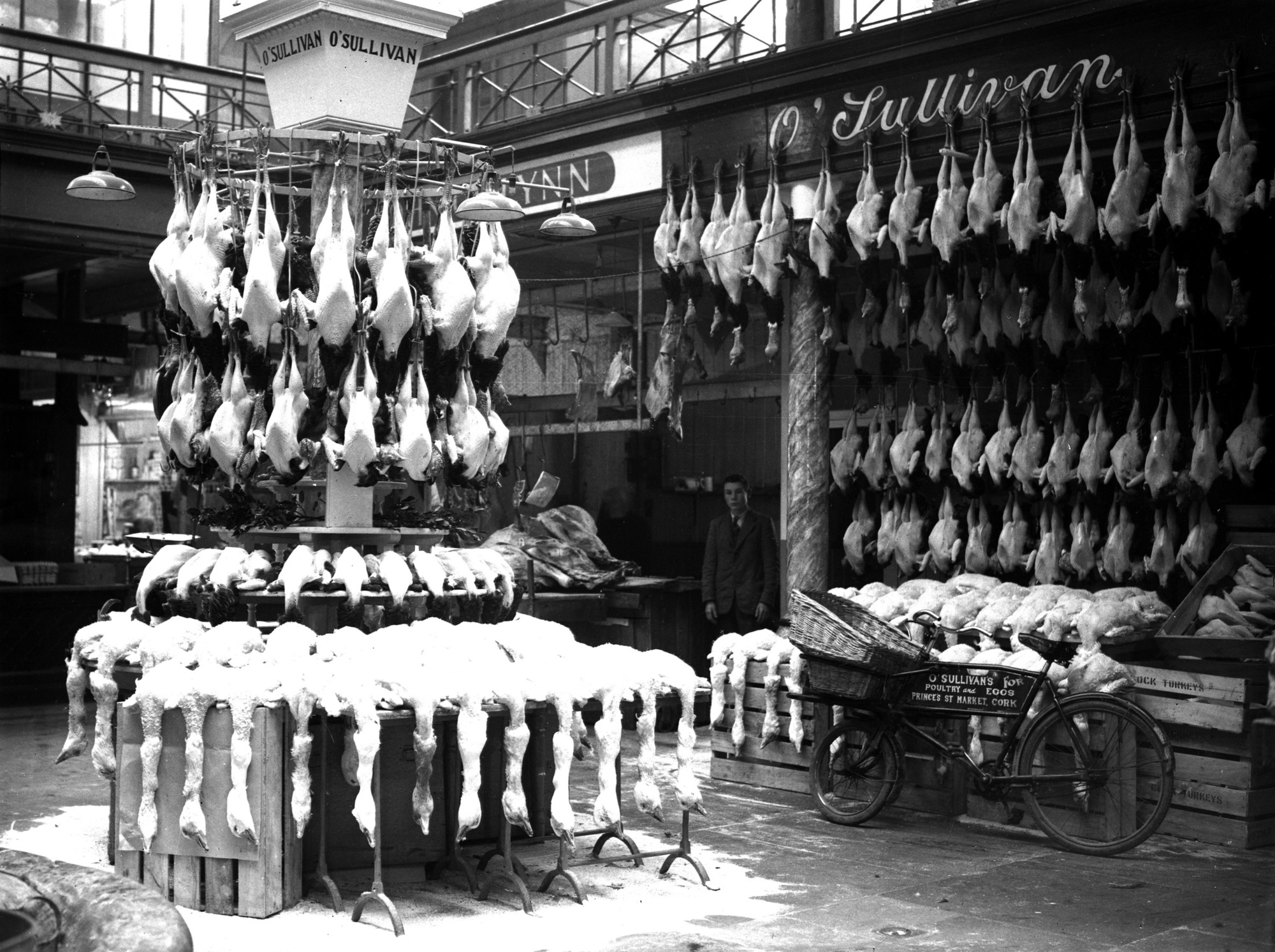
Turkeys ready for sale at Cork's English Market by poultry trader O'Sullivan's in December 1947.
HAVING a turkey for the Christmas dinner is a cherished tradition in most Irish households, but that was not always the case.
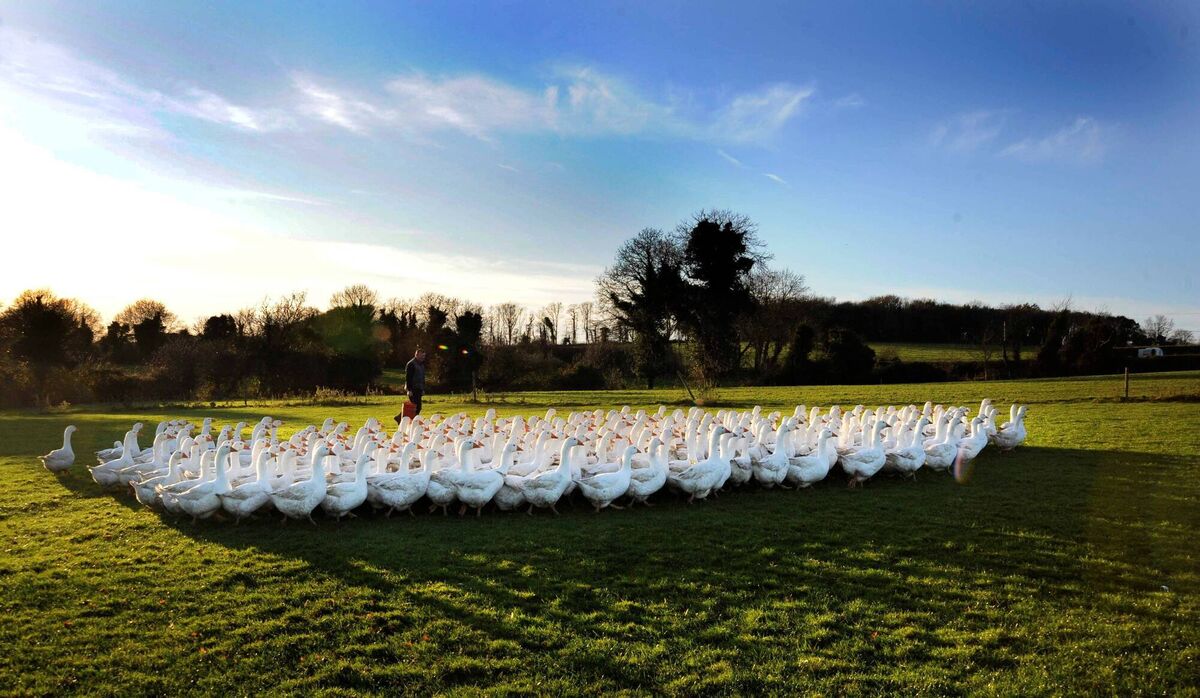
The goose was once the bird of choice for many rural families because it was easier to rear and cheaper to buy.
Goose fairs were held in many towns and villages, but especially in the north where small farmers kept large numbers.
But turkeys began to replace geese as the more popular dinner option around 1850 for a variety of reasons.
Some people believe the change developed from Thanksgiving Day in the United States. Others suggest it was due to Charles Dickens, who wrote about turkeys in his novels.
And there are even claims it was all due to King Henry VIII after he made the switch from roasted swan, but the British monarch credited with having made eating turkey at Christmas fashionable was Edward VIII.
Turkeys remained a luxury for the rich in Britain until the 1950s when the advance of freezing technology brought prices down but they have a special place in the economic and social heritage of rural Ireland.
Markets devoted to turkeys were held in fair fields and on streets and roadsides across the country before livestock marts became the new venues.
West Cork was well served with traditional sales. Clonakilty and Kilbrittain were popular locations and Bandon hosted a large market.
Meath had a big reputation for growing quality birds and so did Galway while Ballyragget was the most important venue in Kilkenny.
Cash prizes of £1 were even offered at some markets for the best cart of turkeys and the best cock and hen. Over 1,000 turkeys were on sale at one market in Dingle, Co Kerry in 1934.
Posting a turkey as a gift to family members in Britain was also a popular practice, but it required a licence. Some 116,000 of these were issued in 1949.
Sometimes, their weight was suspected of being enhanced due to the traditional stuffing being substituted with nylon stockings, cigarettes, and other items still scarce in post-war Britain.
Turkeys were put up as prizes at raffles, card drives, dances and other community and social gatherings in the weeks before Christmas.
Housewives in rural areas also reared and sold them on the open market to earn a few pounds to help them buy presents for family and friends.
Merchants usually began advertising for supplies in newspapers months before Christmas. One business in Cork City, John Lane and Co. (Tower Street), appealed on November 16, 1935, for “10,000 turkeys at once.” Agents even made house calls offering contracts for supplies that were required to meet export orders to Britain through Rosslare, Cork, and other ports.
A show of hands at a meeting in Monaghan revealed that most of the producers present — with a total of almost 1,000 turkeys — were in favour of selling by contract.
Bacon factories that exported thousands of turkeys to England every Christmas also employed large numbers of men and women for a special task. They were known as turkey-pluckers. Their job was to de-feather the birds by hand.
Their skills were preserved and later exhibited by men who had retained the tradition. One of the best-known was Vincent Pilkington from Cootehill, Co Cavan, who was crowned world champion in 1984. He was often featured in the Guinness Book of Records. He de-feathered one turkey on RTÉ television in 1980 in one minute and thirty seconds, a record that remained for over three decades. Two years earlier, he plucked 100 turkeys in seven hours and thirty-two minutes, an average of one bird every five minutes.
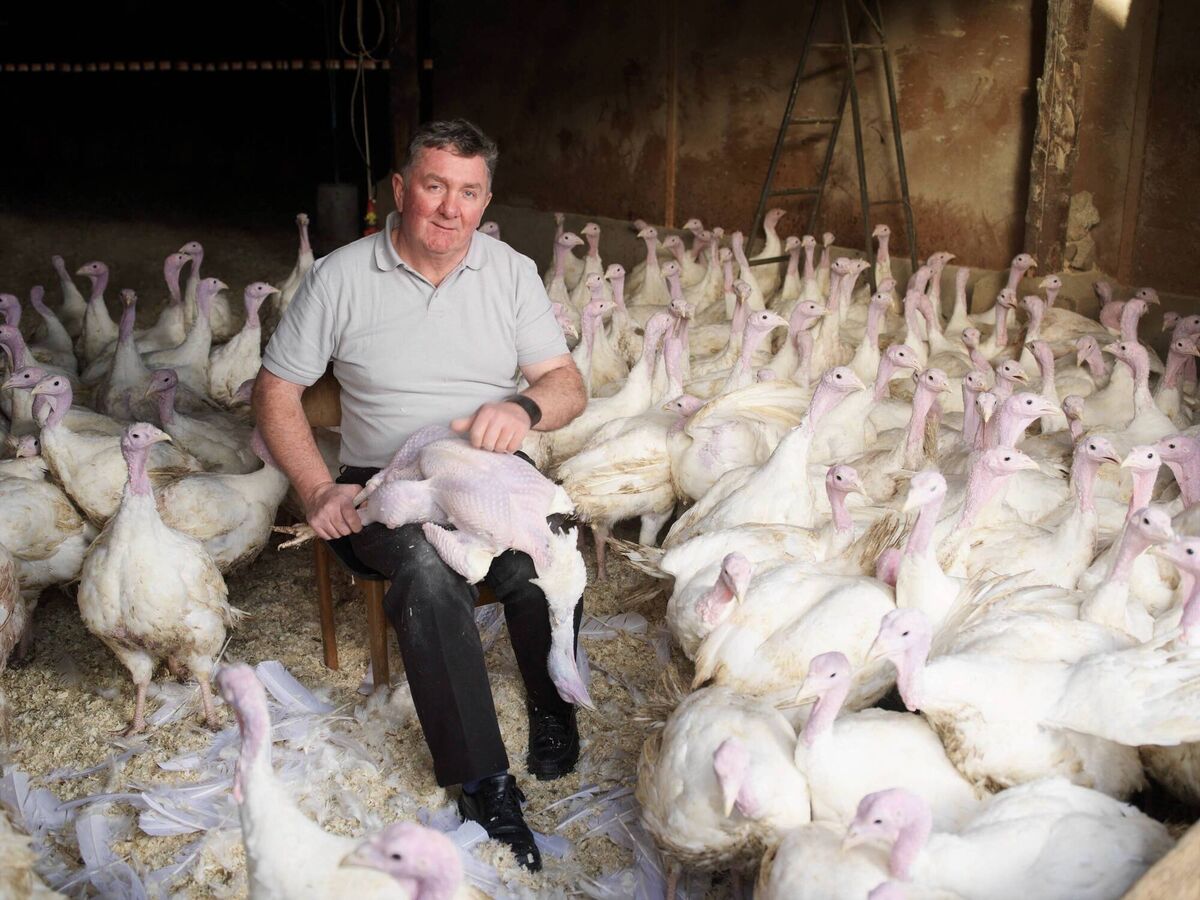
One of the best-known turkey-pluckers in the south of Ireland was Mixie O’Toole from Charleville, Co Cork, who practised his skills for over 60 years. He learned how to cleanly pluck a turkey or goose from his father who had acquired the skill from his father.
Machines have long replaced the need for individual hand pluckers, but turkey production in Ireland, usually aimed at the Christmas market, remains a key part of the poultry industry.
About one million turkeys are sold here in the run-up to the holiday period each year with some 30% of them imported. Irish consumers have repeatedly made it clear in opinion surveys, however, that they prefer to buy home-produced poultry.
This, in turn, presents an opportunity for significant numbers of farmers to develop an alternative income stream, according to the Irish Farmers Association.
It urges consumers every Christmas to support local farmers by buying Irish turkeys which are reared to the highest possible welfare standards and are fully traceable back to the farm.
The IFA says that in doing so consumers will be supporting the hard work put in year-round on family farms to produce top-quality, sustainable food.
Consumers are also urged to check labels or challenge their butcher or retailer directly about the origin of their meat. Those wishing to buy free-range turkeys should ensure products are certified as such.
Teagasc says turkey production can be an additional enterprise to many farms and increase farm income. About four million turkeys are reared in Ireland every year.
The tradition in the United States relates more to Thanksgiving Day when 47 million turkeys are eaten. For the past 76 years, a strange ceremony has taken place on the White House Lawn where the incumbent President saves the life of a turkey.
President Joe Biden recently followed that tradition and “pardoned” two turkeys on his 81st birthday in the presence of gleeful children.
But the culinary popularity of the bird is not confined to this world because the first meal eaten on the moon by American astronauts Neil Armstrong and Edwin Aldren was cold roast turkey.