'Tree' cheers for our native Irish trees
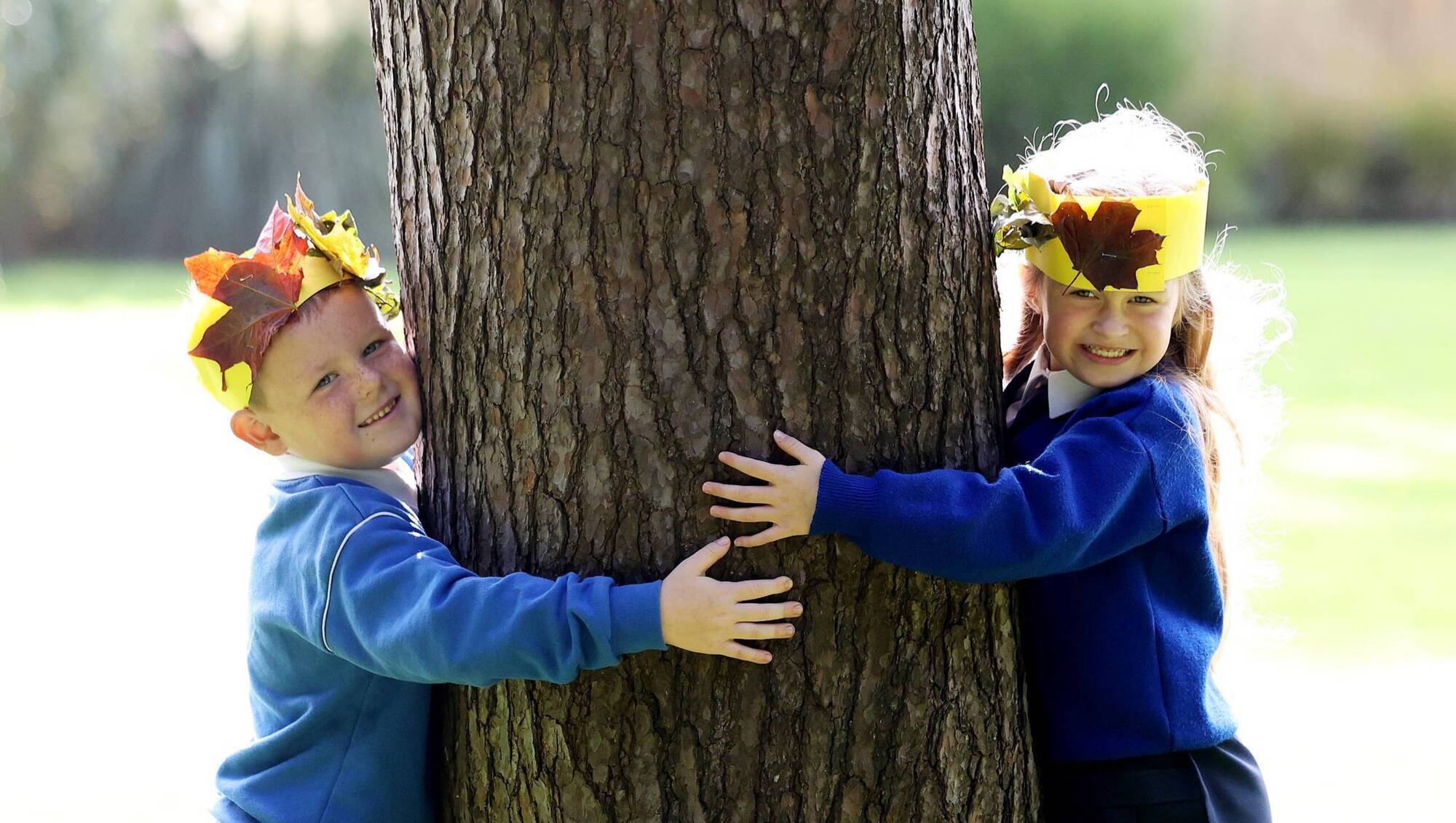
Logan Murphy (5) and Blake Durnin (6) Senior Infants from Our Lady of Consolation School in Donnycarney, pictured at the launch of SPAR National Tree Day in the Botanic Gardens. Picture: Robbie Reynolds.
Today is National Tree Day, with people of all ages being urged to get outdoors and connect with nature.
Trees, mighty symbols of hope and renewal, have filled philosophers, writers and painters with wonder and inspiration throughout history.
They are also good for the soul, essential to the air that people breathe and provide a majestic example of strength and perseverance in the face of adversity.
Run by SPAR and supported by the Tree Council, is focused this year on the native Hazel species.
Besides squirrels, the Hazel sustains numerous insects and animals. Some 140 lichen species have been found on them and 73 types of insects recorded.
Preserving these native trees is vital for maintaining a healthy and interconnected local ecosystem, according to the organisers of today’s event.
The Hazel tree, which has many uses and an ancient history, hosts a diverse ecosystem, and plays a crucial role in supporting biodiversity.
According to Irish folklore, it is also steeped in wisdom and mystery and is believed to be a repository of universal knowledge.
Hazel nuts are also one of the foods associated with the very earliest human settlements in Ireland thousands of years ago.
A strong and flexible timber for huts., Hazel bushes can also be cut right back to a stump and will re-grow. They are also a traditional material in the construction of eel and lobster traps.
Hazel scrub woodland covers extensive areas of limestone, particularly on the Burren in north Clare and in soils derived from limestone in the Glens of Antrim These small and shrubby trees can be found in a variety of habitats, such as woodlands, gardens, and grasslands.
They are famous for their long, yellow, male catkins (known as 'lamb's-tails') that appear in spring, and its green, ripening to brown, fruits (familiar as 'hazelnuts') that appear in late summer.
A total of 2,000 free native Hazel saplings have been made available for primary schools to plant today as part of the national event.
Children and their teachers have been urged to step outside the classroom and foster a deeper understanding of trees and their role in nature.
Tree Council president Cormac Downe said National Tree Day is a fantastic way to ignite excitement about trees and nature among primary school children and their families.
“The deep-rooted connections between the Hazel tree and Irish folklore and wisdom make this campaign all the more special,” he said.
SPAR Sales Director Colin Donnelly said that as the company celebrate 60 years in business it is delighted to contribute to a legacy through its 'Team Tree' initiative in partnership with the Tree Council.
“Primary schools around the country are invited to spend the day learning about trees, to appreciate and enjoy the planet we all live on. A different native Irish tree is featured each year,” he said.
National Tree Day, an important date in the school calendar, has been enthusiastically supported by children, teachers, and parents alike - providing an opportunity to put down the books and get outdoors.
The campaign’s mascot ‘Sammy Squirrel’ shares simple messages to help children understand that they can be a positive influence on the environment.
National Tree Week, organised by the Tree Council and Coillte, also focused on the importance of trees last March.
It highlighted the role of trees in providing birds with at least three very important factors for survival; food, shelter, and a nesting habitat.
Trees also spread seeds, help with forest regeneration, and provide an important food source for bees.
Flowering trees with nectar and pollen such as blackthorn, hawthorn, elder, rowan, horse chestnut and lime, are immensely valuable to insects during late spring and early summer.
Bees can visit up to 1,500 flowers per day to collect nectar, beating their wings 200 times a second, and giving rise to the popular saying: “Busy as a Bee.” Trees also provide shading along waterways to restrict aquatic plant and algae growth and help to lower water temperature to levels that native fish can tolerate.
They are particularly important for kingfishers who use overhanging branches as perches to fish from and make their nests in tunnels supported by the tree roots in the riverbank.
Minister for State, Pippa Hackett, speaking during this year’s National Tree Week, said planting trees is one of the most effective methods of tackling climate change and contributes to improved biodiversity, water quality and well-being.
Tree Council of Ireland president, Éanna Ní Lamhna said at the time that trees are not just beautiful and essential to our environment, but they have the biggest role to play in slowing down biodiversity loss.
“It is our responsibility to plant and protect trees, not only for ourselves but for future generations,” she said.
Referring to Coillte’s role, chief executive Imelda Hurley, said the annual Tree Week gives people the opportunity to learn more about the importance of trees and their vital contribution to Ireland’s climate and biodiversity agendas.