Allocation urged in this year's budget to address ash dieback 'once and for all'
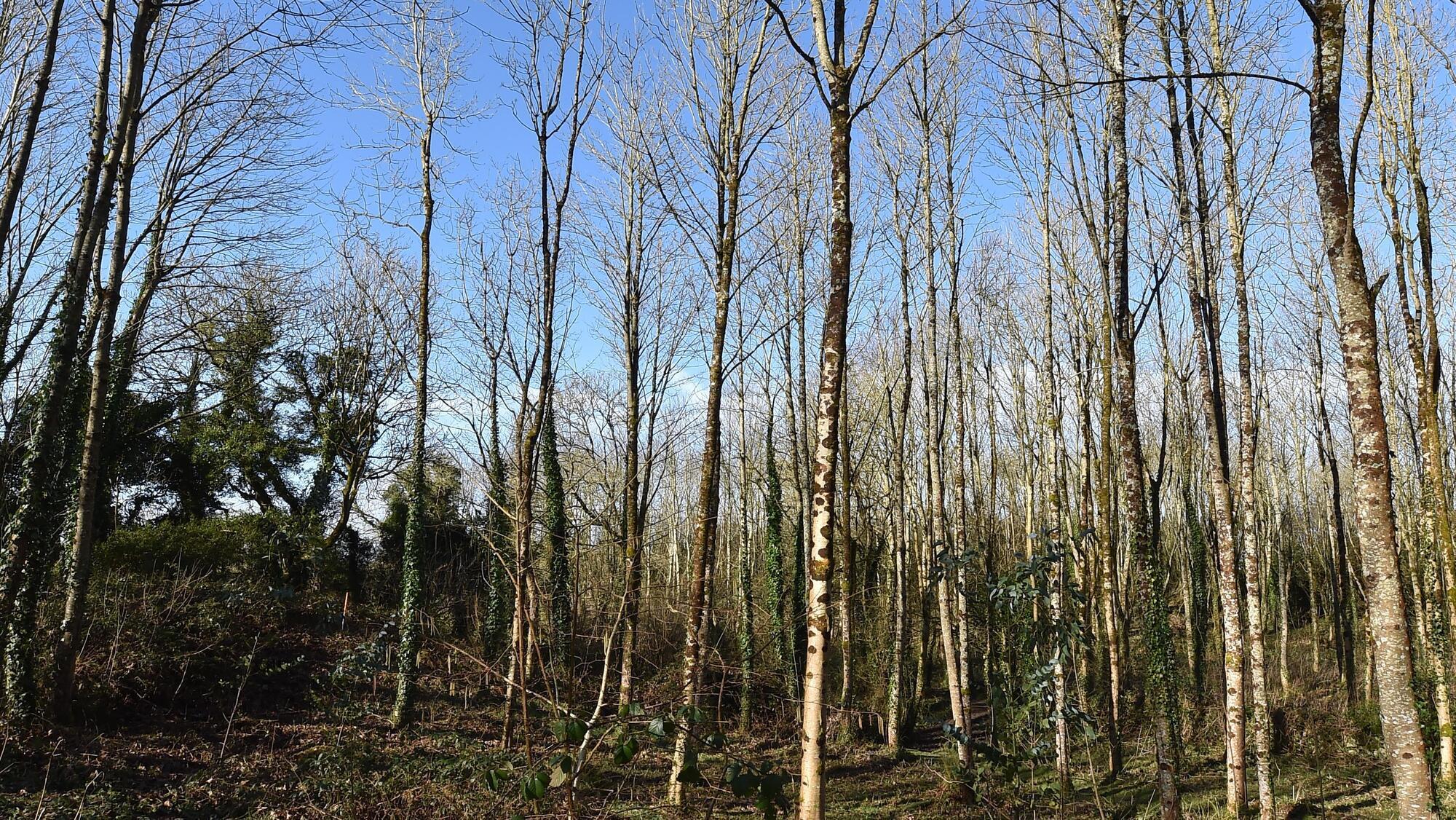
A straight 25-year-old ash tree used for the making of hurleys in an ash plantation in Co Limerick that has ash dieback. Picture: Dan Linehan
An allocation in this year's budget to address ash dieback "once and for all" is being urged.
Fianna Fáil TD Jackie Cahill told the Dáil Thursday night that this is "something I feel we cannot walk away from", and that "now is the time for action".
Mr Cahill told Minister of State Martin Heydon of the "terrible consequences" that ash dieback has brought on farmers.
"It is over 10 years since ash dieback was discovered in this country and for the 16,000 hectares of land that attracted grant aid, unfortunately those farmers now have rubble instead of a profitable crop to harvest," Mr Cahill said.
"I have been representing farmers for many years and I have never seen a case where a disease that was outside of farmers' control happened on farms, for which there was no compensation.
"Whoever is to blame for ash dieback, it most definitely is not the farmer. We are promised another report on ash dieback in the next couple of weeks. What the men and women who own this land want is compensation."
The "lack of confidence" that ash dieback has caused in the forestry sector is one of the major factors why Ireland is not meeting its afforestation targets of 8,000 hectares per year, according to Mr Cahill.
The Oireachtas Joint Committee on Agriculture, Food and the Marine, which Mr Cahill chairs, has put forward a report on forestry strategy in which it has strongly recommended that if people replant their ash trees with whatever crop they want to put into the land, they would access a premium for the next 20 years.
"While this would not compensate them for the huge financial loss they have suffered, at least they would have an income coming in for the next 20 years out of that afforestation and it would go some way to relieving the hardship they have suffered," he explained.
"They would have 20 years for the farmers to pay it back so the financial pressure on the exchequer would be minimal. We have a moral responsibility to do this for these farmers.
"The boost it would give the forestry sector as well should not be underestimated. We would have 16,000 hectares that would be replanted within the next 12 to 18 months and that would have a huge impact on the private forestry sector, which is greatly in need of a boost."
Minister Heydon said that a number of reconstitution schemes to deal with the issue have been initiated by the Department of Agriculture in order to help those landowners with failing ash dieback plantations.
"In March 2013, the department introduced the reconstitution scheme for Chalara ash dieback, to restore forests planted under the afforestation scheme which had suffered from or were associated with plants affected by the disease," he said.
"In March of this year, the Minister of State Pippa Hackett introduced an interim reconstitution scheme for ash dieback via general de minimis, which contains a doubling of site clearance rates, increased grant rates, and an improved premium regime."
The purpose of the scheme is to clear all ash trees and replant with other species. Under the new forestry programme, a reconstitution scheme for ash dieback was launched.
"This is the same as the interim scheme and includes a 100% increase in the site clearance grant rate, from €1,000 to €2,000, and enhanced grant rates for new forest types as per the new forestry programme for 2023 to 2027," Mr Heydon said.
"In addition, for those in receipt of the farmer rate of premium, a top-up premium equal to the difference between the equivalent forestry type and the existing premium will be paid. This will be calculated for the remaining years left in premium and paid in a single sum."
To date, according to Mr Heydon, a total of €10m has been expended on these reconstitution schemes, involving payments on approximately 2,400 hectares.
"Aid has been applied for in respect of approximately 6,500 hectares of the 15,897 hectares of ash under the various reconstitution schemes to date."
An independent review of the department's ash dieback supports was established in June. The report has recently been presented to Ms Hackett, with its findings "now being considered and assessed". This is due to be published shortly.
Mr Cahill said that while there have been various schemes to encourage farmers to clear the sites, "it can be seen from the figures that farmers are not buying into them".
"Confidence among those in this country's forestry sector has never been at a lower ebb. We have to do the right thing for those affected by ash dieback to start rebuilding that confidence," he added.
"If these forestry owners replant this land, they should be entitled to access to the premium for the next 20 years. That will not restore their financial losses."

BLACK FRIDAY
Already a subscriber? Sign in