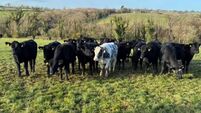
Comprehensive study finds Irish grass-fed cows produce more nutritious milk
Grass-fed milk
Irish grass-fed milk contains more beneficial nutrients than milk from conventional indoor-feeding practices.
Researchers from Teagasc and Food for Health Ireland have discovered that dairy cows who operate on an Irish grass-fed system produce milk with greater beneficial nutrients than milk than those kept using conventional indoor-feeding practices.
A new scientific paper, 'Impact of varying levels of pasture allowance on the nutritional quality and functionality of milk throughout lactation' was published in the Journal of Dairy Science and concluded that pasture-based cows produced milk with higher percentages of omega-3 and conjugated linoleic (CLA) fatty acids compared to cows fed medium and low proportions of grass.
Mark Timlin, a PhD researcher based in the Teagasc Food Research Centre, Moorepark, Co Cork, said: “While grass-based feeding systems are the most common source of dairy produce here in Ireland, the levels of fresh grass-fed to dairy cows in countries such as the United States, Germany, Austria and Denmark is significantly less than in Ireland."
Previous research has shown that purposeful pasture-based, grass-fed feeding systems are seen as more natural and better for the environment, allowing cows to express their natural behaviours by grazing.
This study highlights the nutritional benefits of the Irish grass-fed system by comparing it to what is more commonly operated around the world, whereby cows are housed indoors year-round to maximize the quantities of milk produced.
The research conducted compared the impact of three dairy systems on the nutritional composition and properties of milk. These systems included a high grass allowance diet, typical of that operated by Irish farmers, a medium grass allowance diet and a low grass allowance diet most commonly operated around the world.
Researchers discovered that cows who grazed on an Irish high grass allowance diet produced milk with significantly more beneficial nutrients, compared to cows fed a medium, or low grass diet including:
- 83% increase in omega-3 fatty acids, including an improved n-3 to n-6 ratio;
- 141% increase in conjugated linoleic acids (CLA);
- Highest levels of unsaturated fatty acids (including mono- and polyunsaturated);
- Lowest levels of saturated fatty acids.
Dr André Brodkorb, Teagasc lead scientist, commented: “This is the most comprehensive study of its kind, and we are rewarded with very clear information on the different milks produced.
"The high grass allowance diet investigated in this study is typical of the system implemented by the majority of dairy farmers in Ireland, and meets the Bord Bia grass-fed standard for dairy produce”.
Food for Health Irelands’ Centre Director, Dr Nessa Noronha added: “These results mark part of a wider piece of research, which investigates the composition, functionality and sensory characteristics of Irish grass-fed dairy and the impact of the cow’s diet on human health.
"Irish grass-fed is a claim that is gaining more resonance with consumers as it is perceived as more natural and sustainable.”

BLACK FRIDAY
Already a subscriber? Sign in