Converting to organic sheep farming - the practical implications
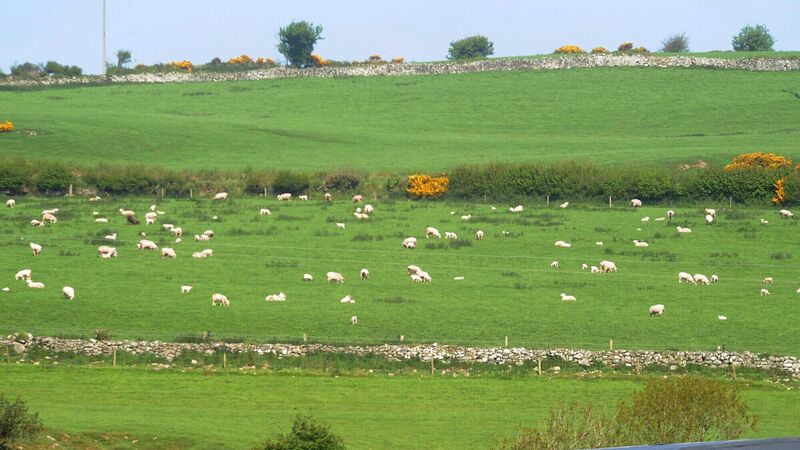
Approximately 2,000 farmers will commence conversion to an organic sheep system this year. Picture: Denis Minihane.
The increase in payment rates for the Organic Farming Scheme 2023, coupled with a reduction in the minimum stocking rate required, has led to an almost doubling of organic farmers in Ireland.
Approximately 2,000 farmers will commence conversion to an organic sheep system this year.
The most suitable holding to produce organic lamb is one with livestock and arable farming. The cereals grown on the farm will provide concentrate feedstuff and a source of straw.Â
A large number of hill sheep farmers are converting to organic farming this year; arable crops are rarely an option for them. In all cases, it is important to check if establishing an organic enterprise will have any implications on the ACRES payment for your farm.
The first step is to have your soil analysed and optimise pH where necessary. Target slurry and FYM to maintain phosphorous (P) and potassium (K) indices with the option to import slurry from non-organic sources.
Incorporating white and red clover into suitable swards will fix nitrogen naturally, but you must have the fencing infrastructure to correctly manage these swards after establishment. For hill sheep farms, commonage can be grazed by sheep once they are properly hefted, but the commonage area is not eligible for payment under the Organic Farming Scheme.
The preferred option for housing organic ewes is straw bedding – it can come from non-organic growers. A higher floor space allowance of 1.5m2 per ewe and 0.35m2 per lamb is required. Sheep slats can only be used where an equal or greater sized area of straw-bedded lieback is also available.
On sheep farms with a cattle enterprise, think carefully about the investment required to make existing cattle housing compliant with organic standards. Out-wintering is permitted once carried out extensively, and providing that no poaching occurs.
The conversion plan includes a flock health element to be prepared in consultation with a veterinary surgeon. It must outline a system that is less dependent on veterinary medicines.Â
The plan will take account of farm history and will describe how to tackle health issues, while conforming to the organic farming standards.
The withdrawal periods are at least double those indicated by manufacturers when used on organic farms. Some meat processors require three times the standard withdrawal period.
As with all sheep systems, a defined breeding policy is key. The target should be to breed replacements from within the flock.Â
However, in an organic system, with a derogation from the Organic Certifying Body (OCB), up to 20% ewe replacements (that have not previously lambed) can be bought in from non-organic sources. Rams may also be sourced from non-organic breeders.