Waterford farmer among the first to get AgNav emissions audit
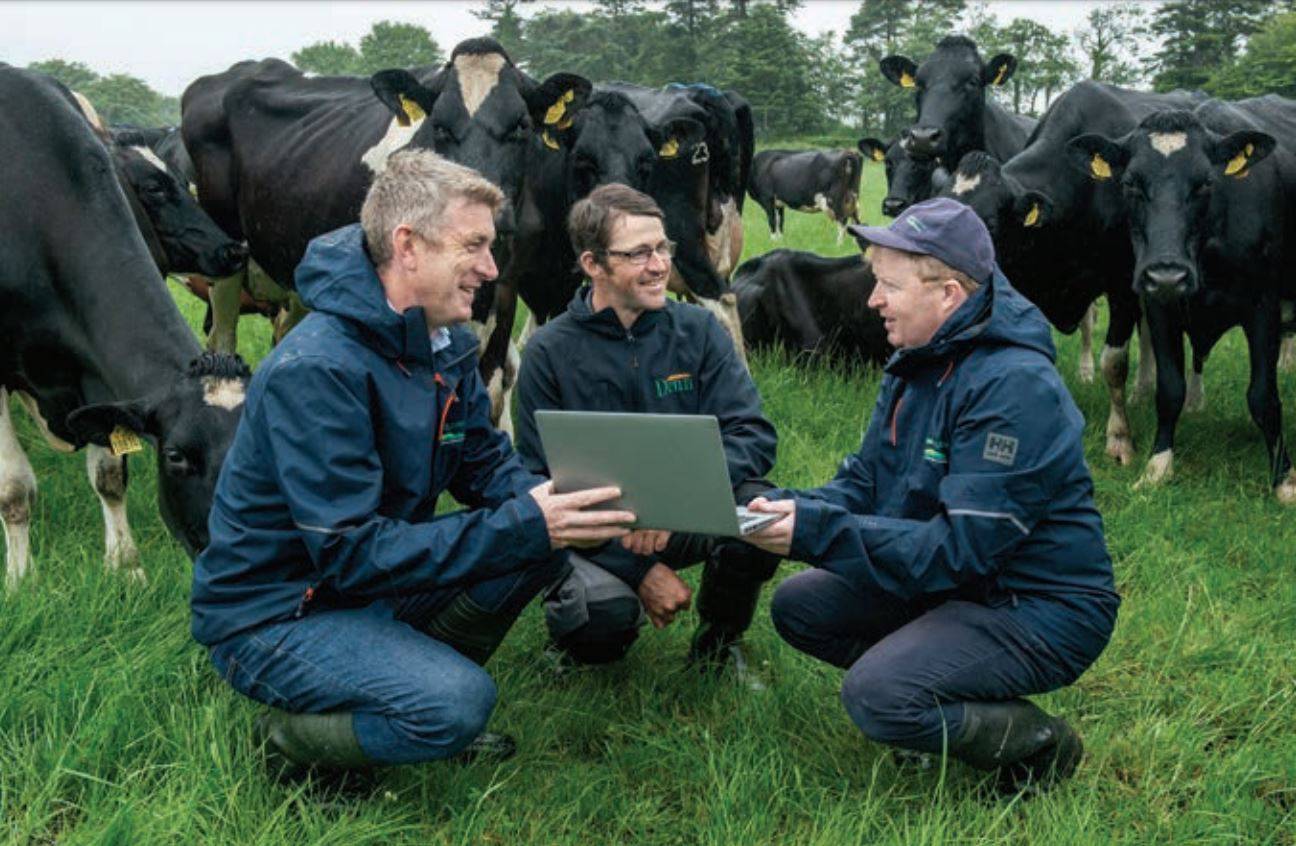
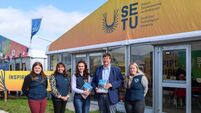
Eamonn Lynch, dairy advisor, Dungarvan; PJ Brennan, dairy farmer from Ballysaggart, Lismore, Co Waterford, and Dr Seamus Kearney, Teagasc, climate action and sustainability advisor Dungarvan, discussing PJ’s farm emissions figure as generated from AgNav.
Milk producer PJ Brennan at Lismore, Co Waterford, is one of the few Irish farmers who knows how much greenhouse gas emissions his business emits.
PJ told Teagasc, “AgNav showed that our farm was generating 428,426kg of carbon dioxide equivalent before we started to take on any mitigation actions".
AgNav calculates farm emissions using data from the Irish Cattle Breeding Federation (ICBF), Bord Bia, and Teagasc.
Some Teagasc advisors and farmers have been trying it out, and it will be further distributed in the next year through regional workshops. From 2024, it is targeted that 10,000 farmers will utilise AgNav each year.
Initially, AgNav will be available to all Irish beef and dairy farmers who sign up for the free Signpost advisory programme (in which 21 dedicated Teagasc advisors help farmers to achieve the 25% emissions cut target for agriculture).
Farmers stay in control of the data in AgNav that relates to their farm.
PJ said: “I liked getting the emissions figure for my farm, as it allows me to see where I am on the start of my journey to reduce farm emissions”.
Farming 42 hectares and milking 70 cows, PJ delivered 549kg of milk solids per cow to Tirlán in 2022. PJ is a member of the Ballyduff-Ballysaggart dairy discussion group which has taken part in a Signpost advisory workshop.
"I used 205kg of nitrogen per hectare in 2021, which is my latest AgNav figure, and 79% of that nitrogen was in the form of protected urea. It was great to be able to see that, on my farm, that this one simple action reduced my farm emissions by 6.8%, while at the same time saving me thousands of euro, compared to using CAN fertiliser", said PJ, who now aims for 90% of chemical nitrogen spread to be protected urea, to reduce emissions further.
His other goals include reducing chemical fertiliser by 20% (through correcting lime, P and K levels, and incorporating clover and multispecies swards); continuing with 100% low emission slurry spreading (75% in the spring, the remaining 25% after first-cut silage); and increasing the grazing season by ten days. Combining these actions is calculated to reduce PJ’s farm emissions to 378,921kg, a reduction of 11.5%.
According to PJ: “These are all actions that will save me money as well as being good for the environment".
Teagasc Director of Knowledge Transfer Dr Stan Lalor has explained that knowing their carbon emissions number gives farmers a baseline on which to act.
“Knowing your number is really important”, he told Cathal Somers and Deirdre Glynn, presenters of Teagasc’s The Environment Edge podcast.
Dr Lalor explained: “Some measures are relatively straightforward. Going out and buying a different kind of fertiliser, for example, is something which is relatively easy to do, or spreading your slurry a different way. But other things are more complicated. They take trial and error by farmers, things such as clover adoption by farmers, reducing nitrogen.
"Those have impacts across the whole farm and advisory support, and industry support, are there to help farmers to take that on and guide them and support them in their journey to making progress. That’s what the Signpost Advisory Programme is doing.”
Also speaking on the podcast was Pete O’Hanrahan, a dairy-calf-to-beef producer in partnership with his father Thomas at Thomastown, Co Kilkenny.
Pete purchases 220 to 230 dairy-bred calves at two weeks old and rears them to slaughter.
Working with his Signpost Climate Advisor, Patrick Dunphy, Pete has learned how replacing standard urea fertiliser with protected urea, and reducing the amount of CAN fertiliser used, he has reduced emissions by 3.5%.
There was a 7.5% total reduction, when low emissions slurry spreading was also factored in to AgNav.
The O'Hanrahans have their own dribble bar for 100% low-emission slurry spreading.
No chemical nitrogen is applied to the red clover and at certain times of year, chemical nitrogen is reduced on the white clover sward.
They also have a programme in place to apply lime annually. They have reduced the age of slaughter through good grassland management, selecting appropriate calves, and attention to animal health. They measure grass weekly, for grazing planning.
Signpost Climate Advisors Dr Seamus Kearney and Patrick Dunphy explained how they visit Waterford and Kilkenny farmers, convene discussion groups and workshops, outline what the new AgNav programme entails, how participants can reduce emissions, and the financial benefits of doing so.
A plan is drawn up for each participating farm, with three or four actions to be implemented over three years. Patrick said switching to protected urea is a key move in lowering emissions, as well as reducing farm costs. Clover and low-emission slurry spreading are also very effective. But soil fertility must be right for clover, and lime can play a key role in this.
Once the plan is in place, the advisors can do follow-up one-to-one visits.
Dr Kearney said the aim is for the Signpost Advisory Programme to reach 54,000 farmers by 2030 (500 farmers per advisor).
He said farmers already signed up are more than happy to take on three or four actions. “It’s a free service. It’s available to all clients”, he explained.
Data for Agnav comes from Bord Bia audits (which record fertiliser usage), and farm figures known to ICBF, combined with how and when farmers spread slurry.
Currently, the focus is on interventions related to slurry, fertiliser, and the length of the grazing season. Further actions will be emphasised as time goes on.
“The plan long-term is that there will be euro figures beside those emissions figures”, Dr Kearney said.
"Get out as much of your nitrogen as you can in the form of protected urea.
"Message No 2 is we try to reduce the amount of chemical nitrogen by improving our lime, our P and K, incorporating clover, and using low emissions to retain more of the nitrogen in the soil.
"Message No 3 is calving heifers that bit earlier, at two years of age, maybe reducing your replacement rates a little where herds have become stagnant.
"And message No 4, we need to look at the 5% of the poorest stock on any farm, are they adding any value, or only extra work? Going to 90% protected urea, cutting fertiliser 10 or 20%, low emission slurry spreading, slurry in the spring, can together reduce emissions 8% to 10% on many farms (25% needed by 2030)."