Small blemishes, oversizing, unusually shaped or discolouration — little quirks, at worst — but their presence on fresh produce can be enough for them to be deemed worthless.
With around a third of the food produced globally for human consumption lost or wasted, it would appear insensible that produce is discarded in volumes because of such quirks.
In most cases, these quirks just result in them not meeting cosmetic standards consumers are accustomed to, rather than being inedible.
This significant wastage of “wonky” produce before it reaches the shop shelves has become a part of the wider discussion this year as the Irish horticultural industry continues to decline.
Cosmetic standards
The attention it has gotten includes that from political figures, with Fine Gael senator in Cork South West Tim Lombard previously calling on the Oireachtas committee on agriculture, food and the marine to discuss the issue with retailers and industry stakeholders.
Mr Lombard has said that retailers must not be allowed to dismiss fruit and vegetables that do not meet cosmetic standards as food inflation and waste continues.
According to Mr Lombard, it is estimated that around 30% of produce is not “even making it to the supermarket shelves” because it does not meet the cosmetic standards required.
“It’s absolutely bizarre,” Mr Lombard told the Irish Examiner.
“That 30% of product is effectively 30% of the land, of the fertiliser, of the labour, and the pesticides, and because it’s not appropriate regarding their visual look it, doesn’t make the food chain.”
With less than 200 horticultural growers left in Ireland, down from over 1,200 in the 1980s and further contractions expected this year, Mr Lombard said this is “because of the power in particular of the multinational supermarket chains over the last decade”.
He said supermarkets must “be proactive in making sure that all this product gets to the actual chain”, noting the positive impacts it would have on agriculture and society.
'Not terribly pretty'
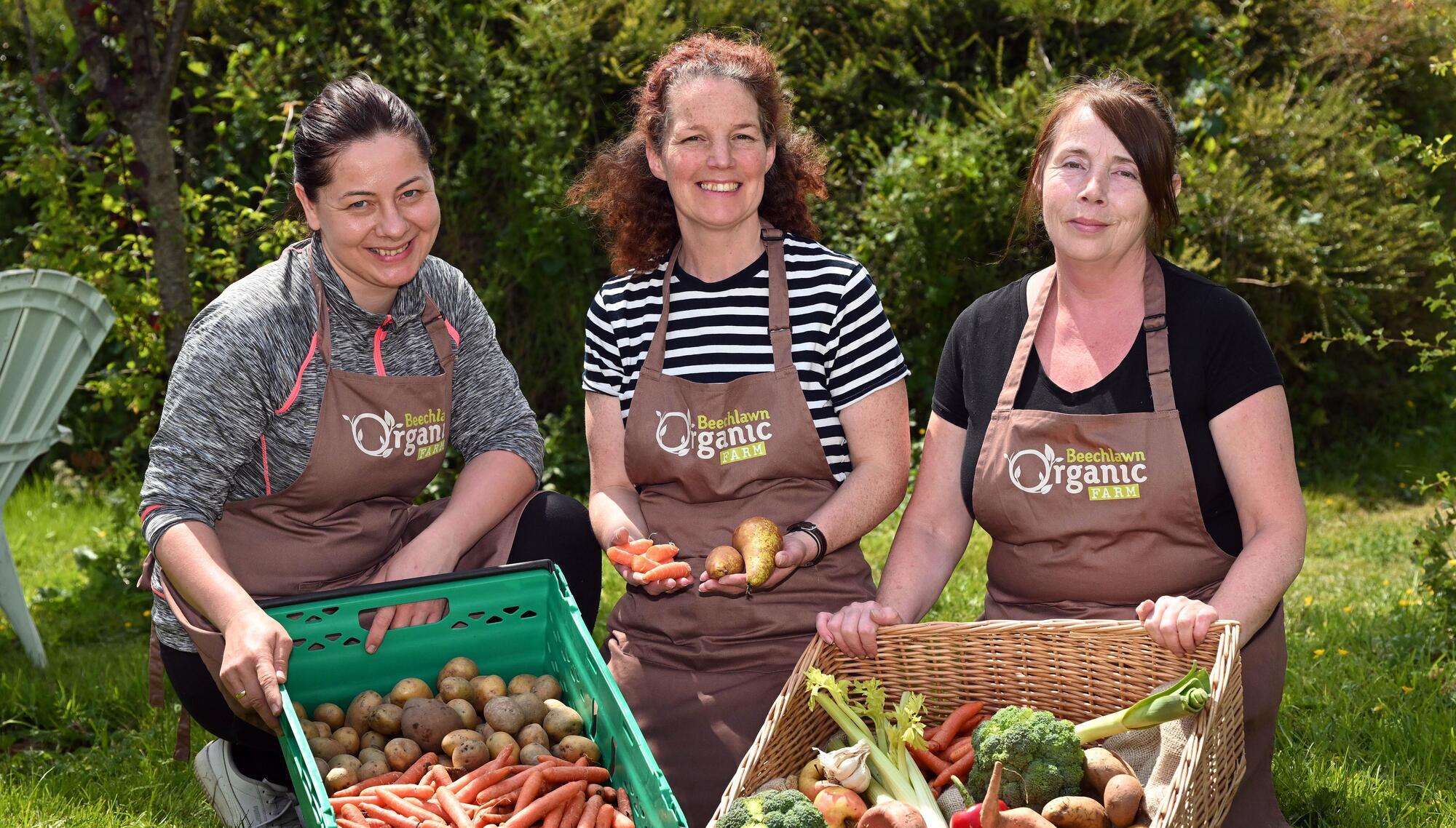
In Ballinasloe, Co Galway, is Beechlawn Organic Farm owned by Padraig Fahy and Úna Ní Bhroin, which sees great purpose in selling produce that does not meet the typical aesthetic standards, as it gives customers ‘wonky veg box’ and ‘wonky veg bag’ offerings.
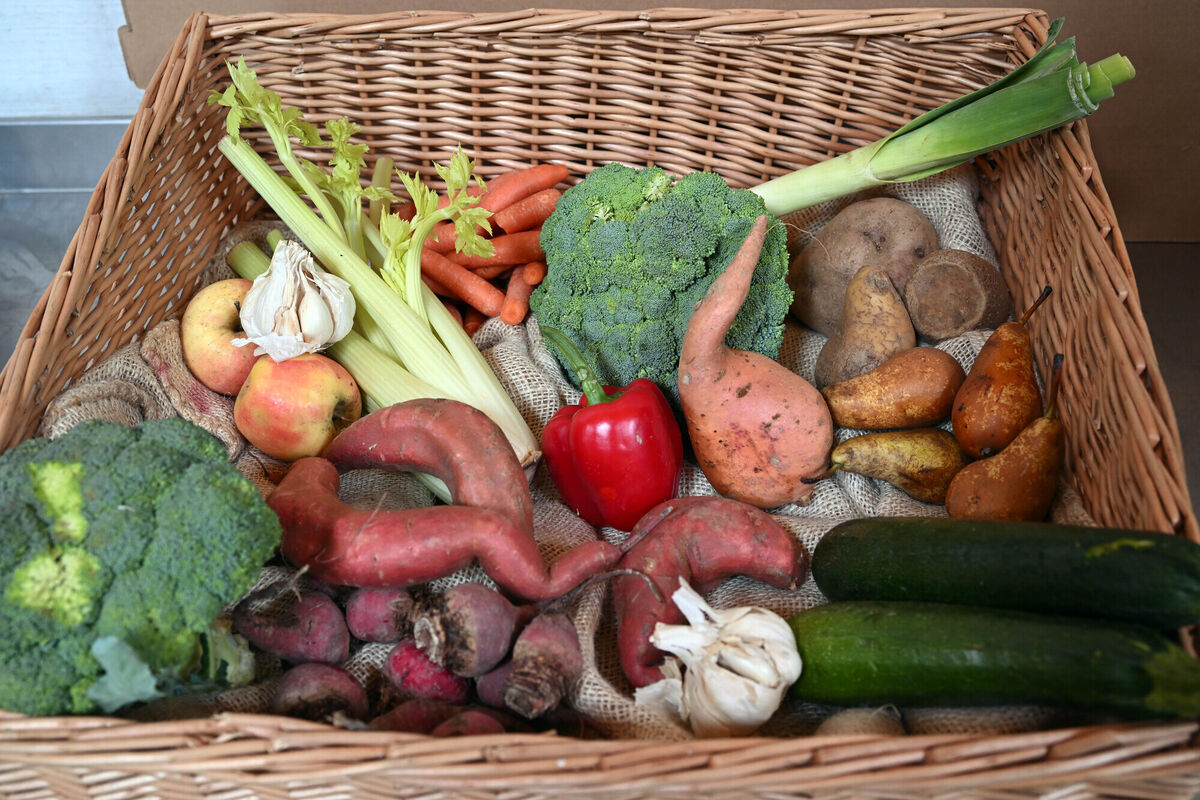
The 8kg box for €10 and 1.5kg bag for €2 contain a mix of second-grade items, in a bid to keep waste to a minimum and give value to customers.
Beechlawn Organic Farm’s veg box manager Trish Masterson said that the produce, which is all organic, comes from two sources — what is grown on the farm, and what is imported.
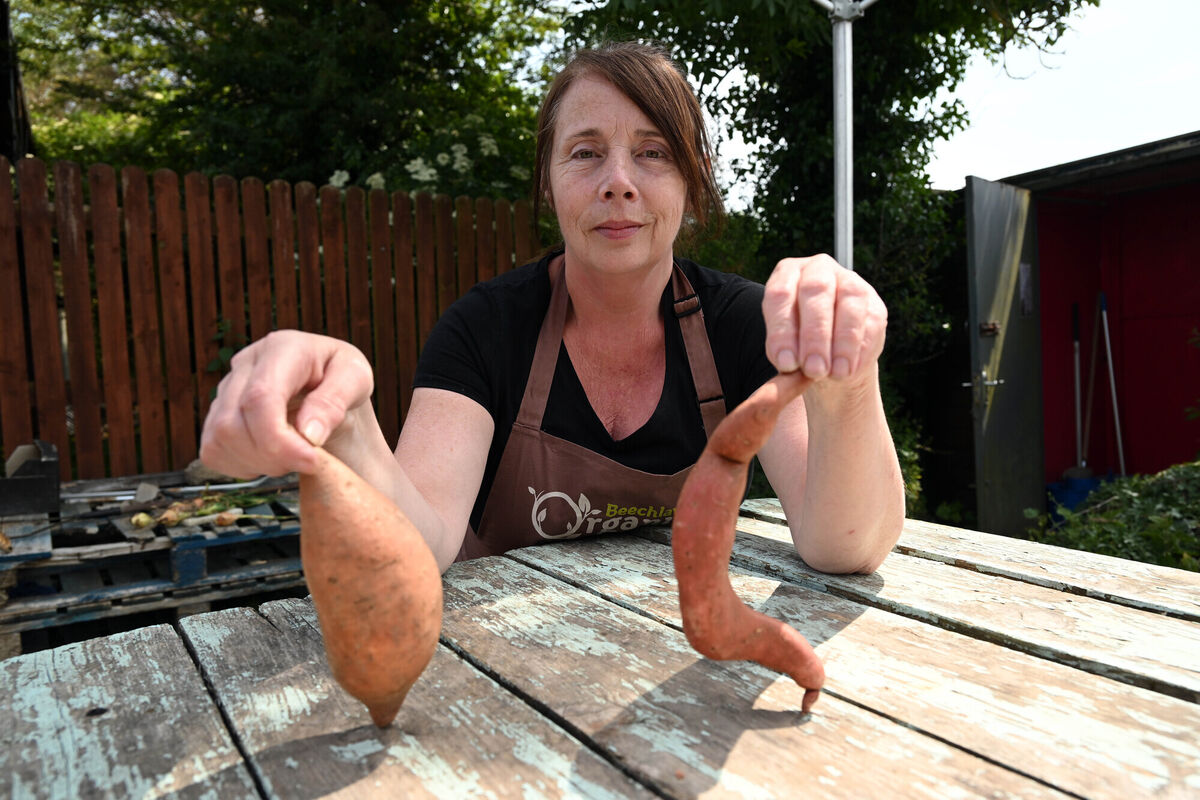
The wonky produce is “anything that’s on the small side, that’s super large, anything that’s slightly deformed or twisted” for example, Ms Masterson explains.
“We could get sweet potatoes, and you’d like them to be easy to peel and deal with. We could get some that are really long and really thin and quite twisty,” she says.
“Sometimes there can be a bit of discolouration too, but it’s always 100% edible; it’s just not terribly pretty.”
Does pretty equal palatable?
“I suppose everybody has their own personal opinion; I would think it’s to do with conditioning,” Ms Masterson says.
“Like most people when you go to the shops — I know we do go to the country markets and buy off the stalls — but 99% of people will go to Tesco or Lidl, Aldi, and we’re used to seeing things presented in such a way.
“I think a lot of it is conditioning — your tomatoes should be a certain shade of red, a certain colour.
“And it’s sad because it just creates so much waste; we need to be more open about things.”
Wonky veg retailing
Beechlawn’s idea for selling wonky produce packages came about a few years ago during a peak season, Ms Masterson explains.
“We were busy, and we were importing and growing a load of stuff, and I was seeing parsnips, and some of the potatoes would be very misshapen,” she says.
“I’d be saying that it’s not good enough to sell to people when you’re charging them premium price, and they have their expectations.”
She thought that there was “too much” of this wonky produce to waste and that the farm had “to find an avenue for it — so [she] started the wonky bag”.
“It’s cutting down on loss of revenue for us as a business, and is still giving our customers 100% organic product, but at a reduced price,” she continues.
A lot of our customers are very ethical, they’re into the environment and their carbon footprint, so it kept with our ethos.
“So we said we’d try the wonky bag, and it took a while to take off — but then it really took off.
“I thought ‘wow!’, and people would be ordering maybe two or three of them.”
Soon after came the wonky box for a tenner, in which “you never know what you’re going to get”.
“It changes depending on the season. July and August, peak harvest — so you’ll be getting a lot of all our stuff, parsnips, courgettes, cucumbers.”
'Nature has a sense of humour'
The contents of the box will vary greatly.
“No two are ever the same. Nature has a sense of humour, it doesn’t always grow to our standards,” says Masterson.
“It’s perfectly edible fruit and veg. It’s an absolute crime to throw it out.”
For produce that is deemed genuinely not suitable for the bags and boxes, the farm finds other outlets.
“We have two farmers who come to the farm at least twice a week, and they collect it,” Ms Masterson explains.
We have one man who brings it for his horses, and we have another man that brings it for his donkeys.
“Anything that we don’t think is good enough for that, we actually compost, we put some brown cardboard through it.
“When it degrades down, we actually recycle it and use it as a natural fertiliser on the land.
“So we try and find as many different avenues as we can.”
An ethical decision
A lot of Beechlawn’s customers are “very loyal, they return weekly”.
Many regulars will make their standard purchase, and “nine times out of 10, they’ll throw in one or two wonky bags”.
“It’s an ethical thing, they don’t want to waste, it’s a way of them feeling good that they’re making their contribution, doing something good.”
Some weeks, the farm could sell 40 or 50 of them, other weeks it could be much less.
People are nearly always happy with the standard of produce — and have been given the warning beforehand that the fruit and veg could be “small, big, bent, a bit strange looking”.
Ireland’s National Food Waste Prevention Roadmap 2023-2025 sets out how the country is to dramatically cut down on food waste by 2030.
The roadmap outlines actions that can be taken over the coming years which will set Ireland on course to reduce food waste by 50% by 2030.
The strategy was launched with FoodCloud, which connects businesses that have excess food with charities and communities who can put it to good and safe use to help households in most need.
The Environmental Protection Agency estimates that Ireland generated about 770,316 tonnes of food waste in 2020.
Households were the biggest producers of food waste, accounting for 31% of the total in 2020, followed by the food and beverage manufacturing and processing sector, which accounted for an estimated 29% of all food waste produced.
The remainder came from restaurants and food service (23%), primary production (9%), and retail and other distribution of food (8%).
With the high level of criticism the retailers, in particular, receive for their practices in this space, the Irish Examiner contacted them to learn about their response to growing concerns that imperfect produce is simply being wasted.
Retailers get on board
In February, Lidl launched its ‘Waste Not Fruit and Veg’ boxes, in an effort to help “combat food waste and offer customers even more value”, a spokesperson for the retailer said.
“Our Waste Not boxes are the ideal solution for those looking to achieve a balance of eating a healthy diet while also saving money,” they said.
“The boxes, priced at just €3, contain at least 5kg of mixed fruit and vegetables from the store shelves.
“The contents of the boxes come from multi-packs where some product has become slightly damaged and removed, and the remaining items, which are perfectly good to eat, are then used to make up the Waste Not Fruit and Veg boxes.”
According to Lidl, demand has been “consistently high” for the boxes, and since their introduction, around 52,000 have been sold, saving an estimated 260,000kg of fruit and veg from going to waste.
Any leftover boxes are given to local good causes through Lidl’s surplus food redistribution partnership with FoodCloud, the retailer said.
Aldi Ireland’s group buying director John Curtin told the Irish Examiner that earlier this year the retailer became the first one to partner with food surplus app Too Good to Go, as part of Aldi’s commitment to reducing food waste by 500 tonnes in 2023.
Through this, Aldi Ireland said that it makes ‘surprise bags’, which contain a range of products that are approaching their sell-by or use-by dates, or which would otherwise go to waste.
“These bags are also just a third of the price, at €3.99 each,” Mr Curtin said.
To date, Aldi has provided over 50,000 surprise bags to customers.
“As part of that commitment, and to make groceries even more affordable, perishable products such as bread, meat and fruit and vegetables are also marked down by 75% before stores close on their last day of life.”
Working with suppliers
Tesco Ireland’s fresh category director John Brennan said that the retailer works “closely with our fresh suppliers and, in turn, growers, to take as much volume of the crop as we can to avoid food waste”.
“Where this is not possible, we work closely with our suppliers to redirect these crops into the production of prepared products [ie ready meals] for Tesco,” Mr Brennan explained.
In recent weeks, Tesco has supported suppliers with “over 10 temporary specification changes across all produce categories”, with this including “melon variants where weather factors impacted appearance, some peppers, satsumas, and Irish scallions where sizing was off normal specification”.
“As we close and enter different seasons, we often find specification changes are most frequent,” Mr Brennan said.
For example, we recently supported our cabbage growers to take extra-large winter cabbage, which was coming to the close of its season, whilst early season sweetheart cabbage was slightly behind on sizing.
“So our teams came together to come up with a solution to prevent unnecessary food waste.”
A spokesperson for SuperValu said that the retailer is “committed to reducing food waste while preserving the safety and premium-quality standard”.
“Waste reduction is an important element of our sustainability agenda, and as such, we have already extended the shelf life of 20% of our fruit and vegetable products while also removing dates from certain fruit and vegetable products in our own brand range,” the spokesperson said.
“In addition, a further 20% of our fruit and vegetable products are sold as loose and do not have dates applied.
“In line with best practice, we retain best before dates on a number of perishable fruit and vegetable products such as fresh berries to provide our customers with the quality they expect.”
Sweet taste of avoiding food waste
Many home bakers during the covid pandemic will have learned that bread was a good way of using up some overripe bananas.
But for one business owner on a mission to save tonnes of fresh produce from being wasted, gelato was the answer instead.
Through the award-winning Cream of the Crop brand of products including gelato and banana snacks, chef Giselle Makinde estimates she has saved 27 tonnes of goods from being discarded.
Cream of the Crop’s gelatos use “rescued surplus and imperfect ingredients”, and despite them being “perfectly good enough to be eaten, would otherwise have ended up in landfill due to a fall in demand following covid and the closure of cafes and restaurants”.
The produce is collected on a weekly basis from local growers and producers and, where possible, the company tries to use 100% of an ingredient, including the peel and seeds.
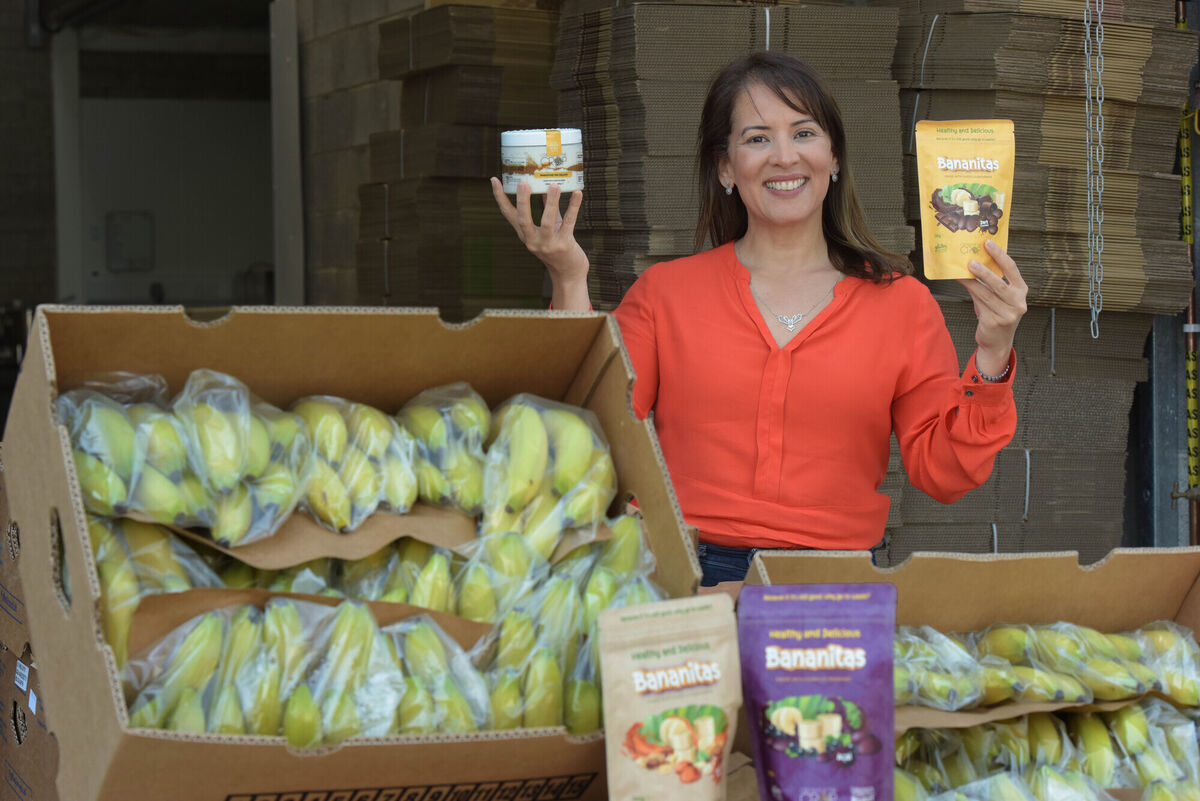
Initially, the idea was just to use fruits that would otherwise go to waste, but then it “transformed into so much more”, as Ms Makinde encountered what she describes as a “food system that is broken”.
“Once you start seeing all the fruits and vegetables that just because they’re wonky, they are not going to be sold in the supermarket… it just opened my eyes to much more problems,” Ms Makinde told the Irish Examiner.
One of the reasons that my business grew so fast was because of the amount of food that would have been wasted.
“I get so much food in, and I have to discover how I’m going to transform this into another product and sell this.”
Gelato
In her base in Portmarnock, Co Dublin, the flavours created range from banoffee pie, to rum raisin, to strawberry oatmilk — but why did Ms Makinde choose to focus on gelato as her main product?
“I love Italy, and when you realise the difference between gelato and ice cream, it made more sense for me with my idea,” she explained.
“First of all, there’s less fat content in gelato, and people are looking for healthier options. So a product that has more fat, it’s not ideal.
“Secondly, the fat coats your tongue and then you don’t feel as much of the flavour. I don’t use any artificial colouring or flavouring, I use all-natural, but it means the flavour is not as strong so I need to be sure to enhance it.
“Also, you eat gelato at a warmer temperature than ice cream. Again, if you eat something at a warmer temperature, you’re going to feel more of the flavour.”
Sustainability
As passionate about food as Ms Makinde is, she is incredibly passionate about sustainability.
Along with the need for companies to take responsibility and tackle food waste, Ms Makinde said that consumers need to “change small behaviours”, and choose to be more open about what they consume and who they support to produce their food.
“Look at the small food businesses like mine using waste product in a different way; you buy a product that there is a story behind, you’re buying a concept that if it multiplies, it will help us to be in a better place in a few years,” she said.
“There’s no planet B; we need to do something fast.
“There’s a lot of work to be done, a lot of education. What is the difference between a banana that doesn’t have the same shape as most in the supermarket? It doesn’t taste different.”