Source of Ash Dieback disease in Ireland remains unknown
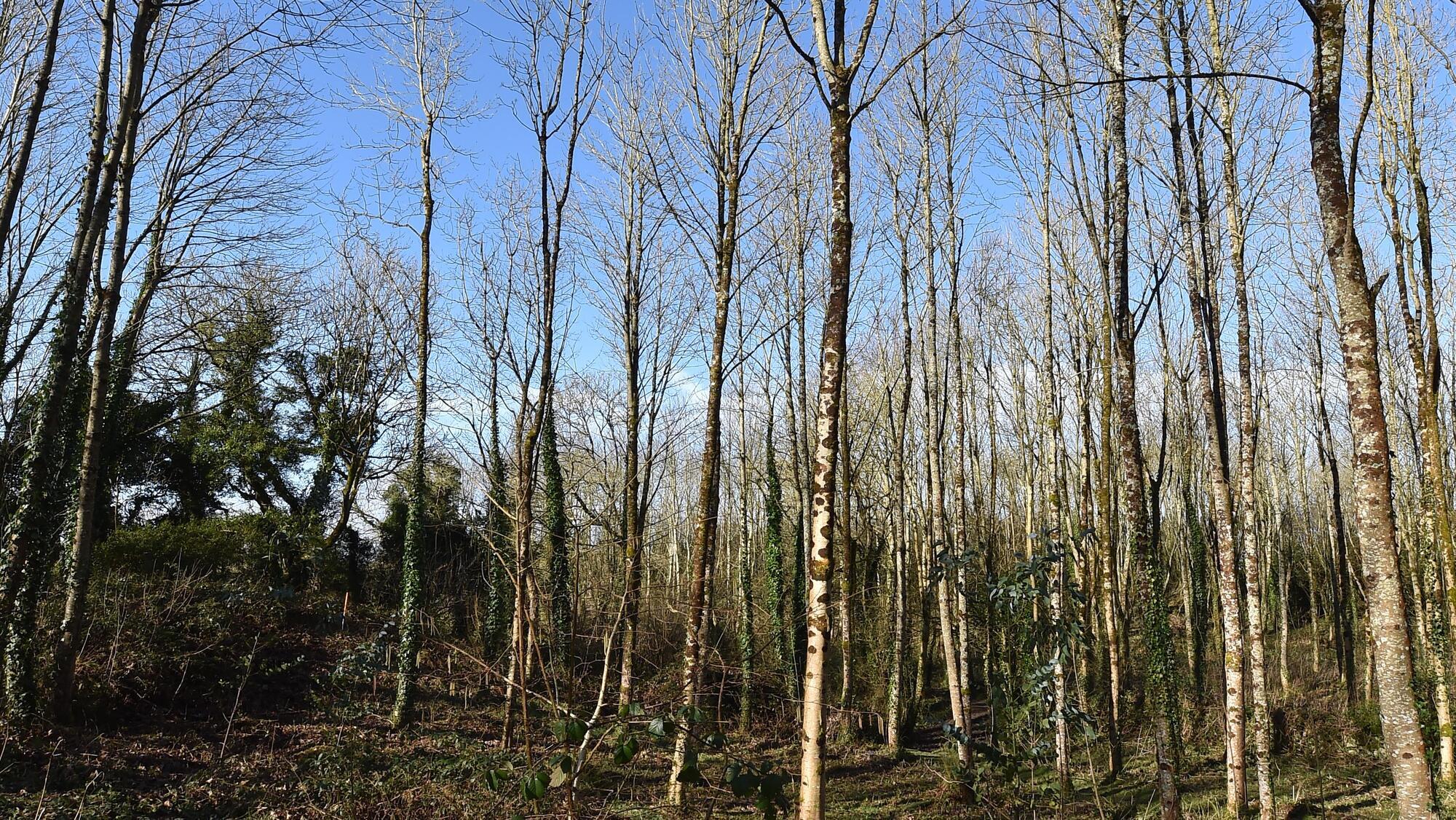
It is likely that Ash Dieback disease was introduced into Ireland on infected plants for use in either forest, farm or roadside planting. File Picture: Dan Linehan
Agriculture Minister Charlie McConalogue refused in the Dáil last week to name businesses, importers and distributors associated with the first finding of ash dieback disease in Irish trees.
In October 2012, the disease was first found in Ireland, at a Co Leitrim forestry plantation site which had been planted in 2009 with trees imported from continental Europe.
Ash dieback is now widespread and has been found in 34,395 hectares of Irish forest, according to the National Forest Inventory completed in 2022.
In 2012, the late Shane McEntee, Minister of State at the Department of Agriculture, Food and the Marine, explained in the Dáil that active monitoring by the DAFM for the disease continued since 2008, along with inspections of ash imports at ports, importers' premises, nurseries and planting sites.
The Co Leitrim site where dieback was confirmed was established in 2009, planted using material from a consignment of 30,000 ash saplings imported from continental Europe. The consignment was used in 11 separate sites throughout Ireland. Ash trees planted on the 11 sites in question were destroyed by cutting and burning 30,000 trees and several thousand adjoining trees, with the cooperation of forest owners and contractors. Later, laboratory results confirmed that four of the 11 sites had the disease.
Last week in the Dáil, Agriculture Minister Charlie McConalogue was asked by Dún Laoghaire People Before Profit-Solidarity TD Richard Boyd Barrett if he could specify the importer and distributor of the 30,000 ash plants infected with ash dieback.
Minister McConalogue said the exact origin of ash dieback disease in Ireland, or when it was introduced, is unknown, but it is likely that the disease was introduced into Ireland on infected plants for use in either forest, farm or roadside planting.
He emphasised that a first finding is not considered proof of the origin of the disease in Ireland.
The Minister said, "Apart from the fact that these businesses did not do anything illegal in importing and distributing imported trees, my Department relies on information from members of the public and from businesses in its role in tackling the risks of introduction and establishment of harmful pests and diseases.
"Publishing their names may also be harmful to their reputation among the wider public."
Ash is important in the Irish landscape and as a raw material for hurley manufacturing.
There were 15,897 hectares of grant-aided ash planted between 1990 and 2013, representing more than 4,000 separate forestry applications. It is feared that only 5% of the ash trees we have now may survive into the future.
The planting of ash has been supported by the Department under the afforestation scheme and the native woodlands scheme. The establishment grant available was up to €4,700 per hectare, followed by an annual premium for 20 years of €481 per hectare. A separate grant of €750 per hectare was available for thinning and tending of young ash forests.
With ash used for an estimated 10% or more of all new grant-aided planting, an estimated 3% of the national forest estate has been under ash.
In 2012, about a quarter of the estimated 2,100 cubic metres of ash wood, required annually to make about 360,000 hurleys, was Irish-grown. At the time, about 200,000 ash plants and 1,600 cubic metres of round wood ash for hurley manufacture were imported annually. Significant quantities of ash firewood were also being imported from Eastern Europe.
In March 2013, a reconstitution scheme was introduced to restore forests planted under the afforestation scheme which suffered from or were associated with ash dieback diseased plants.
However, following scientific advice and evidence that eradication of ash dieback disease was no longer feasible, a reconstitution and underplanting scheme (RUS) was launched in 2020, to incentivise clearing ash sites and replanting with other species.
More than €9 million was expended on both schemes.
Currently, pending EU State Aid approval from the EU Commission for the Forestry Programme 2023-2027, the Interim Reconstitution Scheme for Ash-Dieback is available for applicants with a valid RUS technical approval A new scheme for reconstitution after ash dieback will be launched when the new forestry programme is approved by the EU.
First found here in 2012, ash dieback is widespread in Europe, caused by a fungal pathogen. It is a relatively new disease of ash, first named in 2006, after which it spread rapidly across much of Europe.