'Discounting and degrading' of food 'must be stopped' as loss of growers continues
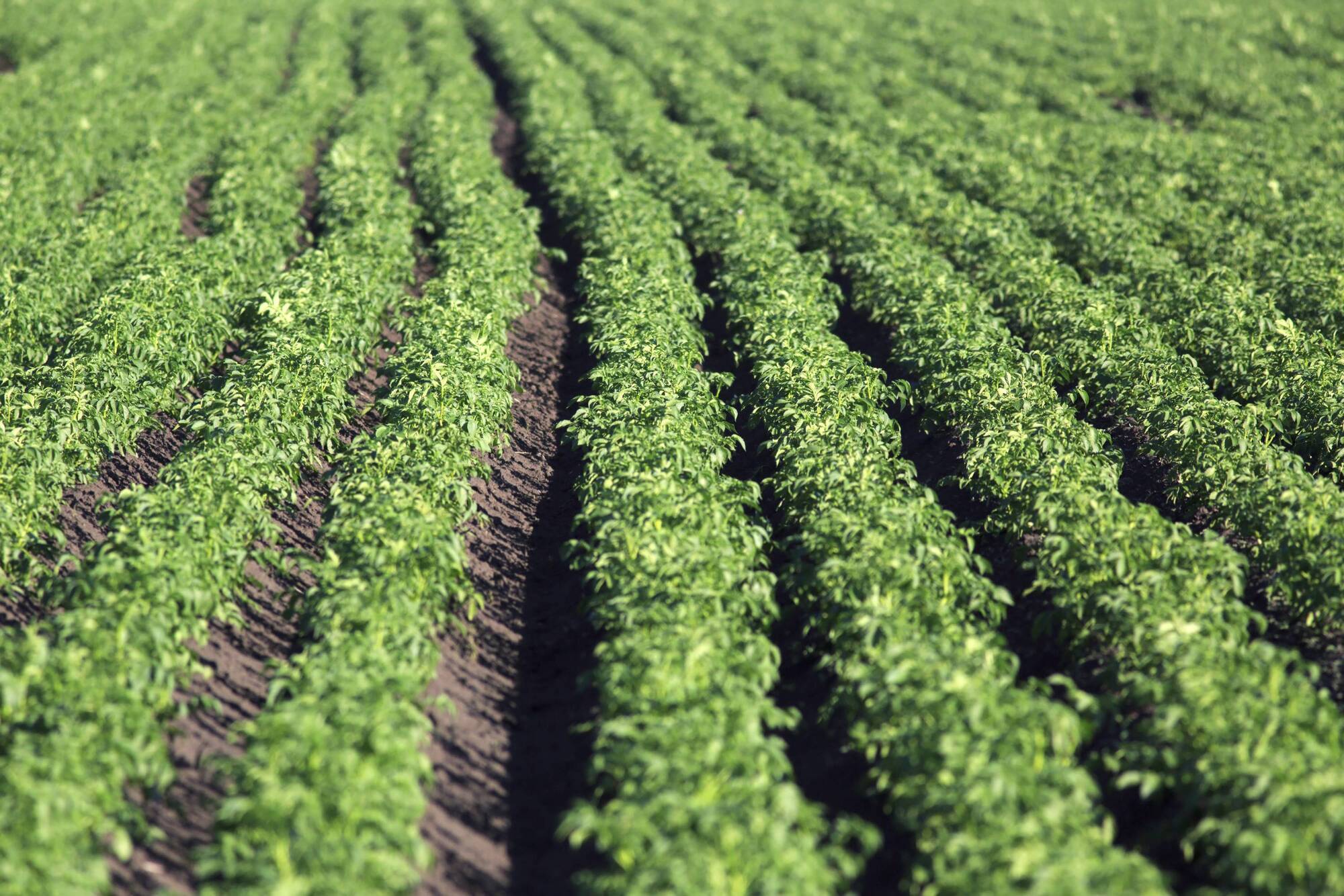
With Teagasc estimating that the area of field vegetables will contract by a minimum of 7% this year, Mr Rushe said that the challnenges facing the horticultural industry are "multi-factorial".
Farmers have said the "discounting and degrading" of food "must be stopped" as they have urged for "legal protection" for their economic sustainability.
The Irish Farmers' Association raised concern this week over the number of field vegetable growers in Ireland dwindling - falling from 377 in 1999, to 165 in 2014, to an estimated 100 now.
IFA deputy president Brian Rushe said this week that unless there is change, "the reality is that our sector will continue to contract, resulting in the loss of family farms".
With Teagasc estimating that the area of field vegetables will contract by a minimum of 7% this year, Mr Rushe said that the challenges facing the horticultural industry are "multi-factorial".
"The rising cost of production and the dominant position of the retail buyers has resulted in the consolidation of growers over the past decade," Mr Rushe told a meeting of the Oireachtas joint committee on agriculture, food and the marine.
"The Irish horticultural sector has always operated on tight margins, however, increases in energy, labour, packaging, and other business inputs have unfortunately squeezed a number of growers out of production again this year.
"Our growers are being squeezed from all sides with the added actions of retailers who are relentlessly pushing down the retail price of their products and embarking on unsustainable discounting to encourage store footfall."
To save the sector, "radical changes" are needed.
"The falling price of food and of fresh produce from the horticultural sector has resulted in squeezed margins for primary food producers and now poses a significant threat to the viability of food production in Ireland," Mr Rushe said in his submission to the committee.
"Our horticulture sector depends on getting a viable return direct from the marketplace as growers in this sector generally do not receive direct payments under the Common Agricultural Policy.
However, over the same period, the average level of consumer prices increased by 12.5%.
"As a result, only a small number of horticulture growers have survived. They have been forced to scale up and they are all extremely vulnerable today," Mr Rushe added.
"This is completely unsustainable and, without a reversal of this trend, will lead to irreparable harm to the Irish horticulture sector."
The IFA is seeking from the Government, at a minimum, the immediate reintroduction of the Horticulture Exceptional Aid Payment.
This scheme is a support measure provided in the form of a once-off payment to growers in those horticulture sub-sectors most affected by the Russian invasion of Ukraine.
The subsectors at most risk and included under this scheme were commercial growers in the glasshouse high-wire crops, field vegetable, mushroom and apple sectors.
The scheme when introduced was worth €2.8m.
The IFA is also calling for a ban on the below-cost selling/procurement of food and that the Agricultural and Food Supply Chain Bill 2022 be amended to address this, along with "legal protection" for the economic sustainability of food producers, who have endured a "consistently declined" price for their produce.
"Retail buyers must be held accountable for the declining number of farmers in these vulnerable sectors of Irish food production that depend on the Irish domestic retail market," Mr Rushe told the committee.
"It is a sad situation when farmers who are producing beef and dairy products, where over 90% is exported, are doing better off world markets than farmers suppling fresh fruit, vegetables, pork and poultry to be consumed here in Ireland.
"The Government is calling for import substitution, however, we cannot even sustain the number of growers we have at present."
He said that better supports are needed for growers, "to avoid any more from exiting the sector and leaving the country even more dependent on imports".
IFA national potato chairman Sean Ryan said that availability of workers is a key issue facing the sector, with staffing issues becoming not just a seasonal issue but one that is all year round.
"Ireland is an outlier in Europe because it has no system for granting seasonal employment permits for foreign workers in sectors such as fruit picking, putting our growers at a competitive disadvantage," Mr Ryan said.
"A bespoke seasonal work permit scheme for foreign workers must be a priority for the sector, in conjunction with a continuous supply of permits from the General Employment Scheme."
The IFA is looking for farm workers to be included in the Critical Skills Occupations List.
The Government has recently announced a review of the list of employers which would be placed on the list.
"Across our farm sectors, there is huge pressure to source workers from outside the EU. At a time of full employment, its increasingly difficult to source farm workers in Ireland and in the EU," IFA president Tim Cullinan said.
"Often, by the time the process is complete the worker, who must be identified at the beginning of the process, could have taken up work elsewhere. Then the farmer is out of pocket and s/he must start a new application from scratch again."
The dairy, pig, poultry and horticulture sectors are those most in need of extra workers, the IFA said.
"The allocation of general employment permits for the horticulture sector is now fully utilised. Although these permits were not ideal for all horticulture sectors, they did provide some level of security for the sector," according to the association.
"The longstanding issue of labour availability is a key constraint for Irish horticulture and rapid changes must be made to ensure the sector has access to a continuous supply of employees."