Achieving compact calving - and why it's crucial to an efficient dairy system
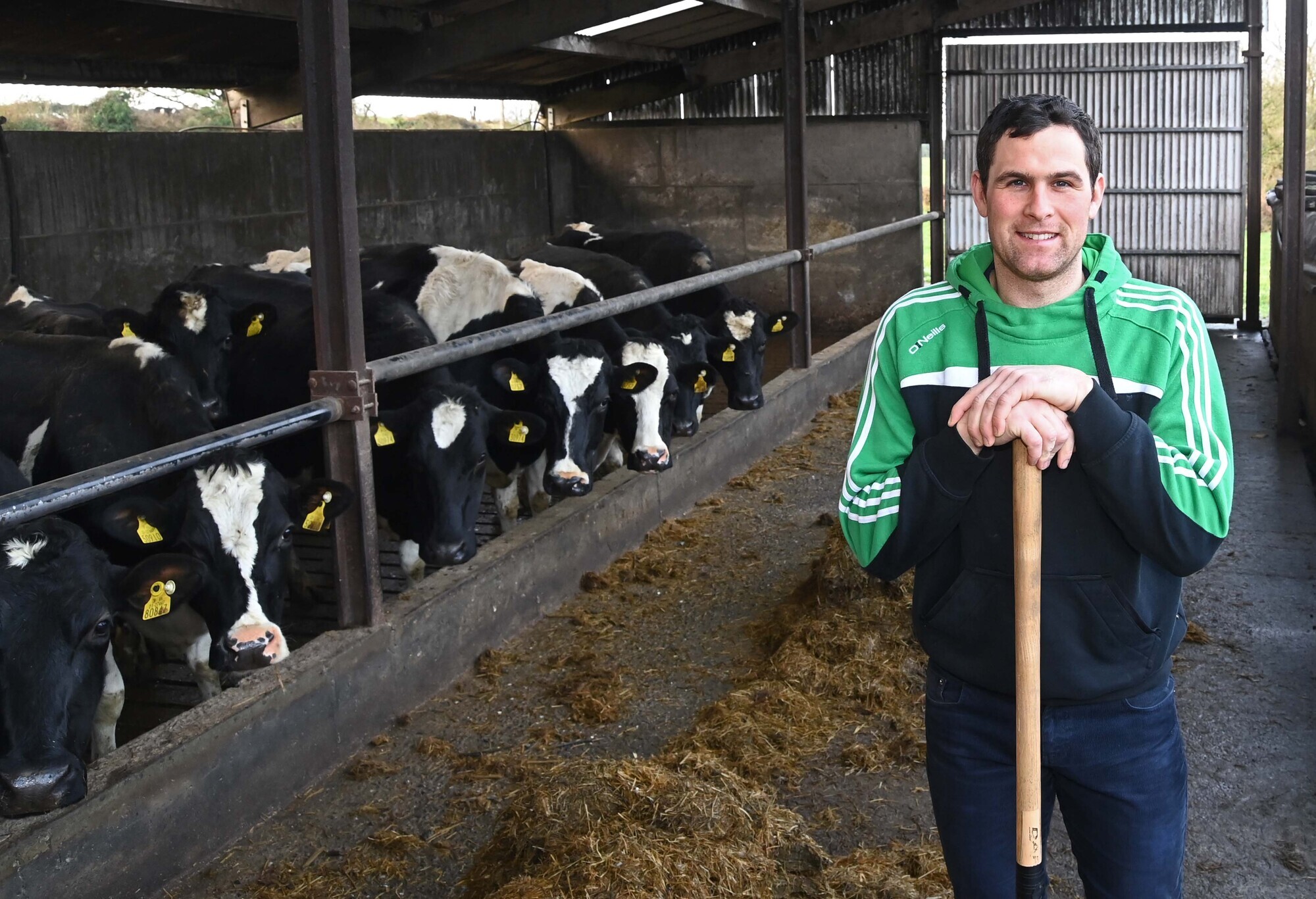
Getting cows back in calf quickly and compacting the calving block has been a key goal for West Cork dairy farmer Peadar O'Driscoll. Picture: Denis Minihane.
Breeding kick-started on May 1, with ten cows served on the first day of breeding. My goal is to have a three-week submission rate of 90%, which is vital for me to hit my target six-week calving rate of 90% next spring.
Compact calving is critical to me so I get the most out of all my cows as they will have a longer lactation leading to more milk and milk solids being produced off a grass-based diet. I use tail paint on the cows and scratch cards on maiden heifers to pick up heats.
I find heifers aren’t heavy enough compared to cows or have the same level of activity to knock off tail paint, so I find scratch cards are ideal for them. Heifers will be AI-ed once and are then put with an Angus stock bull.
As my last calf to be sold went at the end of April, all my attention can be focused on the breading season and grass quality for the cows.
I recorded all heats I saw three weeks before breeding started. I will bring the vet to examine and treat as necessary any cows not seen in heat in these weeks as well as not being served after the first week of breeding.
I have a two-acre paddock sprayed off for reseeding and I will have this hopefully sown by the first week of May. The seed mix I will be using is a permeant grazing mix with all varieties coming from the pasture profit index recommended list. The mix is made up of 60% tetraploid grasses with 2kg of white clover from Drinagh co-op.
I’m including 2kg of clover in the mix, so hopefully, it will ensure that I will have sufficient clover content in the sward so I’ll be able to reduce my chemical nitrogen inputs for this paddock, both reducing my fertiliser costs and reduce my carbon footprint of the overall farm.
Calves are as good as weaned at this stage and eating 2kg of calf ration each. When the weather settles down, I will be letting these out to grass. This will lighten the workload even more giving me more time to focus on other jobs at hand.
Current demand is 44kg and a growth of 41kg. Cows were going into covers of 1700 kgs DM/ha, these high covers were borderline for grazing, but if I cut and baled these paddocks, then I would have run of grass ahead of the cows with current growth rates, so I took the hit on my milk solids and grazed them.
Poor growth meant I had to graze one field of silage ground I was hoping to keep closed. I had it fertilised for grazing in case I ran short of grass and had to graze it, as the original plan was to top dress it with fertiliser and close it up for silage.
Average cow performance for March was 3.79% butterfat, 3.29% protein, SCC averaged 53,000, with all cows able to be milked into the bulk tank and TBC averaged 4.
Silage ground is now fully closed, with the paddock I had to graze fertilised for a silage crop now.
I am following the cows with a little over a bag of 18-6-12 after grazing. Any paddock with at least 20% clover will get little or no nitrogen over the summer.
There is no point in putting in clover and not using it to its full potential by not cutting back the chemical N applications on it.

BLACK FRIDAY
Already a subscriber? Sign in