Need for 'fairness for farmers' within EU corridors highlighted

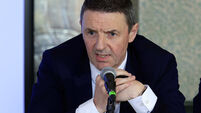
James O'Donnell, president of ICOS has urged the commission and the parliament "to listen to our concerns and work with us in supporting the vital role which our farmers, food producers, and co-ops play across Europe".
The Irish Co-operative Organisation Society (ICOS) has highlighted the importance of "fairness for farmers" within corridors of the EU.
As Ireland reaches 50 years of EU membership this year, ICOS has marked the opening of its Brussels office five decades ago in 1973.
It was a year earlier in January 1972 that then Taoiseach Jack Lynch and Foreign Affairs Minister Patrick Hillery signed the Accession Treaty in the Egmont Palace in Brussels.
The following May, 83% of the electorate voted to join the then EEC.
This came over a decade after Ireland’s first efforts to join the founding six. On January 1, 1973, Ireland along with the UK and Denmark officially took its place as a member.
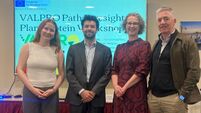
ICOS and the Irish Farmers' Association opened offices the same year to coincide with Ireland joining the EEC. In recent days, both organisations marked the occasion jointly together at a function held in Brussels.
Speaking at the weekend, ICOS president James O’Donnell said the organisation is "very proud" to continue having a presence in Brussels, and being part of Copa-Cogeca.
"As we look ahead, we are entering very testing times for farmers and for co-ops," Mr O'Donnell said.
"Many of the challenges that are coming with force at us are because of legislation being proposed and driven by the EU institutions.
Mr O’Donnell also used the occasion to highlight the importance of fairness for farmers within the corridors of the EU Commission and the EU Parliament.
"We must insist that our voices are heard at commission level, at parliament level, and at council level," he said.
"I urge those from the commission and the parliament to listen to our concerns and work with us in supporting the vital role which our farmers, food producers, and co-ops play across Europe."
Back in 1973, ICOS was known as the Irish Agricultural Organisation Society.
That year, the Irish economy was predominantly an agricultural one, dependent on exports to the UK.
The population was just over 3m and farmers accounted for 25% of the total workforce.
Today, that figure is just around 4%. That is skewed by the fact that, according to ICOS, back then, most farms were small and extensively so.
The ICOS annual report for 1972 states that in that year, 124 dairy co-ops handled 485m gallons or about 2.1bn litres of milk.
By 2023, that figure has more than quadrupled.
The value of milk processed at accession to the EEC was equivalent to about €150m.
The value of Irish dairy exports last year was nearly 50 times that number.
Along with access to the single market, over the past five decades, Irish agriculture and rural development have secured CAP payments of almost €65bn.
ICOS said that climate change and the war in Ukraine are increasingly shaping policy proposals from the EU Commission which are "coming thick and fast", and which will impact food production across the EU until the end of the decade.