'Further flexibility' sought on time to show water quality improvements to keep higher derogation rate
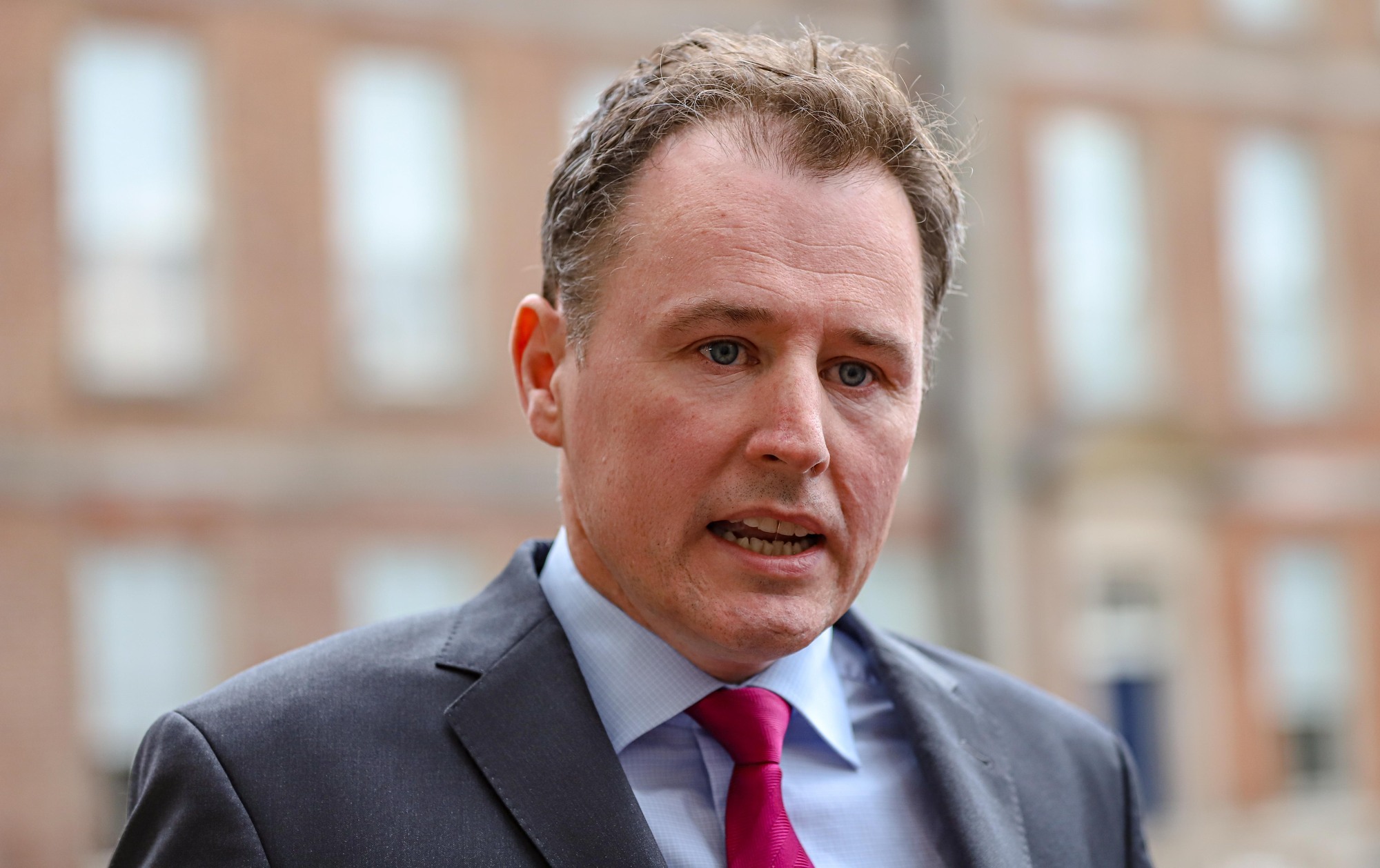
A water quality review required by the European Commission will take place in the coming months. Picture: Damien Storan.
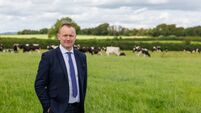
Minister for Agriculture Charlie McConalogue has said he is working to see if Ireland can get "further flexibility around time" to show improvements in water quality.
In March 2022, the Government secured a new nitrates derogation for Ireland covering the period 2022 to 2025.
With that came increased conditionality attached to the derogation.
A water quality review required by the European Commission will take place in the coming months, based on Environmental Protection Agency data.
Depending on the outcome of that review, Mr McConalogue said, it is possible that under the derogation, "at least some of the country" will have to move to the lower maximum stocking limit of 220kg of organic nitrogen per hectare from 250kg.
"At the moment, only Ireland, Denmark, the Flanders region of Belgium, and the Netherlands have a nitrates derogation," Mr McConalogue said this week.
"The Netherlands derogation is being phased out. It will not be granted a derogation after 2025.
"At the end of last year, the derogation for the Flanders region expired. It has not yet sought an extension.
"Denmark’s current derogation expires in 2024."
Based on Ireland's "unique soils, land use, and farming systems within Europe", Mr McConalogue continued, "we can and we will seek to justify our nitrates derogation".
"However, we must at the same time deliver on our commitments in terms of water quality improvements. I believe we can achieve this," he told the Seanad.
He acknowledged the "particular concern" among medium and small farmers on the impact any change from 250kg to 220kg would have on them.
"We had to agree to the mid-term review, and to the fact that 250kg could be reduced to 220kg in certain catchments if water quality was not improving," Mr McConalogue continued.
However, Mr McConalogue cautioned that "there is no guarantee there will be any change in that", and as it stands, "the situation is that it could drop to 220kg in certain catchments if water trends do not improve".
The derogation is "something we will have to prove the case for, and we will have to get the consent of other member states to be able to maintain that derogation after 2025", he added.
Senator Timmy Dooley told the minister that measures in place from 2022 and 2023 "will have had no chance to improve water quality" and therefore will not be reflected in the interim review, which he described as being "flawed".
Over the four-year period from 2017 to 2021 in Ireland, the dairy herd expanded by more than 300,000 head. An average additional 30,000 tonnes of nitrogen were being used nationally per year.
Water quality also declined in certain areas, particularly in the south and south-east, the minister explained.
"We must all work together across the entire agri-food sector to improve Irish water quality to secure the possibility of retaining our nitrates derogation in the long term," he added.