Weather stress in calves and Coccidiosis prevention
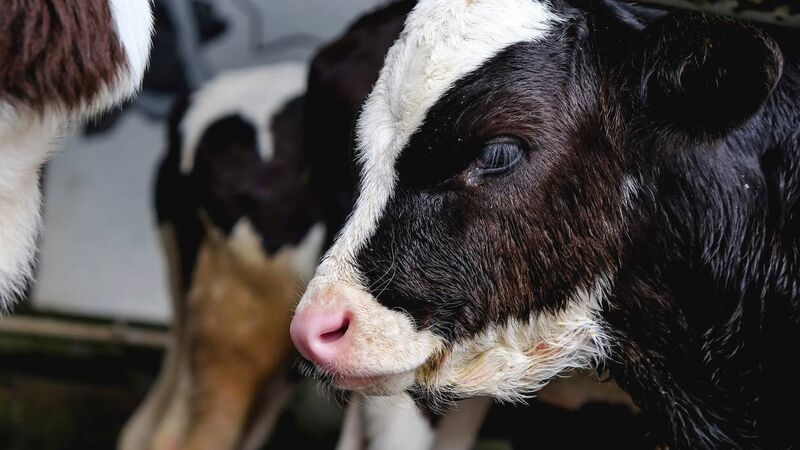
Harsh weather conditions bring an increased risk of disease, especially in younger stock.
This March is certainly living up to the saying “March of many weathers”, and I am hoping at some point we eventually meet the lamb from the old Almanac saying “in like a lion out like a lamb”.
The last few weeks have offered far too many "lion" days for my liking on the farm.
I have been hearing that a lot of farms are experiencing their first run of scour cases after a great February.
We actually had our first case this week, but luckily, it was confined to one calf,who was quickly put in our isolation pen until he recovered.
It is no surprise considering the weather changes, but also the increasing numbers of calves on the ground now and the possible mix of age groups in the sheds.
There are typical ages that certain pathogens tend to target: E-coli is found in calves less than a week old, Rotavirus usually affects young one to three-week-old calves, as does the dreaded Cryptosporidium, and then the older calves can show signs of Coccidiosis from three weeks of age.
Coccidiosis is a disease caused by a protozoa-type parasite, and it can catch farmers unaware as so much attention to detail is being paid to preventing scour in younger calves.
Anything that puts pressure on the immune system, such as bad weather, weaning, or even moving social groups, can predispose a calf to coccidiosis. It has a life cycle of three weeks, so this is why it doesn’t present in younger calves.
The villi that line the gut are attacked by the parasite leaving the gut smooth and lacking the ability to absorb nutrients. In vet school, it was always referred to as the “Silent Killer” due to the fact that a lot of damage can be done to the gut lining before clinical signs appear.
The typical clinical sign of coccidiosis is a blood scour that occurs when significant damage to the gut lining has occurred. It is a particularly painful type of scour and staining is often seen accompanying the blood scour. If the straining is not controlled it can progress to a rectal prolapse which needs immediate veterinary attention. In practice I always found the calves with the clinical signs of coccidiosis some of the most difficult to treat and had very long recovery times. Other diseases can present with a blood scour also, so it's wise to send a faecal sample via your vet to confirm the diagnosis.
As with any scour, re-hydration is key and feeding an extra two feeds of a good quality electrolyte between milk feeds is gold standard. The updated research advices not to stop milk in the scouring calf’s diet as they need the energy to repair their gut.
A stomach tube can be used on calves for electrolytes but not for milk, as the tube enters the rumen and not the abomasum. At home on the farm, we have a special tube for sick calves and it helps reduce cross-contamination to healthy calves.
Luckily the coccidiocides on the market in Ireland can be used in a preventative fashion.
It’s all about the timing of the dose that ensures it preventative properties are utilised. You want that sweet spot where the gut is exposed to the coccidiosis. Farm history is key to knowing the at-risk areas where there previously was a history of coccidiosis.
With our calves, we know that certain sheds have a history of coccidiosis as they usually have adult animals in them during early spring, and adults, unfortunately, act as carriers.
Unfortunately, Coccidiosis is not confined indoors; it can be picked up on pasture also so remember day 14 after entering the risk area for timing the preventative dose.
Hygiene is the other string to our bow when it comes to prevention, using an anti-Coccidiosis disinfectant, such as Cylex, before and after shed use is advisable.
Contrary to popular belief, birds do not spread Coccidiosis to calves or lambs as the pathogen is very host-specific.
However, they do carry other diseases, such as salmonella, meaning that it is always advisable to keep birds away from feed troughs. Ask your vet about coccidiosis prevention on your farm and performing diagnostic faecal samples to aid in early diagnosis.