Danish dairy study weighs up options at drying-off
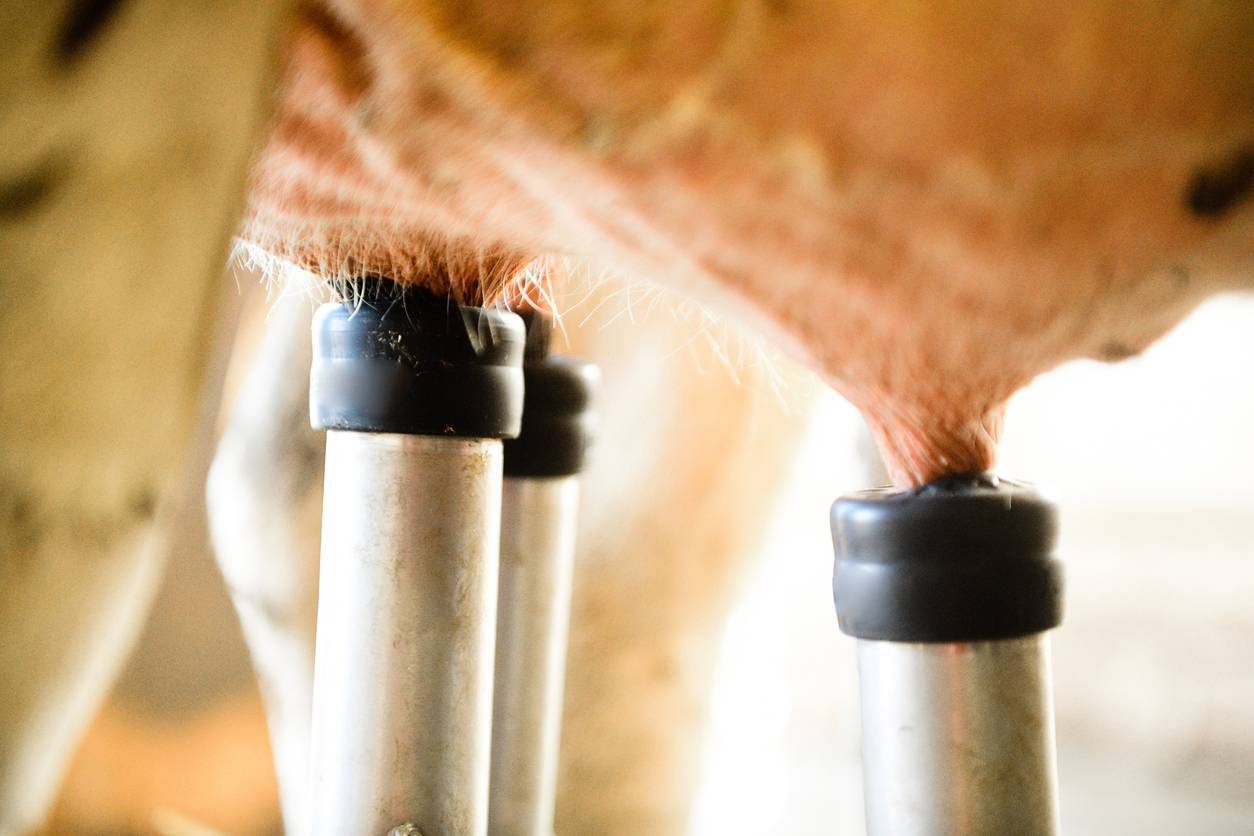
Cow being milked
Reducing the frequency of milking ahead of drying off could be less stressful for dairy cows, researchers in Denmark have claimed.
The study 'Effects of feeding level, milking frequency, and single injection of cabergoline on blood metabolites, hormones, and minerals around dry-off in dairy cows' was published this week in the Journal of Dairy Science and compared three methods of reducing milk yields ahead of drying off: Reduced feeding; less frequent milkings; and injection with Velactis, a veterinary medicine which can facilitate abrupt drying-off.
Velactis was approved in the EU but not released in Ireland.
Researchers found that while cows that were abruptly dried-off with no changes in diet or milking frequency yielded the highest volumes of milk - around 25kg a day of milk at drying-off - this method resulted in significantly higher cortisol levels, suggesting it could be more stressful.
Cows gradually dried off either by reduced feeding levels or once-a-day milking yielded around 30% less. Cortisol levels were lower in those kept on twice-a-day milking, with reduced feed intake; however, metabolic stress was lowest in the group milked less frequently.
In the week before dry-off, cows in the reduced feeding group reduced their Dry Matter Intake by 30% less compared with those fed normally.
As a result, calculated energy balance showed that most cows in this group had entered negative energy balance, while cows brought down to once-a-day milking while being fed normally were the least likely to lose body condition.
Cows on both treatments combined (reduced feed intake and reduced milkings) saw the biggest reduction in yield – a drop of around 45%.
The study led by Lorenzo E. Hernández-Castellano concluded: “Based on the results obtained in the present study before dry-off and taking into consideration the effects of feeding level and milking frequency, it seems that feeding the cows with the normal level and milking them once daily one week before dry-off is the most appropriate strategy to reduce milk yield before dry-off without inducing considerable metabolic stress.
“These findings agree with those from a companion paper, showing that, from a hunger perspective, reducing milking frequency rather than feeding level seems to be a less negative management to reduce milk production before dry-off.”