Dairy reduction scheme expected in 2024
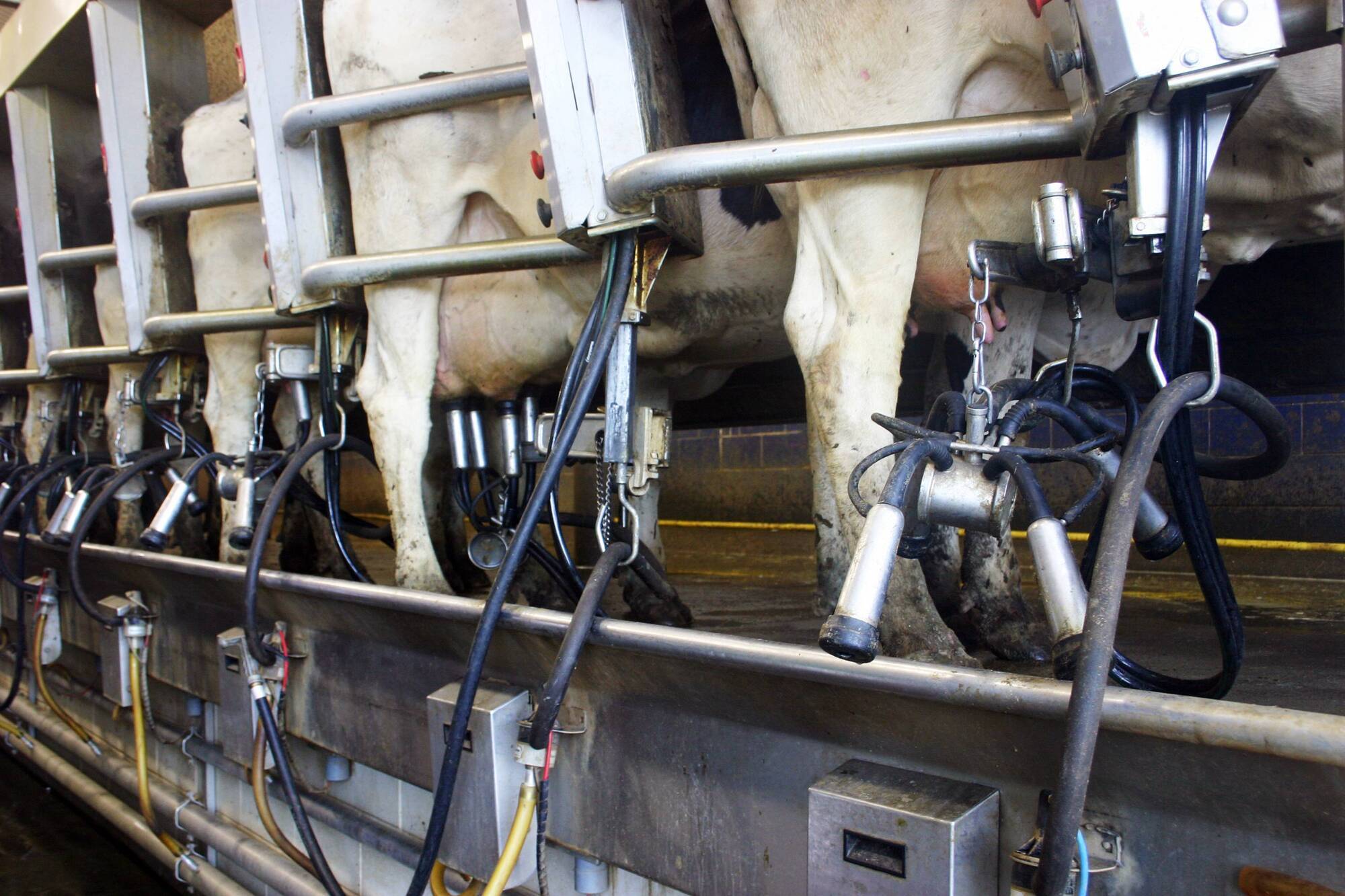
Minister for Agriculture Charlie McConalogue has said that he is engaging with stakeholders in how to roll the scheme out.
The introduction of a voluntary dairy reduction scheme is expected in 2024.
Minister for Agriculture Charlie McConalogue has said that he is engaging with stakeholders in how to roll the scheme out and by the third quarter of this year, details will be clarified and he intends to have the scheme in place from next year.
One of the recommendations from the Food Vision Dairy Group was that “we should explore and look to take forward the option of a voluntary reduction scheme”, Mr McConalogue told a recent meeting of the Oireachtas joint committee on environment and climate action.
“Our target is to have that clarified by the end of this year,” he said.
This is also “to make sure that there [aren’t] any unintended consequences” of farmers increasing their cow numbers now to then decrease under the scheme, Mr McConalogue added.
He said that “pending engagement” with stakeholders in the meantime, he expects the scheme to be in place by the start of 2024.
A voluntary exit/reduction scheme was one of a number of proposals to reduce greenhouse gas emissions from the sector outlined in the Food Vision Dairy Group’s final report, which was published in October 2022.
The report says that indicative income foregone per dairy cow removed is estimated at €1,770 for farms exiting dairy and €2,910 for farms reducing numbers.
In terms of emissions reductions, there would be an estimated 0.45Mt CO2 equivalent per 100,000 dairy cows reduced, the report notes
A farm organisation has said that the cow number reduction/exit scheme, "should be available to all farmers".
Irish Creamery Milk Suppliers Association president Pat McCormack has said that more details are needed soon on the scheme that the minister has, in recent days, outlined his intentions to introduce.
With 2022 to be the reference year for the reduction scheme that is expected to be in place next year, Mr McCormack said he has concerns for the farmers "who for one reason or another exit this year, 2023".
"He’s being coy in how he’s managing with 2024 as the year it starts given the huge change that’s out there with cow banding and the effect that’s having on the family farm model now," Mr McCormack said.
Every measure that can be taken to reach the 25% emissions reduction is going to be important, Mr McCormack said, and what he sees as being "most critical" in the new scheme "is that it will afford people an exit or a reduction mechanism if that’s the choice they make".
"It should allow for others who want to stay farming on a commercial basis into the future and solely dependent on dairying the opportunity to stay where they are numbers-wise," he said.
However: "There’s no good in the fire brigade coming the week after the fire, and the minister should be proactive if he is serious about this scheme delivering."
Mr McCormack added that the scheme should not be confined to just dairy farmers, "the scheme should be available to all farmers whether they’re suckler, dairy, if they wanted to reduce".
"I would have a number of dairy farmers on to me asking the question of what’s the detail, and we don’t have the detail," he said.
One of the concerns Mr McCormack has is around the "constraints on the land afterwards".
"We would certainly have put forward a view that it should be farmable and that it should be even leasable for another farmer, with provisions," Mr McCormack added.
Meanwhile, Macra na Feirme president John Keane has said that its young farmers across the country "are extremely angry and disappointed" that the department is pursuing the exit scheme.
Macra has said that under proposals it has seen, the land that would enter this scheme would no longer be available for use to breed animals, which Mr Keane said would "undoubtedly reduce the stock of land available for farmers who wish to rear breeding animals", and "further increase the price of land paid for lease and sale".
With less than 6% of active farmers under 35 in Ireland, Macra has said that a succession policy is needed rather than an exit policy.
Speaking to a meeting of the Oireachtas joint committee on environment and climate action, Mr McConalogue said the 25% target set for agriculture "relates to emissions reduction, not food or stock reduction".
"Around the setting of the climate targets and what the figure would be for agriculture, there was a sense out there among some that what we were talking about was a percentage reduction in food production or a percentage reduction in our herd. That is not what we want to do," he told the committee.
"We also need to continue to produce food and play a role domestically and internationally. We need more food internationally."
ICMSA president Mr McCormack told the that Ireland "should be maximising" its ability to produce dairy in an environmentally-friendly way.
Over the coming years in this country, "certainly we’re going to see a change in terrain", he added.
"I don’t say that lightly; farmers are becoming disillusioned with the level of regulation put on them now and the complexity of farming.
"We’ll always be out there as a food-producing nation, but our ability to expand has been severely curtailed."

BLACK FRIDAY
Already a subscriber? Sign in