Emergency calf survival: A vet's tips for when things go wrong
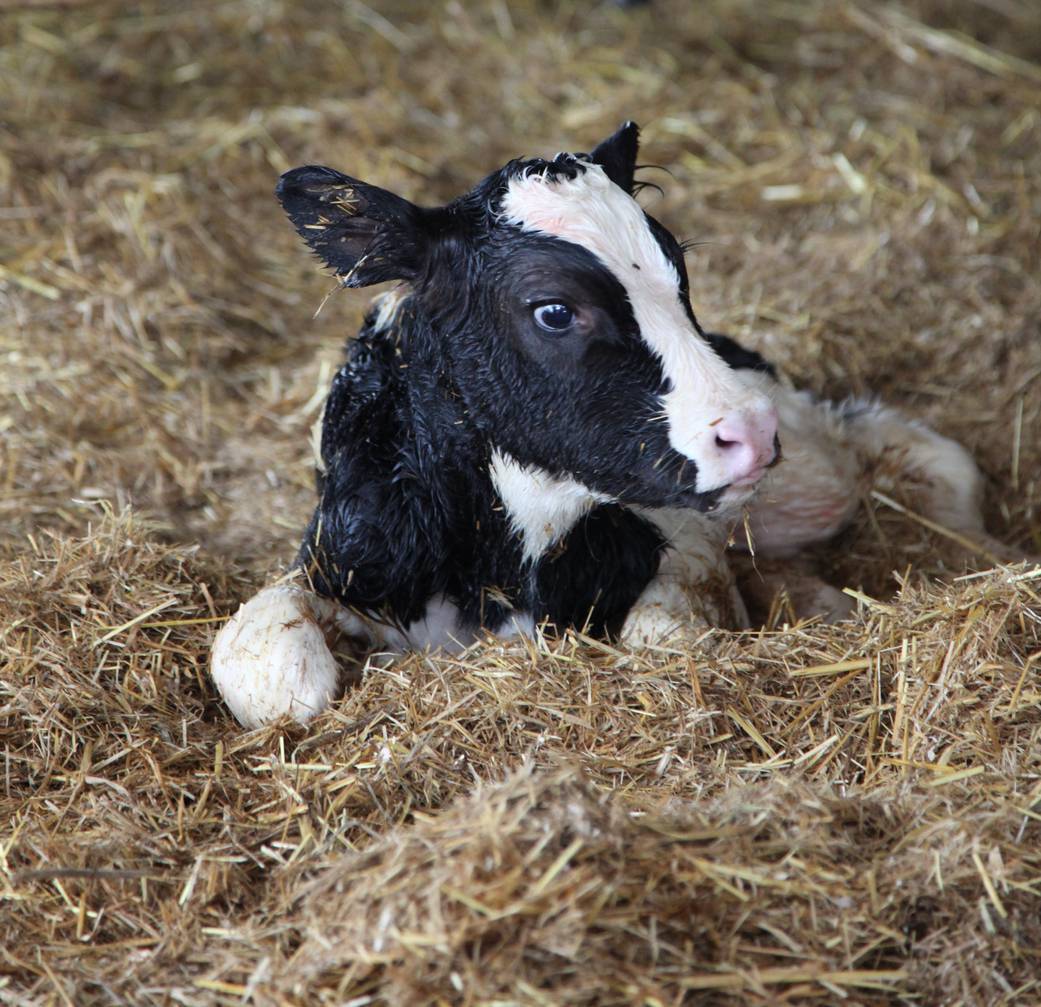
Things don't always go to plan on the farm at calving time, so it's crucial to know how to take early intervention. Farm vet Hazell Mullins shares her tips for emergency calf survival.
Enjoying a nice cup of Maher’s coffee over breakfast, while watching cow 1161 calf on the camera, was an idyllic start to an unassuming February morning.
However, the dramatics weren't long jumping into motion as I spotted the calf emerging within the placental bag with no sign of breaking.
I left my mum’s kitchen mid-conversation without explanation, jumped in the jeep and ran to the calving box.
The cow was still lying down, oblivious to her calf’s struggle behind her, I tore open the placenta from around her muzzle and wiped the fluid from her nose.
I often see calves being hung over gates for minutes at a time on farms, gates are fine for this purpose, but only for 30 seconds at a time.
I then placed her in the "bovine" version of the recovery position, sitting up straight with her head between her front legs and her back legs stretched forward by her chest.
Perhaps it looks odd, but it really helps to open the chest and allows the lungs to take on board the maximum amount of oxygen.
My brain was in overdrive at this point, recalling all the breathing-stimulating tricks that I have learned over the past 10 years in practice.
A piece of clean straw was then placed up the nose and not forgetting a little cold water in the ear for good measure.
The relief I felt when I saw the little cheeky head shake after the cold water ear splash was second to none. I wouldn’t throw cold water on the calf's body, however, as this can induce hypothermia and keeping these weaker calves warm is a priority. I'll put a jacket on this calf as soon as she is dry.
She was alert and breathing independently when I left her with the cow to be licked dry, oblivious to any issues that were soon to unfold.
However, I returned about half an hour later to find her in the same position, with no attempt to stand, and she was shivering with the cold.
I tried to help her find her feet, but to no avail; she had no concept of balance and was just insistent on falling over.
I removed her from the calving pen, put her in a cosy nest of straw and tubed her with four litres of stored colostrum as she had a weak suck reflex.
Luckily, I had good quality colostrum in the freezer I was able to defrost it in a water bath, making sure to not exceed 50 degrees as this can denature the proteins.
It measured 26% Brix on the refractometer at the time of freezing, so I knew it was going to be the best for her. (Remember the magic 22% Brix when measuring colostrum - if it is less than this, it's not worth storing for future calves).
The five Q’s of colostrum management are always important to keep in mind, which all aid in the calf’s future survival on the farm:
Feed and within two hours, make sure it's of good (over 22% Brix), feed the correct (10% of body weight) and ensure it is clean.
Now, I realise the last point doesn’t actually begin with a Q, but it is a vital aspect of colostrum management as recent research has shown how bacterial counts can significantly interact with anti-body absorption in the gut.
After her feed, she was certainly more alert, which was a relief, but she was still able to stand, and she had an intention tremor, which meant she wasn’t able to focus on one point.
She is improving daily, she is walking independently now and drinking very well. However, she needs a little help to focus on the teat - she’s certainly a fighter!
In this instance, only for the camera, this little calf wouldn’t have survived, and even with that, I am questioning why didn’t I take one less sip of my coffee could things of being different.
We were lucky with this calf. However, I fully realise that the calving season is full of highs and lows. Making sure to reach out to a friend or family member to talk about the bad days and not bottle up problems is so important. As the saying goes, “a problem shared is a problem halved”.
- Hazell Mullins BVM BVS, is a large animal vet at Highfield Veterinary Group.