Pursuing new opportunities and diversifying your enterprise involves a “steep learning curve”, according to Aisling Flanagan of Rockfield Dairy, and while it has been a tough year for the family farm and business enduring increased input costs, the demand for their products is “growing at a fairly strong rate”, she said.
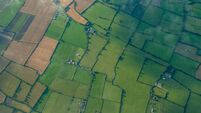
Ms Flanagan and her husband Michael have a “rare enough” farm in Ireland, from which comes their Velvet Cloud brand range of grass-fed sheep milk products, including yoghurt and cheese, which are handmade on the farm near Claremorris in Co Mayo.
The Flanagans are one of only a small number of farms that have their flock for milking.
“We’re unique in that we milk year-round, which means we have to have several lambings,” said Ms Flanagan.
Velvet Cloud was founded in 2015, with its products now stocked in around 120 shops nationwide and can be found in SuperValu and Tesco, and the pair are intent on continuing to grow the business.
The farm now has between 300 and 400 sheep, and from the decent ewes, the output is about two litres a day, according to Ms Flanagan.
Starting off small
“We started off our business small, and we bought animals from somebody else in the country who was getting out of it, so they weren’t the best stock, they were hybrids,” Ms Flanagan explained.
“We’re improving our flock genetics, and we are very optimistic that the pure-bred animals will give us a lot more milk than we have been averaging.
“Sheep only lactate for six months of the year, so you can only get milk from them for six months and then they dry up.
“We have very different breeds, a French breed which is called Lacaune, and a Dutch breed which is called Friesland.
“They give a lot more milk naturally than an average Suffolk or a Texel because they’re bred specifically for milk.
“For example, the Lacaunes would come from the region [in France] that produces Roquefort cheese; southern Europe would have quite a strong sheep dairy industry, and we just don’t here.”
Her husband Michael inherited the sheep farm in Rockfield, which previously was not a dairy enterprise.
“We were living on it, we built a house on it, and we were looking out at these sheep making us no money and wondering ‘there might be something different we could do’,” Ms Flanagan explained.
“We did a lot of research into trends in the market and all of the trends with allergies, dairy alternatives, microbiome — those macro-trends were out there and they all seemed to favour sheep milk and then we actually tried some tests of prototypes.
“We made yoghurt, and we tasted the milk, and the sheep’s milk has a much higher solid content than cow’s milk, so therefore the products taste a lot creamier.
“So just naturally, the products taste nicer — we’re obviously biased, but the reason they taste nicer is that they’re thicker and creamier naturally.”
Tastes how milk used to
This is because sheep’s milk is naturally homogenised, said Ms Flanagan.
“In dairy in Ireland, the milk you get on the supermarket shelf is homogenised,” she said.
“Some will remember when the cream used to rise to the top of the milk bottle, and that’s because [cow’s] milk used to not be homogenised — ie broken up to get the fat globules to spread out in the milk.
“But you don’t have to do that with sheep’s milk, and that’s why people say to us that it tastes like the way milk used to.”
The milking parlour setup is similar to what many people are familiar with in a typical dairy cow enterprise in Ireland.
“Smaller, because a ewe has two teats, but after that then it’s the same,” said Ms Flanagan.
“They’re waiting at the gate for you and are very placid, you get to know your animals, more are cranky than others, some are more placid than others, cleanliness is paramount and all that.”
Running both a farm and a food business, both have been “hit really badly” this year with the costs of inputs.
“To date, anything that we did make was going back into the businesses to grow them, to get equipment, or to bring in new animals and to grow the flock,” said Ms Flanagan.
“This year, I think, has been the hardest year yet in terms of costs because energy and fertiliser — and we already use clover swards and all that kind of stuff — everything has gone up, so it’s been extremely difficult to make any money.
“In 2023, I don’t know if things will improve, but it appears they might stabilise a bit so at least you’ve some level of planning.”
Optimism
In addition, the farm has not made “any money on wool for years, so that is a challenge, but we have got used to it”.
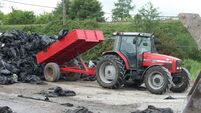
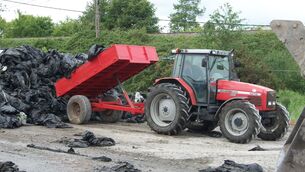
This year, their local wool merchant ceased trading, which meant no outlet for the wool, and it ended up on the manure heap.
The Flanagans say they are seeing a growing awareness rate of, and a demand for, sheep milk.
“Our yoghurt is our hero product, we do cheese as well, but we’re the only ones doing yoghurt in Ireland and it is growing at a fairly strong rate,” she said.
“We’re very optimistic, we’re growing every single year, but unless the costs revert or stop at least so we can take stock, I don’t know how any of us will survive — and it’s not just us.
“If we could invest more, we would, and that’s, I suppose, been part of our challenge — every little tiny bit we made previously went back into it.”