The challenges facing Ireland's food producers

Calls for Government to support small farmers, fishers and food producers, who are highly vulnerable to economic forces
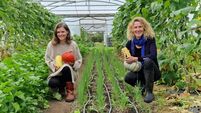
 Caroline Robinson with her fresh veg on offer at her stall at a recent market in Macroom, Co Cork. Picture: Dan Linehan

Caroline Robinson with her fresh veg on offer at her stall at a recent market in Macroom, Co Cork. Picture: Dan Linehan

Today, December 8, is an annual milestone date in rural Ireland because it traditionally marks the start of the Christmas shopping spree.

Farmers' markets are central to much of the hectic activity, which is spread across the entire retail sector — from chain stores to village shops.


Much of the focus again this year will highlight the need for people to buy Irish, and specifically local produce.

Bord Bia describes Irish food markets as a fantastic community resource that allow shoppers to source local produce and to benefit from the interaction with those who farm, grow, catch, make, and bake our food. 

Markets also provide an opportunity for small farmers and food producers to sell their produce and connect with their customers.

“From bakers to butchers and cheesemakers to growers and a vast array in between, you can often find all of your weekly food shopping needs at your local market,” it says.

A progress report on the Government’s commitment to support small food producers, on-farm diversification enterprises and investment in local processing facilities was recently sought in the Dáil by Cork South-West TD Holly Cairns.

She said small farmers, fishers, and producers are very vulnerable to the prices set by the larger retailers and processors.

“They are being squeezed between rising operating costs and fluctuating prices, then they are getting prices that in no way reflect the expenses and the work that goes into producing food,” she said.

Minister of State at the Department of Agriculture Pippa Hackett said the Programme for Government and Food Vision 2030 acknowledge and underline the importance of food producers, particularly farmers, and their importance in maintaining vibrant rural and coastal communities.

Outlining the supports available, she said the Department of Agriculture, Food and the Marine (DAFM) administers the rural innovation and development fund, which includes an agrifood tourism initiative.

Support continues to be made available for initiatives such as the development of farm shops, niche products and ecotourism, and for market development, competitiveness, and innovation.

This is done through the LEADER food initiative, funded by DAFM under the Common Agriculture Policy and operated by the Department of Rural and Community Development.

She said the new CAP strategic plan would provide supports to farmers and rural communities. The LEADER programme is a key element.

The department has also provided almost €10m for the equipment provided to the Prepared Consumer Foods Centre in Teagasc, Ashtown.

Unique role of small farmers

Ms Cairns said Government policy needs to recognise the unique role of small farmers and producers, who provide incredibly high-quality food but are highly vulnerable to economic forces.

While we pay lip service to this model of agriculture, as in the Minister of State's response, the reality is that farmers are being forced into fewer and fewer areas — mainly dairy — because it is the only way to make their farms viable.

Ms Cairns said in terms of food security, greater diversity creates greater resilience. West Cork is a good example of what can be done. However, this type of approach is at serious risk without supports.

“Rather than just paying lip service to it, we need to really look at a return to practical local processing facilities, such as small abattoirs,” she said.

Ms Cairns noted producers in France can go to the Rungis International Market in Paris and trade themselves, giving them greater control. “We could also look at Irish examples of that with some of our farmers' markets,” she said.

Accepting that the value of small food producers has perhaps been ignored, Ms Hackett said: “That is why we fought to include the commitment to recognise that and do what we can to support local food producers in the Programme for Government.

“Indeed, having local access to food processing is one part of that," she said, adding that over the last number of decades, parts of rural Ireland in towns and villages have lost their butchers, greengrocers and creameries that were there in years gone by.

"Reverse engineering out of that is going to be difficult, but we need to do what we can to support those smaller local producers,” she said.

Ms Hackett said she had visited a number of small producers. Some of them might have a micro dairy on their own farm. They are able to pasteurise, bottle and perhaps sell from the farm gate.

“That has proven to be quite lucrative for those involved. There are also excellent examples of people direct-selling their own meat. We need to support local producers and we are committed to supporting them,” she said.

Call to support Irish producers

The farm and food lobby has meanwhile urged consumers to support Irish producers, especially in the run-up to Christmas.

IFA Pig Committee chairman Roy Gallie said the traditional ham is a feature on Christmas dinner tables countrywide.

He urged consumers to choose Bord Bia Quality Assured Irish ham on their trips to the supermarkets or when shopping online. 

“The past 18 months have been extremely difficult for pig farmers. Unfortunately, some producers have had to close their doors due to the exorbitant increases in input costs,” he said.

Read More

More in this section

Farming

Newsletter

Stay ahead of the season. Sign up for insights, expert advice and stories shaping Irish agriculture.

Cookie Policy Privacy Policy Brand Safety FAQ Help Contact Us Terms and Conditions

© Examiner Echo Group Limited