Women Dairy Ireland: Find your space and claim it
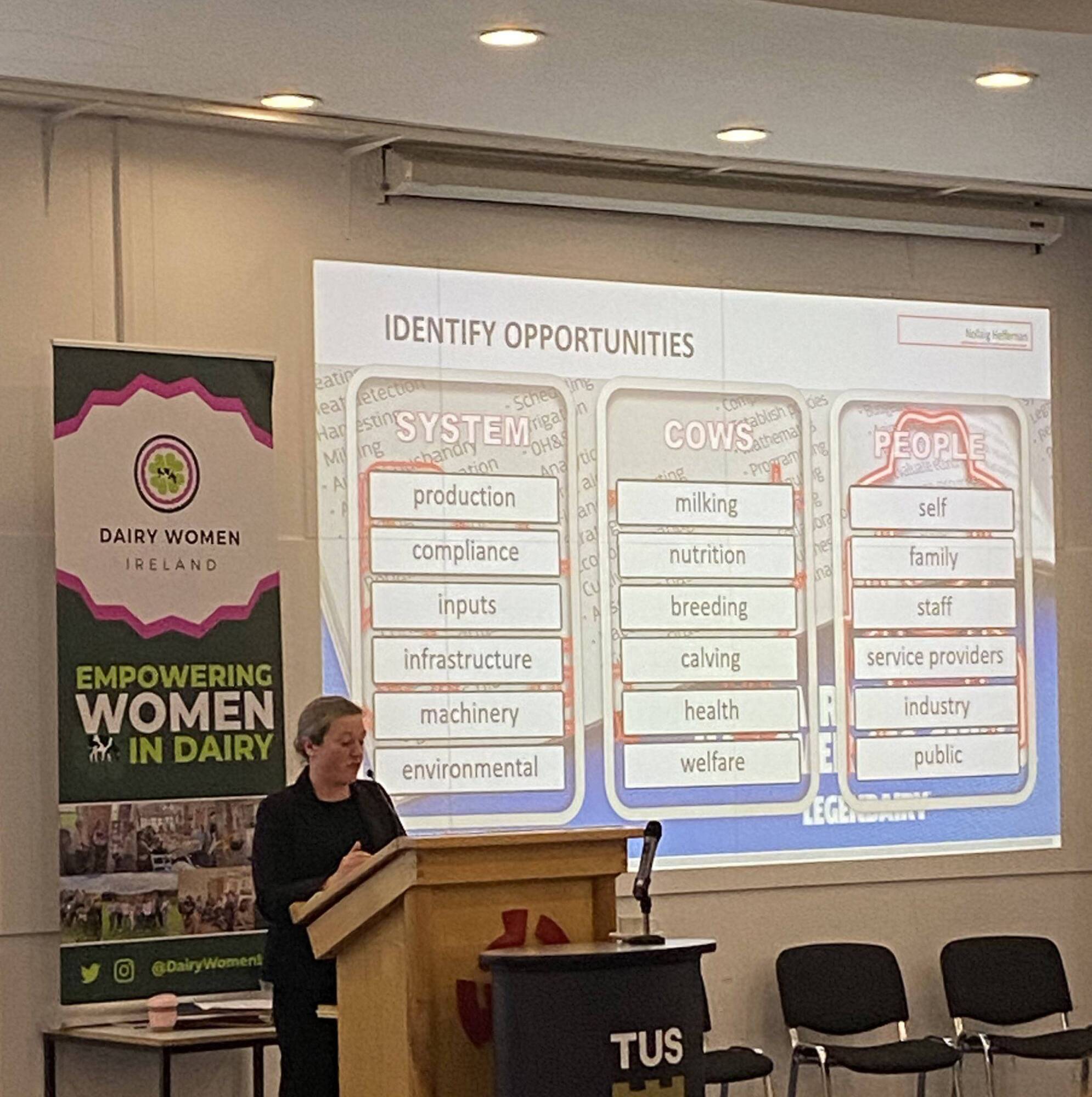
Dr Nollaig Heffernan presents the keynote speech during the Dairy Women Ireland conference in Thurles on Saturday (November 26).
Learning how to find your place on the farm was one of the key themes at the Dairy Women Ireland conference.
The organisation’s inaugral conference had the theme “empower women” and included expert speakers like Noreen Lacey from IFAC to explain how to navigate meetings with the bank, and Teagasc researchers Laurence Shalloo and Mike Egan to discuss efficient and sustainable farming and grassland management.
Nollaig Neffernan, who holds a PhD in psychology, suggested ways women could identify their role and create their space in the business.
She explained the high standards women often hold themselves to, as well as the need to have confidence in their own role in the business.
Giving the example of one unit manager, who was “phenomenal” at managing both stock and pastures.
“But she did not consider herself a ‘real farmer’ because she did not have machinery skills,” Ms Heffernan explained.
“Dairy is huge, it can be difficult to know where to start when you are trying to find your role or your niche,” she said.
“Humans strive towards progression and contribution,” she said, explaining that there were over 170 skills involved in running a dairy farm. “This of course, is a challenge, because if you want to be involved in a dairy business, where do you start when there are more than 170 skills?
“…If you’ve got a skillset from elsewhere consider what value you can add – rather than waiting to be told what value you can add.” Ms Heffernan broke these down under three categories:
System: production, compliance, inputs, infrastructure, machinery, environmental.
Cows: Milking, nutrition, breeding, calving, health, welfare.
People: Self, family, staff, service providers, industry, public engagement.
“Just like we can contract out fertiliser spreading or spraying, we can contract out certain skills,” she told delegates.
However, she stressed the importance of timing communication properly and suggested this conversation to establish the areas where they could be of most help should take place at a scheduled time, well ahead of pressure points for the farm.
“Typically, when you say ‘how can I help?’ you will be asking at a point where the person isn’t able to articulate it because they are already stressed,” she said.
“It’s easier to just say ‘no, it’s ok’, than to file through my filing cabinet in my brain and say ‘out of the 170, I would really appreciate if you took this on’.
“So this is about understanding the macro level of the business and stepping back and thinking about what you like doing, what you are passionate about, or where you can add value.” One of the most valuable was often in areas of compliance – helping with paperwork or people management or managing inputs, are important aspects of the business.
However, the first step – to find your strengths and communicate areas you can help – is critical.