42 farms sign up for Guinness regenerative ag pilot
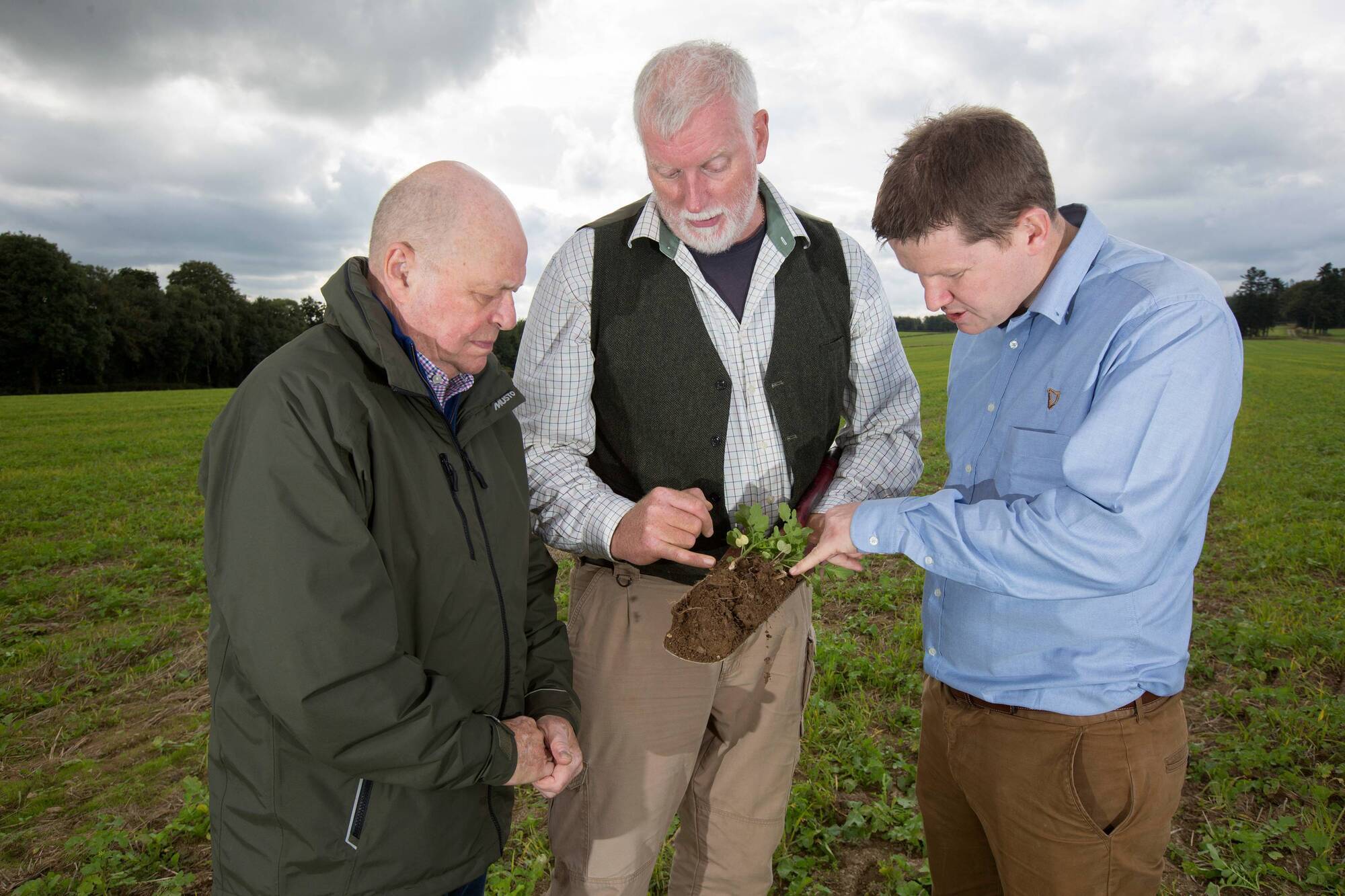
Steve Cann, Future Food Solutions, Neil Fuller, soil health and nutrition scientist, with David Hagan, Diageo, examine soil at Castleboro Farm, Wexford. Picture: Julien Behal Photography
42 Irish farms have signed up for the first phase of a three-year pilot regenerative farming programme run by Guinness.
The aim of the pilot, which includes approximately 1,400 acres of land, is to trial and test regenerative agriculture techniques in Irish conditions.
So far, more than seven tonnes of cover crop seed were planted through the months of July, August and September in Kildare, Laois, Carlow, Kilkenny, Tipperary and Wexford.
Cover crops are mixtures of biodiverse teams of beneficial plants that are grown in the gap between harvesting one crop and planting another to protect and improve soil health by recycling nutrients and reducing soil erosion.
Laois-based grower Eugene Ryan said: “The 2022 season included unprecedented and extremely challenging growing conditions for Irish farmers, with crops experiencing extremes of temperature and moisture stress.
"I’m pleased to have the opportunity to share experiences and knowledge with other farmers as we embark on this journey together as part of the pilot to test and trial regenerative agriculture methods for the conditions in Ireland.”
Farmers and agronomists involved in the programme are currently working to establish baseline measurements for soil, crop and farm performance including the carbon footprint of the crop produced.
Soils will also be analysed for major nutrients, pH level, soil health and carbon dynamics, with this data to be used to help to monitor changes in soil health and inform decisions including fertiliser selection and application.
Vanessa Maire, Global Head of Regenerative Agriculture at Diageo, said: “This pilot is the first such programme being implemented by Diageo. The learnings and outcomes will help inform other potential opportunities, not just in Ireland, but further afield.
"We are looking forward to reviewing the baseline data, which will help identify opportunities for reducing the carbon emissions of barley production in Ireland, in line with Food Vision 2030 and the Climate Action and Low Carbon Development Act 2021”.