Former agriculture minister calls for changes to TB valuations
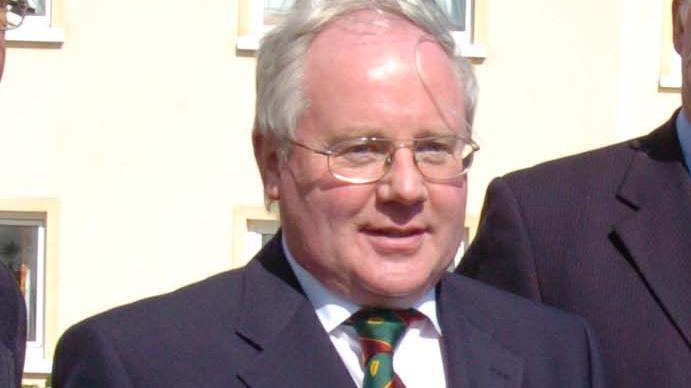
Brendan Smith said: “I have a concern that valuable pedigree lines could be lost. I know of some individual farmers who win national awards every year and would have a number of substantive pedigree herds. File picture: Maurice O'Mahony
Current TB compensation levels for cattle do not reflect the reality of the prices being paid in the marts today, a former agriculture minister told the Dail.
Deputy Brendan Smith called on the current Minister, Charlie McConalogue, to ensure the payments are increased without further delay. He was speaking ahead of Thursday’s scheduled meeting of the TB Forum’s financial working group, set up 16 months ago to review the programme’s current financial model.
Officials from the Department of Agriculture, Food and the Marine and representatives of the farming organisations will attend the meeting. The group’s remit includes a review of compensation schemes with respect to all types of bovine herds. Recommendations will be submitted to the TB forum for consideration.
Deputy Smith told the Dail it is devastating for a farmer when his or her herd has to be partially or totally depopulated. “We know that herds are built up over a considerable length of time. There is a big investment and big commitment by the individual farmer, and we do not switch on or off the breeding or development of herds,” he said.
Mr McConalogue said he is acutely aware of the emotional and financial burden that comes with a TB breakdown for a farm family, adding that reducing the incidence rates of the disease remains a key priority for him.
“The main compensation provision of the bovine TB programme is the on-farm market valuation scheme," Mr McConalogue said. It compensates eligible herd-owners up to the market value an individual animal would have attained on the open market at the time of its valuation under the scheme.
However, the current animal ceiling under the on-farm market value scheme is €3,000 in respect of an individual bovine, except in the case of a stock bull where the ceiling is €4,000 or a pedigree stock bull in the same breakdown episode which has a ceiling of €5,000.
"The valuations are carried out by independent valuers who are informed by summary market prices which reflect the most up-to-date market values for various categories sold on the open market,” he said.
Mr McConalogue said in addition to the on-farm market valuation compensation package, depopulation grants may be paid to eligible herd-owners. The grant is paid per animal removed in the measure and for those removed as reactors since the holding was restricted, on condition that the herd-owner agrees to the depopulation at the time specified by the department.
He said compensation rates for TB reactor animals are capped under the provisions of the Animal Health and Welfare Act 2013. Mr Smith said he was concerned the compensation was not adequate for pedigree cattle.
Currently, herd-owners in possession of very valuable animals are advised to mitigate their risks by taking out insurance, enabling them to recover the full market value of such animals in the event of an outbreak of TB in the herd.
“Those of us who were reared on farms and represent rural communities take great pride in looking at quality animals at our shows every year and in visiting individual farmers," Mr Smith said. “I have a concern that valuable pedigree lines could be lost. I know of some individual farmers who win national awards every year and would have a number of substantive pedigree herds.
“If they are unfortunate enough to have a partial or total depopulation, it will mean financial ruin for them. We need to address that particular matter.
“Farmers take such pride in the work on their farms and in building up herds and having the quality produce we all champion in this country. We talk about the quality of the food we export to so many countries throughout the world. We need to ensure the primary producer is adequately compensated to meet all costs,” he said.
Deputy Smith also stressed that cross-border co-operation is hugely important for dealing with animal disease on an all-Ireland basis.
“I sincerely hope that this co-operation, which has existed for many years, will work as robustly as it did in the past,” he said.