Signs your grass isn't delivering for you
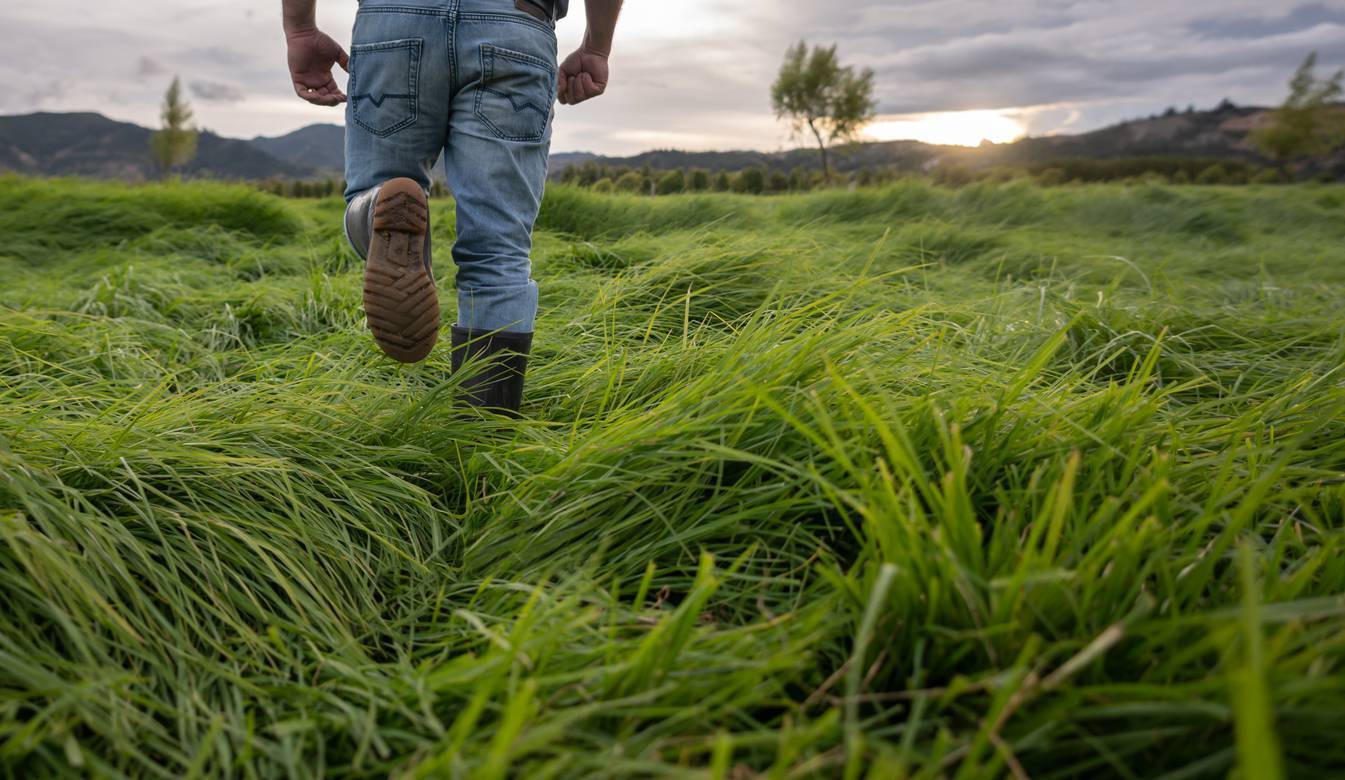
Close-up on a farmer working at a cattle farm and walking around the fields checking the grass
Grass is becoming very difficult to manage right now. Keeping quality grass in front of stock is becoming a hard task.
Getting a sufficient window to take out surplus paddocks is proving difficult and, as a result, a lot of rotations will be gone out of sync and perhaps lead to a short-term deficit once these strong paddocks finally get baled.
Obviously, the quality of this surplus grass will make stronger silage that will more than likely be used for dry cows or for lower performing stock in the winter.
Establishing suitable grass quality for different groups on-farm is critical to animal performance.
Plenty of experienced dairy farmers who have been running a strict grassland management programme for years are finding the going tough trying to get the right grass for their cows at the moment.
In reality, cows in a strong paddock can actually be hungry. They will end up walking more looking for better grass and only bite the leaf on top of the sward meaning each bite is smaller and total intake drops.
Beef stock and replacements will also react the same to stronger grass, and ultimately end up with reduced performance.
Many producers I spoke to this week have significant grass surpluses; some, however, don’t realise that the surplus exists on their farm.
At this time of year, we really must walk our farms twice a week to keep an eye on growth rates and sward quality. Grass quality is the number one influence on animal performance at this time of year.
It is, however, easier to identify the consequences of grazing unsuitable swards on a dairy farm as measurements of performance are in the tank volume daily along with milk quality tests received by text.
How can we get a handle on possible performance drop-off?
Dairy herds as I mentioned above, have seen in many areas marked declines in milk yield well beyond normal yield curve reductions. This has been combined in many cases with a drop off in milk protein and butterfat.
All of these indicate that cows have not been consuming sufficient Kgs of Dry Matter of appropriate energy density to maintain performance. Grass intakes decline as quality/digestibility declines.
As grass DMD diminishes then so too does the intake of the grass resulting in lower total energy intakes and ultimately a decline in animal performance.
There are several indications that grass intakes are poor due to stronger swards:
- Stock will tend to do much more walking between bites of grass-looking for the nicer bite.
- The tops of the grass will all be eaten with a lot of stem remaining uneaten.
- They will have poor rumen fill. The space between the last rib and the hip bone on the left-hand side will be hollow.
- They tend to be more agitated and once you appear to herd them you will hear plenty of noise from them!
- As a simple rule of thumb - paddocks that have just been grazed should still be green. If it is all yellow when cattle leave the field, it was too strong to graze in the first place.
- If your grass quality is poor, then you need to address it immediately as weather conditions allow.
- If you must graze dairy cows on strong covers, try to alternate between strip grazing strong grass by day and lower cover better quality grass by night. Take out surplus grass in the rotation when it is due to be grazed.
- Don’t reduce fertiliser use for your rotation length-grow grass when it will grow. Grass that is under fertilised gets stressed faster and will throw up a stem and seedhead faster.
- Don’t hold back several fields/paddocks for wrapping on the one day as they will all be ready for grazing at the one time in the next rotation leading to another surplus.
- If your grass quality is poor and you need to take out a significant area of your farm for bales to get quality back into the system, then you will need to supplement stock for a while until grass returns.
- If you don’t feed cattle during a period of energy deficit it will be very hard for them to catch up to targets.
- If you regularly need to take out surplus paddocks keep nitrogen application at one unit per day- this will ensure that preservation is successfully achieved in both bales and pit saved.