Correctly managed ponds positively impact biodiversity
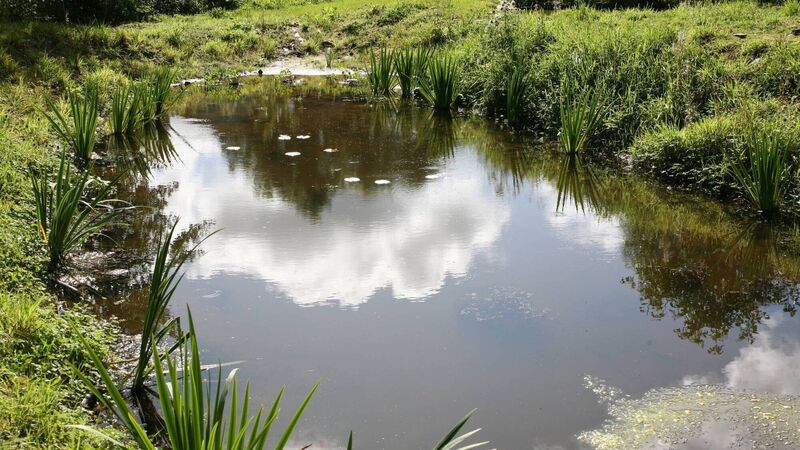
Farmland ponds can be large or small and can be created by excavating a wet or damp site by compacting the basin if needed, or streams or other water sources can be blocked.
The number of farmland ponds declined by 53.9% between 1887-1913 and 2005-2011 due to increasing the area of land for agricultural production. Correctly managed ponds positively impact biodiversity and provide other benefits such as water purification, flood control and sediment trapping.
Ponds provide a habitat for many aquatic plants, insects such dragonflies and damselflies, water beetles, mayflies, stoneflies, moths, springtails and hoverflies. Increasing the number of insects on your farm, increase the number of insectivorous animals such as spiders, amphibians, birds and bats.
Dragonfly Ireland 2019 – 2024 is an all-Ireland Citizen Science survey of dragonflies and damselflies, and their habitats, coordinated by the National Biodiversity Data Centre in the Republic of Ireland and by the Centre for Environmental Data and Recording in Northern Ireland. The project is funded by The Environmental Protection Agency as part of a citizen science project examining the potential of aquatic species as bio-indicators of climate change and water quality.
Farmers need access to good quality water to grow fruits, vegetables, crops and raise livestock. By monitoring dragonflies and damselflies, you can assess your farms biodiversity and water quality. By monitoring our biodiversity and water quality we are ensuring the long-term sustainability of farming in Ireland to pass onto future generations.
If you are interested in monitoring dragonflies and damselflies on your farm, see here.
Farmland ponds can be large or small and can be created by excavating a wet or damp site by compacting the basin if needed, or streams or other water sources can be blocked. Here a few pointers to help you create a wildlife friendly farmland pond:
· Do not use liner, either compact the soil or use gravel or sand on the bottom of your pond to create habitat for plants and invertebrates.
· Build different levels into your pond to create habitats for species which prefer shallower or deeper water.
· Plant your pond with plants that grow from the water, these ‘emergent’ plants will attract dragonflies, damselflies and a host of other insect species.
· Plant using native species. Our wildlife thrives in the presence of native plant species but may struggle in the presence of invasive species.
· Never use chemicals in or near your pond as they can harm or even kill many aquatic species.
· A buffer zone around the pond can act as a buffer for surface run‐off and aid improved water quality.
· Don’t allow the pond surface to become overgrown. Freshwater species need sunlight to thrive, whether they be plants or animals, an overgrown pond will be dark and less biodiverse.
· Do not stock with fish, fish are predators of the larval stages of insects and amphibians.