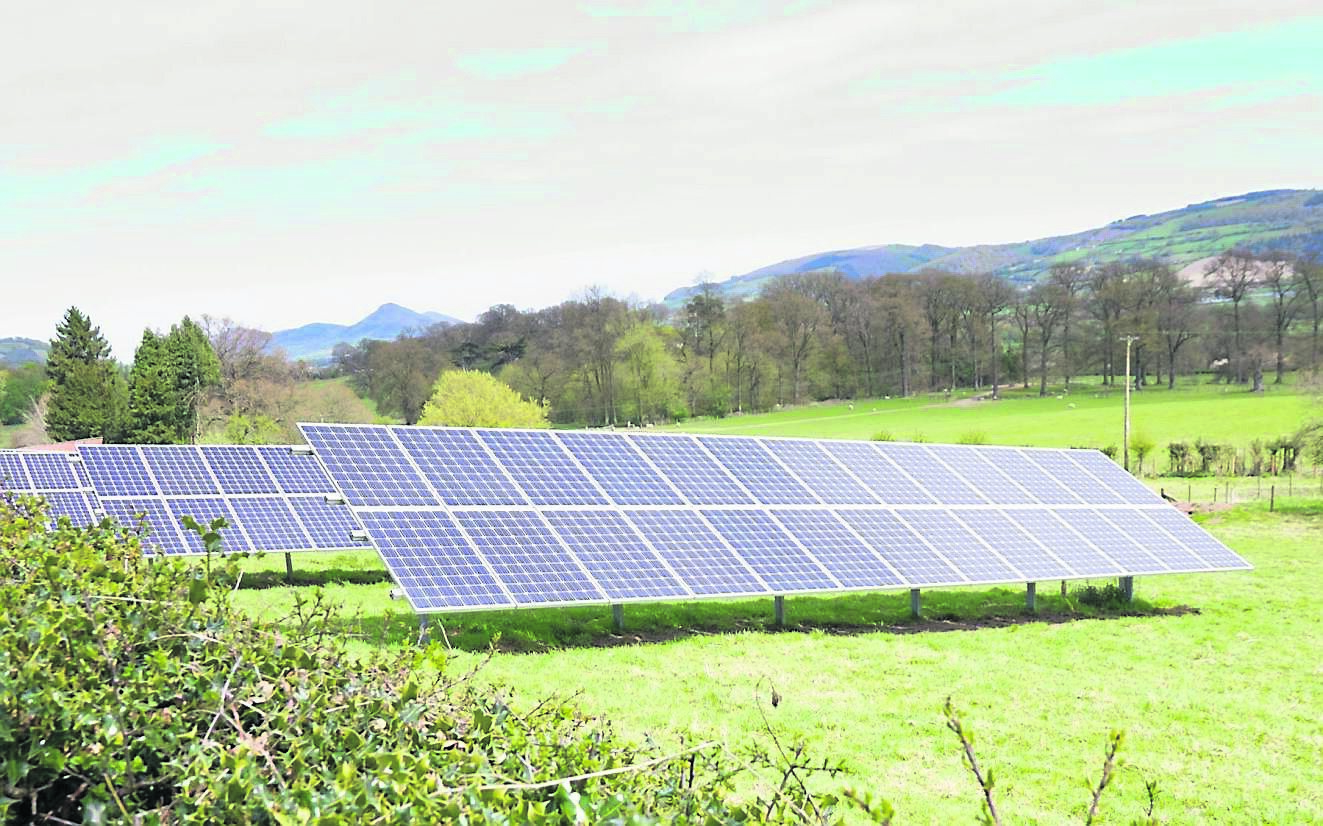
Solar energy microgeneration on farms will be the first piece of work for a new agriculture forum set up by Fine Gael.
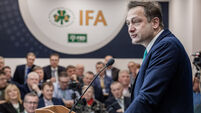
Eddie Downey, former IFA president and dairy, poultry, and tillage farmer, was elected chairman of Fine Gael’s national Agriculture, Food, and Rural Development Forum, having run against Pat Deering for the role.
Speaking at the forum’s first AGM and special conference, Mr Downey, who farms in Co Meath with his wife Mary and son Patrick, said Fine Gael needs to “connect rural Ireland, plus the agricultural sector, to the Oireachtas; and we need to connect the Oireachtas back”.
“A two-way street,” Mr Downey said.
“We’re looking at a situation at the moment where there’s a message going out there: we must do good by the climate change agenda.
“But, we also must do good by the rural agenda.
At the moment, it’s do good for climate change, but wreck rural Ireland. That’s not acceptable.
"We can do both — we can drive on agricultural production and make a difference, and we can drive the climate change agenda in the same way.”
Minister of State at the Department of Agriculture, Food and the Marine Martin Heydon has proposed that the new forum’s first piece of work should be to explore the area of solar and microgeneration in agriculture, “with the aim of having a concrete policy position in place within three months”.
“The small-scale generation of energy by farmers can not only increase income streams but also represents an opportunity to lower the carbon footprint of the agricultural sector,” Mr Heydon said.
“Farmers have repeatedly stated that they are willing to play their part in decarbonising our energy system, and the issue of microgeneration has been raised with me frequently in recent weeks.
“It is emerging as one of the top agricultural issues, and I imagine it will only develop into the future.
“I believe there is a huge opportunity for farmers and rural communities to play a major role in this area.
“We must put policies and investment in place to support this.”
Tánaiste Leo Varadkar told the conference that he would like to see solar panels on all farm roofs, but “crucial to that is making sure that we guarantee farmers a decent tariff so that if farmers invest, they know they will get a return not in 20 years but in a reasonable timeframe”.
He said it is important that farmers have a number of sources of income alongside the “traditional” sources that come from food production.
At a recent meeting of the Oireachtas joint committee on agriculture, food and the marine, Conall Bolger, chief executive of the Irish Solar Energy Association said that solar provides a “practical option to aid agriculture” in its energy transition.
“The microgeneration support scheme should come into effect in July and ISEA members report significant interest from individuals, communities, farms and businesses seeking to participate in the energy transition,” Mr Bolger told the committee.
“Making land available for solar developments presents opportunities for farmers to diversify their revenues with minimal impact on the sector,” he said.
“Our estimate of the necessary solar contribution to meet Ireland’s renewable target entails using the equivalent of approximately one-fifth of 1% of agricultural land. Buildings such as sheds on many farms can host panels and enable farms to move towards energy independence.
“If one also considers the potential savings to the agri-food sector of farmers generating their own clean power, it suggests an immediate benefit to maximising solar.”
Mr Bolger said Ireland has the resource, land, and building stock, along with a sector that is “motivated and interested” in solar.
“Unfortunately, however, there are barriers inhibiting progress,” he said. “We believe there are three broad areas that require action, namely, support structures, taxation, and network access. The support structures require concerted action to maximise the take-up of solar by farmers.
“In our view, the design of the TAMS II solar grant has been unduly restrictive and that has minimised take-up.
“The microgeneration support scheme, announced in December 2021, now has a clear plan for homes to access its benefits. However, the timeline for farmers remains unclear and that should be addressed.”
He explained a second barrier that relates to an agricultural relief under capital acquisitions tax rules that “allows farming families to inherit agricultural land without being subjected to potentially unaffordable levels of inheritance tax”.
“Current rules allow farms with solar panels to qualify for the relief so long as the panels do not take up more than half of the total land area,” Mr Bolger continued.
“This stipulation is inadvertently preventing farmers from hosting solar panels. Easing the restriction could have an immediate impact for farmers and the solar industry.
“Solar installation does not prevent the use of the land for agriculturally relevant purposes such as sheep grazing.
Depending on the equipment layout, international experience suggests that 55% to 80% of the land under lease could be available for use, and that is before one considers use of the land under panels.
He also said that accessing the network remains another area of concern.
“It can be a lengthy, uncertain and expensive process,” he told the committee.
“Ireland needs to rationalise that process for all users, from an individual farmer seeking to export from his or her rooftop to the utility-scale solar farm.
“A helpful fix would be to ease the restrictive legislation in respect of so-called direct lines. Direct lines provide direct connections from renewable energy sources such as solar farms to the customers, which are typically large-scale industrial users.
“Direct lines could provide quicker routes for users to connect to renewable sources of energy. That would allow large energy users such as agri-food facilities to satisfy much of their demand from green sources.”
Teagasc research office John Upton told the committee that there is “considerable ground to cover” between now and 2030 to achieve targets set out in Food Vision 2030 and Ag Climatise.
“A prerequisite to the successful deployment of solar energy in agriculture is that it should be profitable and equitable across all farm types and stages of development, regardless of farming system deployed,” Mr Upton said.
“Opportunities for deployment of solar PV systems that are economically beneficial for farmers have been greatest where a significant part of the energy generated is consumed on the farm, for example, on dairy, pigs, poultry, and horticulture, thereby offsetting expensive grid-supplied electricity charges.
“In the absence of substantial on-farm demand for electricity or a significant export tariff, the payback periods can easily exceed 10 years, resulting in low levels of interest in solar PV systems on some farms.”
He told the committee that the opportunities for solar deployment on farms are great, “given that shed roofs are the ideal home for such systems and there is no shortage of space for these systems on a typical farm”.
“Enhanced energy security through the displacement of fossil fuels will bolster our national energy self-reliance through the consumption of locally-generated renewable electricity in place of electricity generated from imported fossil fuels,” he added.
CLIMATE & SUSTAINABILITY HUB