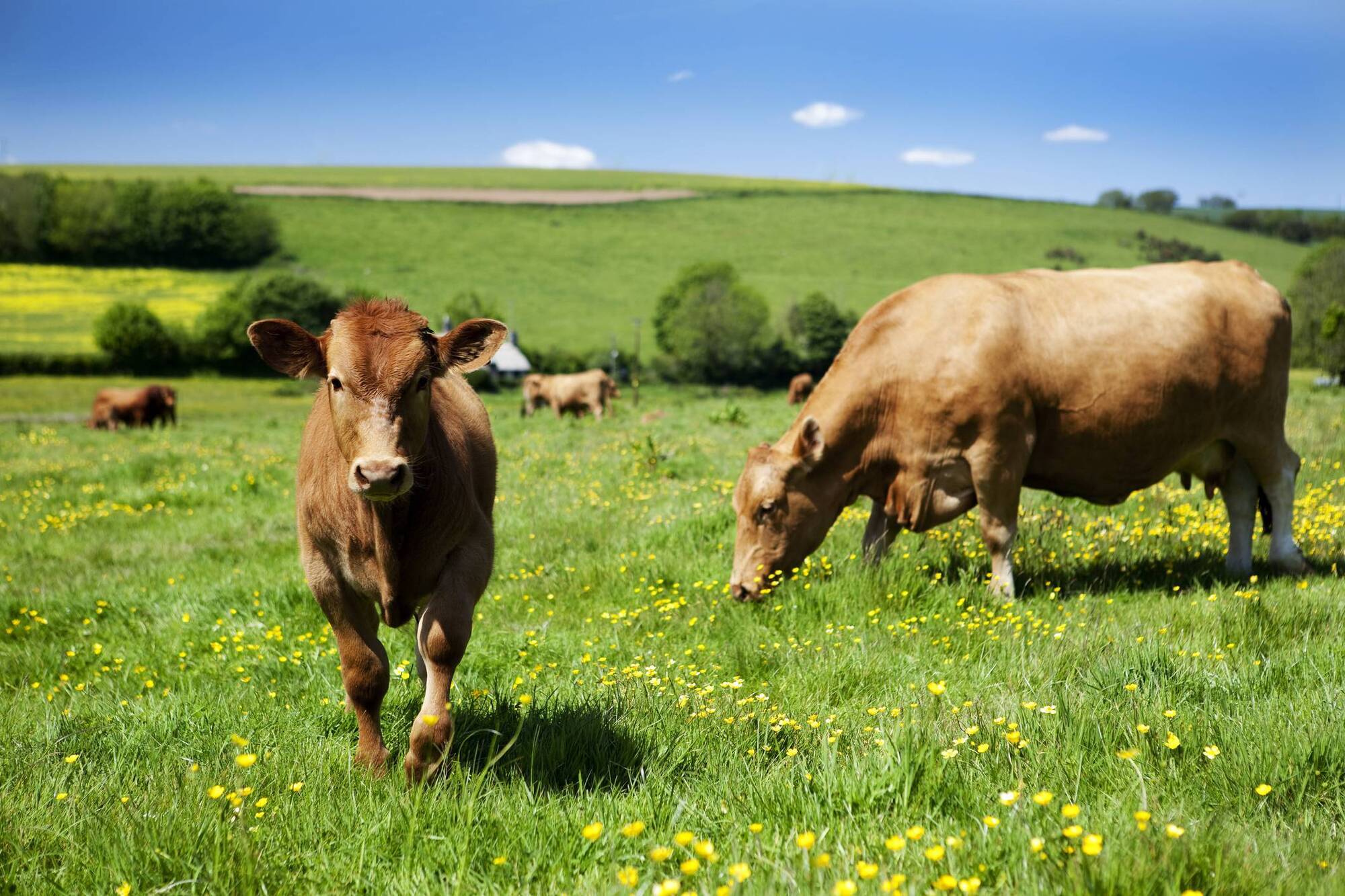
The price of fertiliser has “focused a lot of minds” this year and steered livestock farmers towards entering organics, according to Teagasc organic specialist Joe Kelleher.
According to the latest figures from the CSO, fertiliser costs rose by 149% in March this year compared to in 2021, while feedstuffs increased by 22.6%, and energy by 54.9%. Farmers are looking at these prices and considering ways to reduce or eliminate them, Mr Kelleher said.
There were 380 new applicants to the Organic Farming Scheme this year, which closed for applications on April 22. This was an almost 20% increase in application numbers to the scheme in comparison to 2021. Altogether, this means just under 700 new farmers joined the scheme in the last 12 months.
Minister of state at the DAFM, Pippa Hackett, said it is “extremely encouraging” that farmers and their advisors are responding to the scheme. Of the 380 new applicants, 40% were from cattle farming enterprises, while nearly a third were from sheep farming enterprises.
Some 7.5% of applications were received from mixed livestock enterprises, 4% from tillage, and 2.5% from dairy.
Mr Kelleher told the Irish Examiner these figures are promising, and that it was thought initially the application number “might have been even lower because the feedback from the farmers on the ground was that there was an awful lot of them postponing it until the October opening”.
Ms Hackett confirmed last month that the scheme would reopen again to new applicants in the autumn. She also said she encourages anyone who is interested in it to attend a farm walk on an organic farm this summer in preparation for joining the scheme.
Reasons for delay
There’s a “whole host” of reasons why farmers may have delayed joining until later this year, Mr Kelleher said.
“People want to see what the next round of CAP looks like, they want to see what the next organic scheme looks like, what the payment rates are like, they want to see how it [will tie] in ... with the various environmental schemes,” he explained.
“They want to see the two of them on the table in front of them and they want to be able to see how can they maximise the benefits in both schemes, which is fair enough.
“Then you have another category of farmers who maybe have a lot of work to do to housing, and they want to buy themselves a bit more time to get the housing sorted.
“The other part of that then is that there’s an anticipation there will be a higher level of TAMS grant aid for organic farmers in the next round of CAP, and people are holding out for that to help them modify their sheds as they need. You might have other reasons with land leases.
“There’s a whole host of reasons but the general indications are that there’s a lot of interest there for the October opening and we expect to see a good surge in applicants in October.”
Fertiliser prices
He said the price of fertiliser has “focused a lot of people’s minds”, especially those with beef and sheep enterprises.
“Beef and sheep are the two biggest [application] categories as they have been traditionally and the reason for that is they’re the nearest to organic farming in their current setup,” Mr Kelleher added.
“They don’t have too far to go to get to organic; for a lot of the beef and sheep farmers often it’s only a tweaking of their system, but for the dairy and the tillage it requires a more significant change to their system.”
The prospect of being able to “eliminate their fertiliser bill, get a cheque for organics, and a premium on products on top of that, and maybe cut back stock numbers slightly” is one that may leave some “in a much better place financially”, Mr Kelleher added.
The rest of the supply chain is able to keep pace with the increasing number of farms making the switch, he also said.
“The beauty of organics is the two-year conversion period,” he said.
“You’re sending a signal out. That signal has already gone to the beef and sheep processors that there’s going to be this extra amount of beef and sheep appearing in two years’ time.
“So they’ve got a two-year warning now to work with the likes of Bord Bia to find additional markets for that product but I think really there’s probably enough markets there already to take a lot of what’s going to come out of numbers that went in this time, in particular in the beef, there is strong demand there at the moment.”
EU Farm to Fork
There will be increased support for organic farming in Ireland in line with the programme for government commitment and EU Farm to Fork ambitions.
Mr Kelleher said the payment rates are “key” to enticing increasing amounts of farmers to convert. Organic farming involves undergoing a period of conversion in which the land and producer adjust to the organic methods.
Prior to commencing conversion, the farmer must submit an application along with a conversion plan, drawn up by either the farmer or a qualified planner to the inspection body for approval.
After the required conversion period expires, the inspection body may issue organic status to the farmer, unless the conversion period is being extended, which allows the farmer to sell their produce as organic. The DAFM acknowledges that there is often a financial cost associated with conversion.
Factors include:
- output reduction due to changes in production practices;
- certification and inspection costs;
- loss of some direct support payments;
- and inability to command premium prices during the conversion phase.
For those entering the scheme, they could qualify for annual payments of up to €220 per hectare during the conversion period, with that payment reducing to €170 per hectare when they have achieved full organic status when the organic premium price can then be commanded.
This week, it was also announced that the next tranche of the Organic Processing Investment Grant Scheme is open.
This scheme aims to develop the organic sector ensuring a consistent supply of high-quality organic produce to the market. It provides funding to processors who wish to invest in developing facilities for the processing, preparation, grading, packing, and storage of organic products.
Funding of €1.2m has been allocated to the scheme. Applicants can apply for grant aid for off-farm investments up to €700,000 on eligible expenditure. The scheme continues to open in tranches, and this tranche will remain open for applications until July 31.
Ms Hackett said that with the demand for organic produce continuing to increase each year, she is “steadfast in [her] commitment to the development of the Irish organic industry by providing the necessary supports to producers and processors to meet market demands”.
“Following the continued success of the Organic Farming Scheme in increasing the overall yield of quality organic products, the Organic Processing Investment Grant Scheme provides essential financial assistance in the processing of these products, increasing the supply of quality Irish organic products to both domestic and international markets,” Ms Hackett added.
There is a commitment in the current programme for government to align Ireland’s organic land area with that of the current EU average of approximately 7.5% over the lifetime of this Government, with a five-fold increase in funding to €256m in the next CAP.

Subscribe to access all of the Irish Examiner.
Try unlimited access from only €1.50 a week
Already a subscriber? Sign in