Agriculture can not only ‘help itself, but also other sectors’ in decarbonising
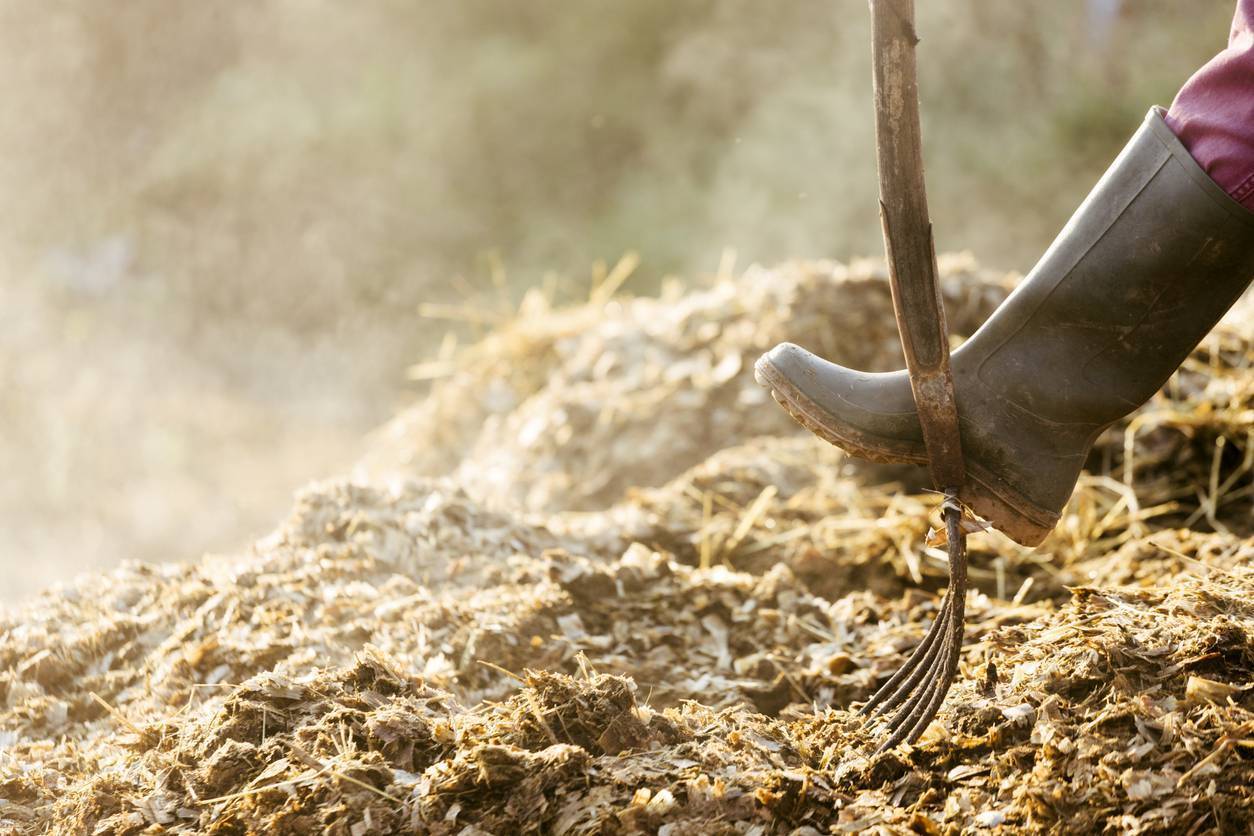
'You have a whole biogas industry that could be developed based on waste residues from slurries, farmyard manures, all that type of material, but the policy framework and landscape doesn’t support it.' Picture: iStock / Getty Images
Speaking to the at a recent event held at Teagasc’s Ashtown Food Research Centre on using carbon-neutral biomass to reduce farm fuel costs, Seán Finan, chief executive of the Irish Bioenergy Association (IrBEA), said as an “agricultural country, there’s a huge opportunity for bioenergy”.
Bioenergy is energy generated from renewable biomass. Biomass includes any material which is or is derived from plant matter, animal matter, fungi, or algae — such as wood, straw, energy crops, sewage sludge, waste organic materials, and animal litter.
Agriculture is not only a large energy consumer, but it also holds the potential to become a large-scale energy generator, researchers explained.
With the general shift away from fossil fuels, demand is being created for renewable inputs, with biomass crops being one of those.
Mr Finan said the current policy landscape is “very much based around electrification”, with discussion focused on heat pumps, and electric vehicles, for example.
However, citing figures from the World Bioenergy Association, he said that while bioenergy makes up 67.2% of total renewable energy production globally in 2018, this was not reflected in the policy discussion at an Irish level.
“Aside from the Support Scheme for Renewable Heat, we don’t really have meaningful policy support frameworks,” Mr Finan said.
“[Yet], as an agricultural country, there’s huge opportunity for bioenergy.
"You have a whole biogas industry that could be developed based on waste residues from slurries, farmyard manures, all that type of material, but the policy framework and landscape doesn’t support it.”
The IrBEA is “strongly calling” for that to be developed, Mr Finan said.
“Ireland has the greatest potential in terms of anaerobic digestion or biogas feedstocks across all of the European countries,” he added.
“So why not utilise that? Add value, reduce our dependence on fossil fuels and gas.
“Our current discussions from a policy position will only get us so far, we need to go an awful lot further, and we see strong potential in bioenergy.
“We believe that our time will come…but it needs to be now because the opportunities are there, the resources are there.
“But the challenge is there, and the current policy discussion is very, very narrow and it needs to be broadened.”
Barry Caslin, Teagasc energy and rural development specialist, told the that with energy prices increasing “exponentially” for all industries, farmers need to be looking at where they can make some changes.
He said some industries will be most affected by energy costs — such as pigs, poultry, and horticulture — but that “all you can do is what’s in your control to do” and implement simple measures where possible.
After that, Mr Caslin said farmers should look at what kind of renewable technology could be relevant to their farms.
“It could be a renewable technology such as the biomass boiler, and that boiler could be potentially used for a substitute in the heat that will be coming from maybe coal or from oil or gas,” he said.
“You could be looking at heat pumps as a technology and it may suit certain businesses, may even suit dairy farms to be using heat pumps, while biomass boilers would be very relevant to pigs, poultry, and horticultural sectors.”
Renewables, in general, are going to require a lot of land, and farmers will have a “big role”, Mr Caslin said.
However, some worry that in promoting land-hungry anaerobic digestion, significant portions of quality farmland could be used purely for energy production rather than food.
“Land must continue to be used to produce food, and that should be the number one priority”, Mr Caslin said. “But as a landowner, you have to look at your assets, which is your land, and see what’s the best use for you.
“Every sector will have a role to play, and I see this as an opportunity for agriculture, rather than a threat.”