Forestry 'falsely inflating' farmland prices contributes to rural decline
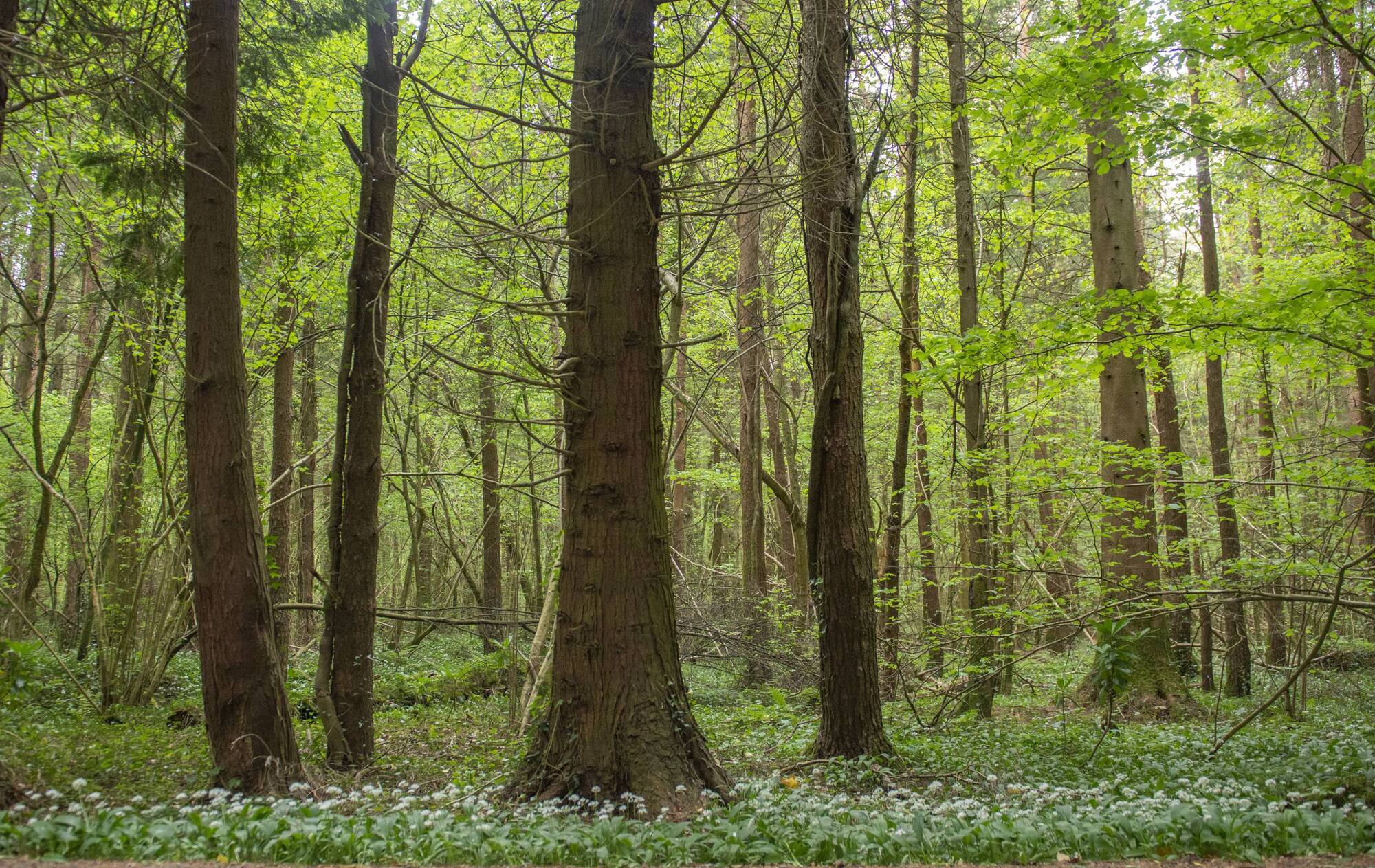
The Save Groups told the Oireachtas that the use of state aids is favouring investor-led afforestation over more balanced and diverse forestry land uses
Forestry 'falsely inflating' farmland prices contributes to rural decline

According to the submission of the Save Groups to the Oireachtas: ‘Ongoing inappropriate afforestation and forestry activity combined with forestry legacy issues is having an enormous detrimental impact on our areas and counties.’

Forestry has contributed to the “decline of farm families” in rural areas “by falsely inflating the price of farmland”, an awareness group has said.

According to the submission of the Save Groups to the Oireachtas, in some areas, there are “very high cumulative levels of afforestation, felling and replanting which is not sustainable”.

“Ongoing inappropriate afforestation and forestry activity combined with forestry legacy issues is having an enormous detrimental impact on our areas and counties,” the submission reads.

“The current forestry policies and programmes and forestry model and its implementation by the forest service is compromising the social and ecological fabric of our counties and areas around the country.”

Farmers in the “save areas” — namely Leitrim, west Cavan, Kerry, and Wicklow — are “in the main, not investors”, while they try “to make a living from farming the land which has in many cases been in their families for generations”.

“The land is generally of high nature value and is farmed extensively and in many cases organically,” the group said.

“These farmers want to farm as they need an ongoing income and turnover of cash to continue with their lives and they do not want to plant all of their land, but unfortunately many come to the end of their careers and lives having little option but to sell their land to survive into retirement or through poor health.

“The main model of forestry [based mainly on low-quality timber production] and the level of supports for farmer-led forestry is not [at] a level to attract farmers to plant up much of their land.

“On the other hand, there are plenty of investors who are intensive commercial farmers [from other parts of the county] but who don’t and never will farm in our areas and who are buying large blocks of land including whole farms to plant up with conifers.”

Representing Save Groups at a meeting of the Oireachtas joint committee on agriculture, food and the marine, Francis Cassidy said that in many areas, forestry “has a bad name”.

“It has resulted in a decline of farm families living in our area by falsely inflating the price of farmland, enabling investors to outbid local interests,” he said. “The subsequent reduction in population has further deprived our rural villages of services and users.

“Our landscape has been irreparably blighted, not just by forestation itself, but by the clear-felling which leaves vast tracks of our hill sites barren in a manner similar to Armageddon.”

Mr Cassidy said that although some of the forestry is privately owned, a “very small part” is owned by people residing in the area.

“To the families of west Cavan, Leitrim, Kerry, Wicklow, it is no different whether the Sitka is owned by Coillte, a pension fund, or a farmer from Cork,” Mr Cassidy continued.

The daylight is blocked; the neighbour is gone. Absentee landlords are no advantage to the local economy. They pay no road tax, no development levies on new builds or extensions, they employ no workers. It’s a lose-lose.

“A family which remains are often the last families on laneways, which were planted on both sides, creating a tunnel effect.

“Isolation and light deprivation are well-known contributors to depression and social withdrawal.”

State aid

Representative, Brian Smyth, said that the pressures seen on farm families from the “state aid exemption” is “problematic”, and that it is “distorting the decisions farmers make, the entry of new farmers and the access to land both to lease and to purchase”.

In their submission to the Oireachtas, the representatives said that the use of state aids — “grants, premia payments, and tax breaks is favouring investor-led afforestation over more balanced and diverse forestry land uses which can equally tackle biodiversity and carbon issue and be socially sustainable”.

“The afforestation scheme is distorting the access to land. It is when the percentage of land reaches a certain limit acceptable to local people at least that the issues have arisen and the resistance to it has increased and is increasing all the time,” Mr Smyth told the committee.

“There are very different types of forestry: A farmer planting some space is very different than a corporate drive to produce timber, because farmers need a regular income over a long period of time rather than investing, sitting back and waiting for that to mature and return on the investment.

“There is no real distinction in the afforestation programme between the goals of achieving quality net carbon sink or carbon sequestration as opposed to timber production.

“There needs to be a distinction. The system of support for farmers needs to be different than that for timber production because farmers aren’t timber producers necessarily.

“They want to farm, young people want to get into farming, and forestry is certainly a mix for many on the farm but it is not the be-all and end-all.

“It should be possible for them to make decisions to plant that as part of a multi-income source and rather than focus necessarily on timber, they should have the option for biodiversity reasons or long-term carbon goals.”

Demographic decline

Mr Smyth said that “the drive” to plant in areas like Leitrim, west Cavan, east Clare, north Kerry, Wicklow, “is driving people out and creating demographic decline beyond what would be expected in these rural areas”.

“There is no consideration of the goals of local communities,” he said.

“If a parish wants to try to keep a school open, the goal is to limit the number of farms sold and planted so that people can actually live there. That goal is not accepted or reviewed in the process of afforestation licensing, which is problematic for many communities.

“There are many other goals such as keeping the village alive and keeping the shop open.”

As the “drive to plant” continues and increases, it is “distorting the economy as well as the land market”, Mr Smyth added.

“It is good for everybody that land prices increase but it is when that creates other problems that it becomes a problem in itself,” he said.

“That is what we are concerned about. If 10 farms are planted, that is 10 families gone for two cycles — 80 years minimum. There is no real land-use plan as to what level of afforestation is acceptable to keep communities viable.”

Balance

Senator Victor Boyhan told the meeting that the committee must “stand in solidarity with communities that wish to see their community develop in a sustainable manner”.

“We need a land-use plan and there must be a balance between forestry, agriculture, tourism, and other sustainable development, but there must also be support for the communities in the area,” Mr Boyhan added.

Michael Fitzmaurice TD said that a balance must be struck in each county. “We need a certain amount of forestry, and there is no point in saying we do not,” he added.

The Department of Agriculture is currently preparing for the development of the next forestry programme.

Mr Cassidy told the meeting that this “has to have the buy-in of local communities”.

“We want to see a better vision for rural Ireland,” he said. “Forestry has a role in that, but it is not the saviour of Ireland, no more than it is the saviour of the carbon budgets. It is only a small part of it. People and communities are the future.”

A public consultation survey on the future of forests in Ireland closed this week. This was the latest step in developing a new forestry strategy for Ireland.
Minister of State at the Department of Agriculture, Food and the Marine Pippa Hackett told the meeting that the department is “doing everything we can to bring as many people on board, to help us as a State to decide what we as a nation want from forestry”.

“We are in the process of continuing to engage with different stakeholders; my department has had bilaterals with nearly every stakeholder who wants to engage with that process,” Ms Hackett said.

“We absolutely need a commercial forestry sector. It is essential, particularly when you look at why it was set up initially. It was for remote rural areas that needed jobs. It has served that end. We need to make sure that continues.”

x

More in this section

Farming

Newsletter

Keep up-to-date with all the latest developments in Farming with our weekly newsletter.

Cookie Policy Privacy Policy Brand Safety FAQ Help Contact Us Terms and Conditions

© Examiner Echo Group Limited