Report sets out where you'll find Europe's most expensive farmland
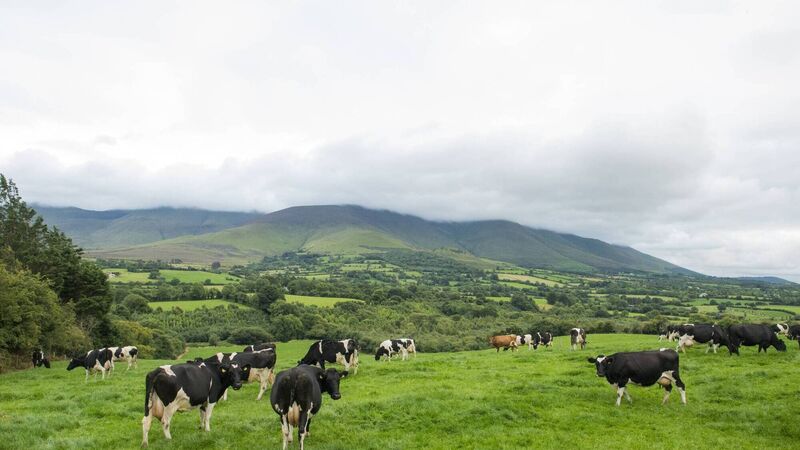
Herd of Friesian cattle grazing beneath the Galtee mountains, Glen of Aherlow, Tipperary, Ireland.
The most expensive place to rent farmland in the EU is the Italian region of Friuli-Venezia Giulia.
The average rental of €1,714 per hectare in this region of north-eastern Italy is slightly more than twice the national Italian average, according to Eurostat’s latest report on land rental and sale prices.
The report, mostly based on 2020 prices, reveals that Ireland has the fourth-highest farmland rental or sale cost.
Eurostat said it averaged about €320 per hectare per year to rent arable land and/or permanent pasture in Ireland in 2020. The land sale price was about €25,000 per hectare for arable land in Ireland in 2020.
The report reveals huge variation between and within member states in agricultural land prices and rents.
Eurostat said prices depend on many factors, including national laws; regional climate; productivity factors such as soil quality, slope, and drainage; and the market forces of supply and demand (including foreign land ownership rules).
Competition for land comes not only from farmers but also from others planning to use land for purposes other than agriculture.
However, the Netherlands is the most expensive member state for arable land, with a hectare averaging €69,632 in 2019. The price of arable land in every region of the Netherlands was above all other available national averages in the EU.
Among the member states for which data are available, renting one hectare of arable land and/or permanent grassland was most expensive in Italy (an average of €837 per year in 2020). Next was the Netherlands, at about €800, followed by Denmark at about €550.
Austria had a rental cost only marginally below Ireland’s €320 per hectare, and then came Belgium, Luxembourg, Poland, Finland, and Bulgaria, all with a rental cost averaging about €250.
Figures are included for Norway, at only about €30, with land rental costing from about €180 down in other EU member states.
Overall, in 2020, renting agricultural land was cheapest in Slovakia, with a hectare costing an average of €57 for the year, although the cheapest regions in the EU for renting agricultural land were Central Norrland and Upper Norrland in Sweden (both €34 per year).
But data was not available for Cyprus, Germany, or Portugal.
Not surprisingly, the cost of buying land in different member states has similar rankings to rental rates.
However, the Netherlands comes out on top, at nearly €70,000 per hectare of arable land in 2019.
Next comes Luxembourg, at nearly €40,000, in 2020.
It's about €35,000 in Italy, followed by Ireland at about €25,000.
Lower rates were seen in Romania, France, Bulgaria, Hungary, Latvia, Lithuania, Slovakia, Estonia, and Croatia.
Arable land was cheapest in Croatia, with a hectare costing on average €3,440 in 2020.
At the regional level, a hectare of arable land was cheapest in the Övre Norrland region of Sweden (averaging €1,822 in 2020).
Data was not available for Belgium, Germany, Cyprus, Malta, Austria, and Portugal.
From the data available, the strongest purchase price growth between 2011 and 2020 for a hectare of arable land was in Romania and Czechia (both with a more than five-fold increase). Other sharp rises were recorded for Estonia and Lithuania (both about a three-and-a-half-fold increase, albeit remaining among the lowest national averages in the EU), and Bulgaria, Hungary and Poland (both more than doubling).
Prices rose in most other Member States too, albeit at much lower rates. The notable exception was Greece, where the average price of arable land declined (by about 18% in the period under consideration).
Buying irrigable arable land was more expensive than non-irrigable arable land in almost all regions in Spain (it was almost six times more expensive in the Spanish region of Murcia) and Slovakia, but cheaper in almost all regions in Italy (particularly in Liguria where it was half the price).
The Eurostat figures are used by EU agriculture policymakers when evaluating the impact of the CAP and other policies.