Livestock farmers should not wait to be asked to carry out a national inventory. Advisors warn they should take urgent action this week to conduct their own on-farm inventories to establish how they will be set for the winter, before time runs out to sow fertiliser and increase spring yields.
The Irish Farmers’ Association has been calling for a national fodder survey, however, Teagasc Dairy Advisor Adrian O’Callaghan has told farmers not to wait for Government instruction.
Advisors at the Cork Central IFA meeting warned farmers that “time was tight” in terms of making an impact on the crop.
“There are calls for a national inventory but I think everyone should be doing a fodder survey for themselves over the next week or so,” Mr O’Callaghan said.
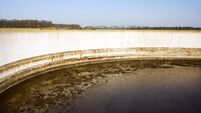
“At this stage, with the weather picking up, hopefully, most stock are out or on their way out, and what silage is left in the pit now can be measured and counted for the winter at the end of the year.
“What we need to do is to evaluate stocks on the farm, establish what we need and what we can supply for the coming year and then ask the question is there a surplus or a deficit?”
A survey of dry stock farmers carried out by the advisory body a few weeks ago suggested a 20% surplus in fodder stocks.
However, with farmers opting to use less fertiliser as a result of spiralling input costs, its feared spring and summer yields could be much lower than in previous years.
“[The survey] wasn’t taking into account that the winter wasn’t finished just yet, but overall there seems to be silage in pits or bales left over,” Mr O’Callaghan said.
“Everyone has a ‘rainy day’ surplus but everyone has different attitudes to risk. Some people under no circumstances will touch that surplus – it’s there for the real rainy day. But I ask the question now, ‘is this year the rainy day?’ “Is this year the year when you should eat into the surpluses based on the cost of nitrogen? Really that is dependent on your attitude to risk and how much of that surplus you want to use.
“You have to ask yourself that question.”
Mr O’Callaghan also warned to be careful with alternative crops and to consider whether it was suited to the farm set-up.
“You have to ask if it is compatible with your facilities,” he said.
“Because indirectly, you may be able to grow the crop, but can you feed it?
“In a lot of cases they’re well able to grow the property, but they’re definitely not able to feed it because their feeding facilities let them down.
“When you’re using maize or beet or anything like that, you really need to feed all the animals in one bowl because it just brings problems with acidosis if some animals get get a lot and others get none.
“The other issue is cash flow - if you’re going to come to a deal with a neighbouring tillage farmer to grow these crops there’s a cash flow issue.
“He is not going to wait all the way to next September October to grow that crop for you. He’s going to expect some cash in return and just cash flow issues in that you have to meet.
“And then, there’s the cost of re-seeding back to grass - that’s a substantial enough cost which has also gone up with the cost of fertiliser. At this stage, that’s probably sitting somewhere around €400 an acre.”
The situation is similar north of the border, where Ulster Bank’s Senior Agriculture Manager Cormac McKervey warned cash flow was now the “single biggest issue” for farmers.
“Turnover is through the roof during this period of inflation. Farm profitability on the whole (other than for pigs) hasn’t been impacted yet. Our biggest concern isn’t of profitability – it’s of cash flow.
“It’s the single biggest issue at the moment,” McKervey said, advising farmers to take out for loans to buy fertiliser rather than digging deeper into their overdrafts.
“Short-term, we have some concern that farmers aren’t buying and sowing fertiliser that will mean less grass is grown which will, in turn, mean less silage is available for feeding stock next year,” he said.
BLACK FRIDAY
50% off monthly and annual subscriptions.
Already a subscriber? Sign in