Take stock of feed needs and think ahead
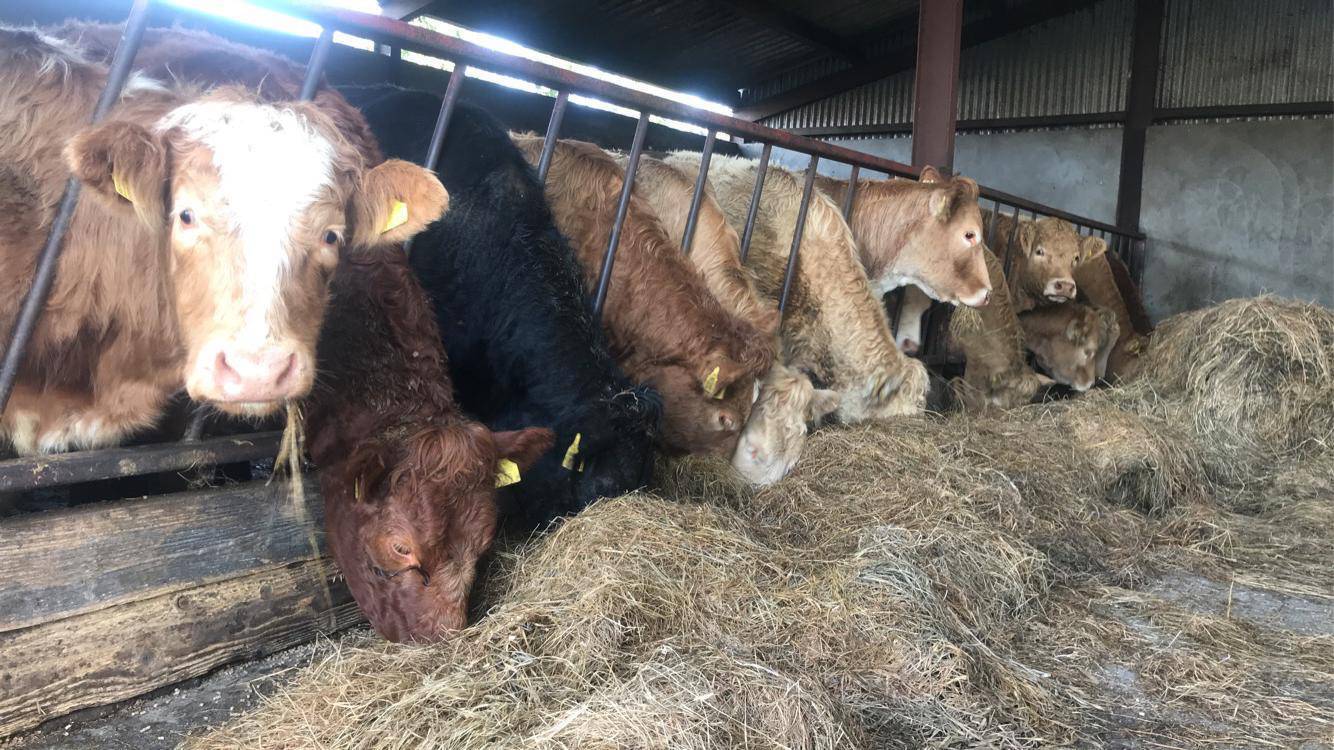
Some level of concentrate supplementation will be needed, depending on the stage of lactation or dry cow period, due to the cow’s requirements for protein and energy.
With the previous winter still in our sights, now is the perfect time to look ahead from a feeding perspective.
To conduct a feed budget, measure your silage pits to work out the tonnes of silage left. If required, ask for advice from an advisor or nutritionist when calculating the tonnage, as this will depend on the dry matter of the crop. With the time to spread fertiliser for silage ground fast approaching, now more than ever, it is worth calculating how much tonnage you will require.
To begin, think carefully about making three high-quality cuts of silage instead of two big cuts. The longer a crop of silage is left to bulk up, the lower the quality of the crop. A typical first cut of silage, which has been growing for 6–7 weeks, will yield a crop of 12 tonnes to the acre at a dry matter of 23%.
A second cut can yield a crop of 10 tonnes an acre, and a third cut potentially yields a crop of eight tonnes an acre. Added together, this is the potential of 30 tonnes of high-quality silage compared to two big cuts of poorer quality silage.
If 25 acres of silage are cut three times, this will be 750 tonnes of fresh weight silage.
On paper, that's enough silage to feed 100 cows for five months at 1.5 tonnes of silage consumed per cow per month. An excellent cut of silage should have at least a DMD of 70 with energy of 11 ME and protein content of 14%.
Due to rising fertiliser and diesel prices, the cost of silage per kg dry matter will work out close to 21–24 cents per kg DM compared to the average cost of concentrates at 35–36 cents per kg DM.
Some level of concentrate supplementation will be needed, depending on the stage of lactation or dry cow period, due to the cow’s requirements for protein and energy. Using the services of a nutritionist can help to decide what rate and type of supplementation are required for your herd based on the results of the silage.
In the past two weeks, questions about alternative forage options have come up daily.
The options with wholecrop silage are well known (for example, as either spring barley or winter wheat).
Cereal wholecrop has a typical feed value of 40–45% dry matter. It has an energy value of 10–10.5 ME. The fibre content of the crop will be high, at 45–50% NDF. Wholecrop is a low-protein feed, at 9–10% crude protein. When selecting a wholecrop variety, select one with a high grain content, as this is where the energy of the crop will be.
The grain content needs to have at least 3.5–4 tonnes of grain yield per acre. An excellent crop will have a 60:40 grain to straw ratio, but depending on how low the crop is cut, this can be a 50:50 split.
The higher the straw content of the crop, the lower the energy value. Expected yields of spring barley wholecrop vary from 8.5–11 tonnes, while winter wheat wholecrop can have yields of up to 13 tonnes an acre in fresh weight. Wholecrop is generally used as a feed in the autumn when cows are still being fed grass by day but require a buffer feed at night.
The value in the crop comes in the form of its starch content, which can be between 23–28%. This high-starch feed combined with the high dry matter works well at putting condition on cows during late lactation.
Feeding rates can be 8–12 kg of fresh weight per head for a mature cow and should be fed along grazed grass as part of a buffer or mixed with good quality grass silage as part of the diet.
With the sowing window around the corner from mid-April to mid-May, the decision around site selection has already begun.
As a feed, maize is high in energy at typical values of 11–11.5 ME. The dry matter will be 30–35%, while protein is at 7–9% crude protein. The fibre content of maize will be around 40% NDF, depending on the maturity of the crop. The benefit from a feeding perspective is the high starch content. Maize silage will have a starch content of 30–35%.
The biggest benefit of feeding maize silage for a spring calving herd is in the early stages of lactation. Due to its high energy and low protein, it complements grazed grass as a night-time buffer feed, as grazed grass is high in protein.
Maize can be fed effectively from 8–20kg fresh weight per head as part of a balanced diet. A maize crop can yield 20–22 tonnes of fresh weight per acre. If budgeting to grow maize as a buffer feed, allow for feeding 12kg per head for a minimum of 100 days of feeding.
For a 100-cow herd, this is 1,200kg per day. For 100 days, this farm would need 120 tonnes of maize. In this case, six acres of maize would be sufficient to cover this herd’s maize requirements.
An important factor to remember when feeding maize is that it needs to be supplemented with a high-phosphorus mineral, as maize is low in phosphorus. Maize can be ensiled on its own but can also be ensiled with chopped fodder beet and soya hulls to form a forage mix.
The ratio at which maize, beet and hulls are mixed will depend on the dry matter of maize. Seek the advice of a nutritionist if looking at pitting different feeds together.
There has been much discussion of home-grown cereals in recent weeks. As with all cereals, it is important to understand the storage and handling of any cereal.
Crimping grain refers to harvesting the grain at 35–45% moisture. The grain is crushed when harvesting and stored in an air-free zone.
Once the crimped grain is covered, it undergoes lactic acid fermentation. Typical feed values of crimped grain range from 60–65% DM at 13.2 millijoules of energy.
The protein content of the crimped grain is low at 10% crude protein but has an excellent starch content of 55–60%. The use of additives can be added at the time of ensiling to avoid moulds developing. The feeding rates for crimped grain can be 3–4.5kg per head daily.
Urea-treated cereals refer to treating the cereal grain with ammonia treatment at a moisture content of 16–23%. The grain needs to be treated whole, not crushed, and covered for a month before the seal can be removed.
The feeding value of urea-treated grain can vary from 80–85% DM. The energy content is 13.2 millijoules/DM with a protein content of 15–16% crude protein.
The advantage of treating the grain whole is that more wholegrain can be stored in an area compared to a crushed or rolled grain. The urea treatment of grain can also lift the protein content by 20%, depending on the product being used. Feeding rates for urea-treated grain can vary from 2-4 kg per head daily.
Most commonly known as prop corn, which refers to treating grain with propionic acid at a moisture content between 16–24%. The advantage of prop corn is that the acid can be applied to the grain at the time of rolling the grain during harvest.
The rates of propionic acid vary depending on the moisture content of the grain. The biggest advantage of the prop corn is that it can be fed straight away. There is no minimum storing time or fermentation process. Store in a cool, dry, well-ventilated shed. The feeding rates for prop corn can vary from 1–4kg per head.
- Bernard Stack, InTouch feeding specialist, Alltech Ireland