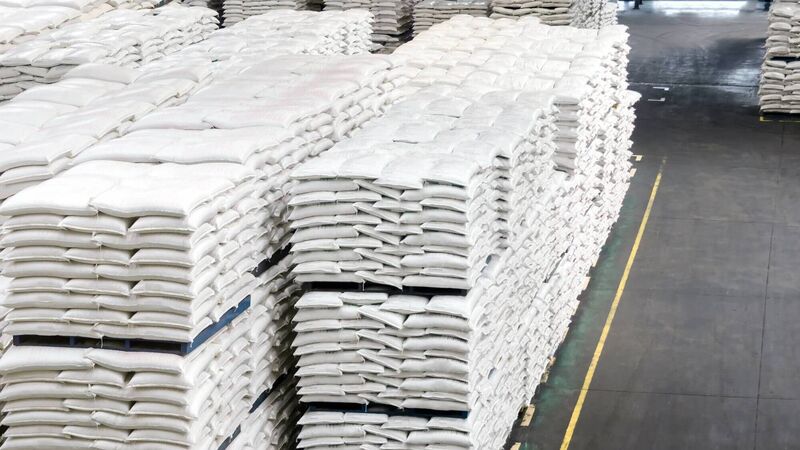
Russian trade sanctions and political unrest have dashed hopes of fertiliser prices falling in time for Ireland’s peak grass growing season.
Russia had banned ammonium nitrate exports since the beginning of February, while gas prices have also continued to surge, causing fertiliser prices to hit unprecedented levels.
Industry bodies had initially hoped prices would ease with the planned ending of the ban on April 1.
However, sources told the Irish Examiner recent political developments meant this was no longer likely, amid warnings European gas prices could double after Germany withdrew its approval for the Nord Stream 2 natural gas pipeline.
Industry experts have warned farmers who haven’t already bought what they need should place orders now to ensure supply.
Russia is an important global player with regard to the production and export of nitrogen and phosphate fertiliser and is a key supplier of fertiliser to Ireland.

According to CSO data, Russian fertiliser imports accounted for 22% of our total fertiliser imports in 2020.
Teagasc’s chief economist Kevin Hanrahan said it was likely Irish fertiliser prices would increase further.
“Any possibility of extending that export ban, or anything that pushes natural gas prices higher than they are, will increase fertiliser prices that farmers are already facing,” he said.
“We know that natural gas prices had increased by around 100% in December compared to the previous year. Our forecast then was that wasn’t going to reverse in time for the key spreading season for Irish agriculture.
“Now you are looking at least elevated fertiliser prices through until next year.
“If natural gas prices stay as high as they have over the last quarter, then [fertiliser production] plants that are currently offline will remain offline and some more might go offline.
“The available supply in Europe will be tightened and that has immediate knock-on consequences for fertiliser prices, for crop yields – which means that the impact will continue into 2023.”
CAN is expected to be particularly affected. Ammonia is the main constituent of CAN, with around 80% of the price of ammonia linked to gas prices.
Eva Ross, business manager of Yara in Ireland, explained: “The whole supply side of things will no doubt have an effect on fertiliser prices because at the moment gas prices are already very high.”
The firm, which is one of the biggest Nitrogen producers globally, has sites in Cork, Tipperary, Belfast, and Co Down.
On Tuesday, the Dutch TTF Natural Gas, the index used by industry to benchmark gas prices, hit $24 per Metric Million British Thermal Unit, the standardised unit used to trade gas internationally. It compares with $5.50 per unit this time last year and the recent lowest at $2.50 in May 2020. “15.5 million tonnes of CAN were produced globally in 2020, with 75% of that produced in Europe. If European factories are buying at high gas prices it’s only going to increase prices,” Ms Ross said.
“We are keeping a watchful eye on the situation between Ukraine and Russia because it will have an effect on gas prices globally.
“It is important that if farmers they haven’t already bought what they need that they go and purchase product to ensure supply.”
Mr Hanrahan explained it was crucial farmers carefully considered their fertiliser usage, recommending they consult with their private or Teagasc advisor on how they could cut back.
“I wouldn’t be encouraging people to rush out and pay the exorbitant price at the moment to avoid further increases,” he said.
“I think what farmers need to do is to think long and hard about what they really need to use. Can they get away with using less than they did last year?
“Look at your budgets; how much money did you make last year per hectare or input and consider how much scope — if any — you have to reduce your inputs.”
With around two thirds of Irish soils estimated to be at suboptimal fertility, Mr Hanrahan said steps to improve nitrogen efficiency would pay dividends.
“Liming is a very smart way to spend your money,” he said. “For an awful lot of farmers, the money they spend on fertiliser is money wasted because they are not getting their value out of it because their soil fertility is suboptimal.”
The best money they can spend is the money spent on liming: “By getting the pH to rise, it means that the money that you do spend on fertiliser this year and every year afterwards will give better returns - and that’s regardless of whether fertiliser prices stay where they are now or change again.”

Subscribe to access all of the Irish Examiner.
Try unlimited access from only €1.50 a week
Already a subscriber? Sign in