Why Ireland's beef exports are under threat from the UK's post-Brexit trade agreements
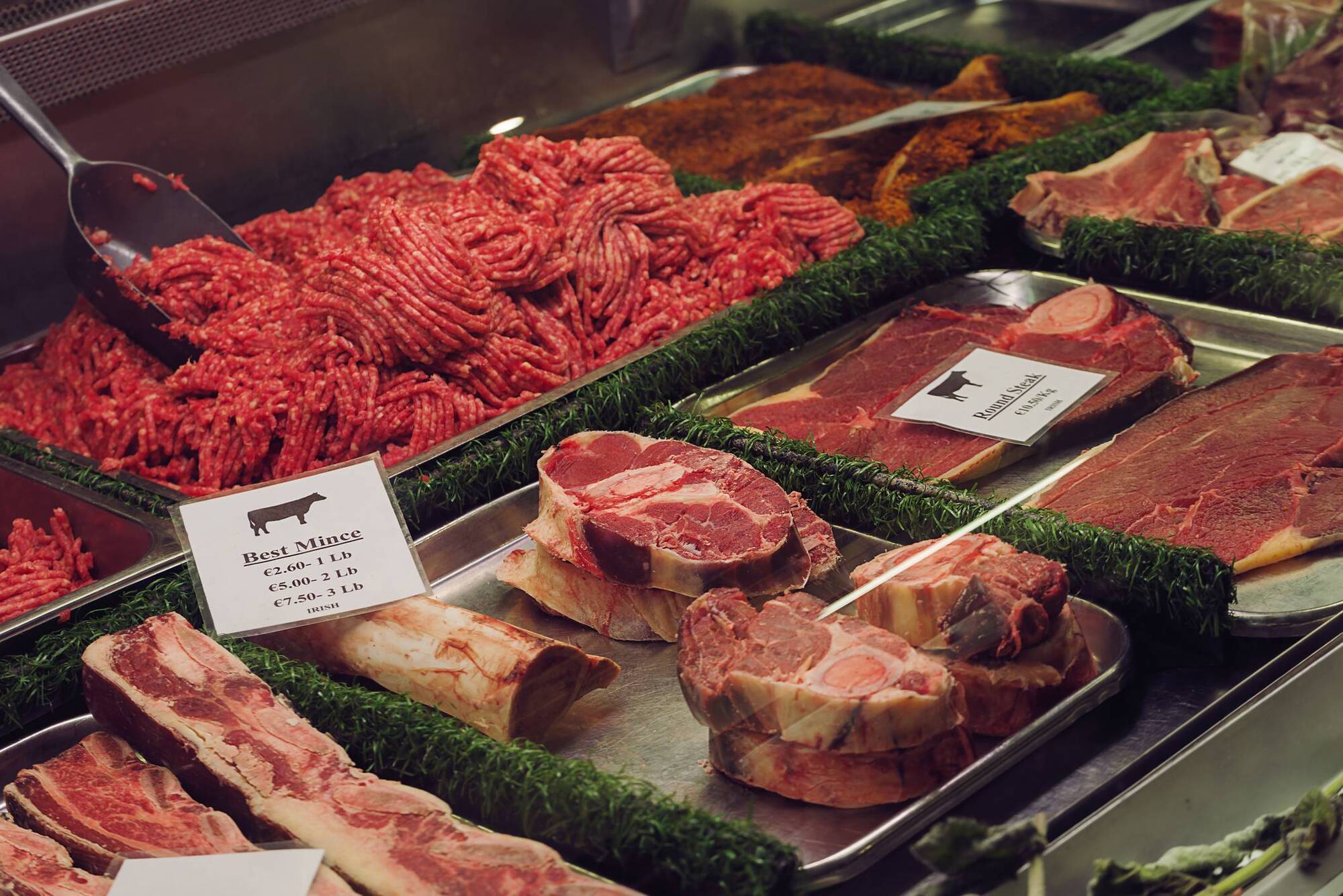
Total beef exports to the UK were down by 2% in 2021 at around €880m.
Two major free-trade agreements struck by the UK are likely to threaten some of Irish beef's €880m in exports to the UK over the next decade, a new report has warned.
After 16 months of negotiations, the UK and New Zealand governments agreed in principle on new free-trade agreements in October and both sides continue to discuss further details of the agreements.
However, a report led by former IFA Chief Economist Con Lucey warns that Australia and New Zealand are “likely to gain a significant share in the UK market over time" as a result of the agreements, risking the "erosion of the UK market price” for Irish beef.
The two free-trade agreements (FTA) are the first significant post-Brexit deals that are not a rollover of existing agreements that the UK enjoyed as a member of the EU. The GB market continues to be the largest and highest-priced market for Irish beef exports.
In 2021, the value of Irish food and drink exports to the UK was €4.4bn, a slight decline in the value in 2020, but an increase on the €4.1 billion exported in 2016, according to the latest Bord Bia figures. Total beef exports to the UK were down by 2% in 2021 at around €880m, Bord Bia's figures show.
“Their market strategy may be guided by a desire to become less reliant on China, on the one hand, and a desire to have a presence in the UK market for political and strategic reasons, on the other,” the report said in relation to Australia and New Zealand.
In regards to beef, the UK market consists of three elements - retail (supermarkets), manufacturing, and foodservice.
Ireland’s position is “most vulnerable” in foodservice - “particularly the lower-priced element, as this segment is most likely to look to imports based on price”.
In the retail beef segment, Irish beef is “well-integrated” into the British market, and British and Irish beef are “viewed as being interchangeable, based on shared production standards and shared companies”.
“In the manufacturing segment, which is important for the lower-value cuts, strong commercial arrangements are in place between the main Irish processors and the main market players, including McDonald's.”
In the immediate future years, the Irish position in the UK beef market “may not face a major threat”.
“It is possible that the greatest threat may come indirectly from these two agreements - based on zero-quotas, zero-tariffs, and different health and safety standards-setting a template for wider FTA’s between the UK and a number of third countries, such as the US and Brazil,” it added, highlighting that without the UK, the EU is in a “surplus situation” for beef.
European Commission data shows that over the four years from 2017 to 2020, the average annual EU beef exports were 480,000t and imports were 265,000t - a surplus of 215,000t annually without the UK.
Meanwhile, EU beef consumption has been broadly flat in recent years. It warns the EU beef market is a "mature market with well-established supply chains, many of which are relatively local".
Thus, switching Irish exports from the UK to the EU26 is "not easy" and likely to be "less remunerative" than the current UK market.
For lamb, Australia is likely to compete in the UK market - thereby “both eroding prices and displacing domestic product and imports from Ireland on the home market”.
However, the displaced GB and Irish production would be likely to be switched to the EU market.
“This, in turn, is likely to put pressure on the French and other European markets; it may also raise charges of ‘trade displacement’ by the EU against the UK," the report states.
However, the future of New Zealand lamb in the British market remains unclear, with New Zealand not currently filling its existing quota in the UK.
“Sheep meat production in New Zealand is declining. The FTA provides for a major increase in future exports to Britain and gives New Zealand the opportunity to shift exports from other markets," the report stated.
Tariffs on butter and cheese imports to the UK from New Zealand will also be phased out in equal steps over five years - a timeframe highlighted as being “quite short”.
The report warns the impact on the UK market is likely to be seen "quickly, particularly for butter," in Ireland.
“New Zealand can be expected to become a significant exporter of butter to GB, but may not be very significant in the case of cheese, as it has tended to prioritise soft cheese exports to Asian markets," it read.
“Australia is likely to become a player in the UK cheese market.”
In the case of both Australia and New Zealand, having sought the FTA, they “may decide for political and strategic reasons to establish a presence in the UK dairy product market”.
“Taking all factors into account, it seems likely that Irish exports of butter, in particular, will face a more competitive environment in the GB market,” the report said.
The report noted that the Northern Ireland agri-food sector will be protected against lower import tariffs and potentially lower food safety standards under the Protocol on Ireland/Northern Ireland.
"While the UK may accept the food safety standards of imports of Australian beef, for example, these are unlikely to be accepted by the EU. This situation is likely to strengthen the EU position on the necessity for the Protocol on trade from GB to NI."
The UK has also sought participation in the Trans-Pacific Partnership involving 11 countries including Japan, Canada, and Mexico.
Bord Bia's chief executive Tara McCarthy has said recently that there are a number of challenges ahead for the Irish food and drinks sector, including the ongoing impact of Brexit, which has yet to be fully implemented.
Although the transition period ended on December 31, 2020, physical inspections of food and drink imports have not started to be carried out by the UK. This is scheduled to begin in July.
The Irish meat industry has a "good story to tell" with production being at a "very high standard" and Brendan Golden, chairman of the Irish Farmers’ Association national livestock committee, told the Irish Examiner that he hopes that "helps us" in keeping Irish product on UK shelves.
"We would have to hope that the UK consumer and supermarkets will recognise our standards," Mr Golden said.
"One can't predict the effect really; you would say that yes, long-term, these trade deals would have a negative impact but then it all depends on how things play out and supply and demand.
"The most important thing in the short-term is that we have access to the UK market.
"A key one is to maintain that shelf-space in the UK and maybe diversify a bit more into Europe and try and build less dependence on the UK.
"I would have concerns about trade deals, they can have a critical impact, but I wouldn't be over-negative on it at the moment."
He said that at the moment, farmers' expenses and inputs "are a bigger concern".
"I think EU policy and our own national policy are the biggest threats to us in the short-term," he added.
Meanwhile, Edmund Graham, beef chairman of the Irish Cattle and Sheep Farmers' Association said that it is one of farmers' "biggest fears" that the Irish product would be displaced by a cheaper product from another country with different standards.
"At the end of the day, maybe the British consumer doesn't care about that - maybe they only worry about price. If they have no issues where they buy their beef from, then we're fighting a losing battle," Mr Graham said.
"The UK is our closest market and a very important market and nobody wants to see it go.
"We're not saying Australian farmers are doing any bad; we just need the market."
He said the industry will "have to sit tight" and see what might actually happen in the years ahead.
According to the report, current and recent EU import data for beef shows that the tariff levels have been "very effective" in protecting the market from third country imports.