Is your shed designed with herd performance in mind?
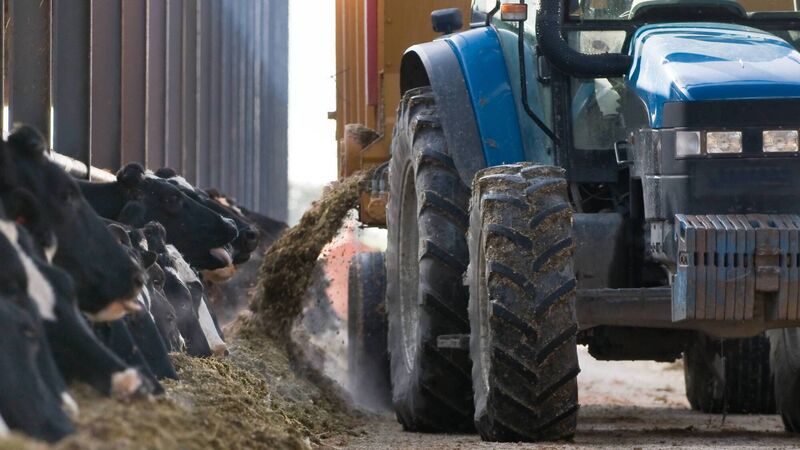
Ruminant nutritionist Brian Reidy says he sees too many sheds set up incorrectly for the cows using them
Is your shed designed with herd performance in mind?

If you diet-feed, then you need a little less barrier space than if you are top dressing with some concentrates.

Following on from last week, when I covered how achieving high dry matter intakes in early lactation would benefit a herd throughout their whole lactation, it is worth looking at other details that can affect this around the farm.


Feed high-quality forages 

A recap: Forage quality in early lactation is a major driver of intake and performance. 

You can help your cows consume more nutrients by feeding only the highest-quality forages available to your fresh cows. High-quality forages contain a much higher energy content than low-quality forages. 

Likewise, high-quality forages tend to be more palatable, which appeals to finicky fresh cows. 

While a dry matter digestibility (DMD) figure tells us little about a forage, it does indicate that intakes will be better on high-DMD silages. 

High-quality grass ensiled and preserved well will make silage that cows like to eat more of. Good-quality forage fed indoors is the ideal preparation for grazed grass. 

The addition of a second forage, such as maize, whole crop, beet from distillery or brewing byproducts, can help to achieve as much as 15% of an increase in total forage intake.

Increased forage intake makes the cow's rumens much more healthy and therefore those same cows can handle extra concentrates safely if they are genetically predisposed to respond to extra energy.

Feeding systems and timing 

One of the biggest influences on fresh-cow intake is your feeding management. 

How often and how regular is your feeding? Is it ad-lib silage plus parlour feeding or is it a TMR system? 

Forage clamp management is also very important, as the better you look after the pit face, the fresher the feed you offer your cows.

Fresh cows and, in particular, heifers are the most vulnerable and least competitive animals in your milking herd. 

They will tend to avoid situations that force them to compete for their feed, and that reduces feed intake. This applies to feeding, drinking water and also to accessing cubicles. 

Space at the feed barrier is critical, as is the design and construction of the feed barrier. 

What type of barriers suits your system? 

If you diet-feed, then you need a little less barrier space than if you are top-dressing with some concentrates.

Clean water is also extremely important when encouraging feed intake. 

Cows that drink clean water, drink more water, and as a result, they will eat more food.

Clean out water troughs regularly, and inspect each one several times a day.

Some troughs are located in positions where they are more prone to be dirty due to cows dunging into them – consider relocating these.

As we all know, cows are at their most productive when they are lying down and chewing the cud. With this in mind, a critical part of your feeding management must include a clean dry cubicle for every cow, with a few spare spaces ideally. 

It is crazy to think you can optimise herd performance if there is not one cubicle allocated to each cow or heifer in the shed. Beyond that, the cubicle must be fit for purpose.

I see too many sheds where cubicles are set up incorrectly for the cows using them. 

A measure of a cubicle shed for many is the amount of dung that needs to be swept off them daily. Dung on the cubicles, while not ideal, is a necessary evil.

In excess of 35% of any herd are first and second calvers who are smaller than the mature cows. 

These smaller animals will go further up onto a cubicle, and if they dung while lying, then it will remain on the back of the cubicle. 

If you move neck rails on the cubicles to reduce/prevent this, then how will a mature cow find comfort in the same cubicle set-up?

No dung on cubicles means mature cows are likely to be edging over the back of the cubicle and are not comfortable, may be prone to more injuries, and ultimately, be less productive. 

In this scenario, it is not uncommon to see cows with sores on their back legs from rubbing off the corner of the cubicles and also cracked tails from getting stood on by herd mates or caught in the scrapers.

If cows spend more than one minute standing on a cubicle undisturbed without lying down, then they are not happy with the cubicle. 

A diagonal measurement of 81-82in from the outside of the neck rail to the back edge of the cubicle mat would be applicable for the majority of Irish dairy herds.

x

More in this section

Farming

Newsletter

Keep up-to-date with all the latest developments in Farming with our weekly newsletter.

Cookie Policy Privacy Policy Brand Safety FAQ Help Contact Us Terms and Conditions

© Examiner Echo Group Limited