Dirty hands, clean money: What could good slurry management do for your farm's bottom line?
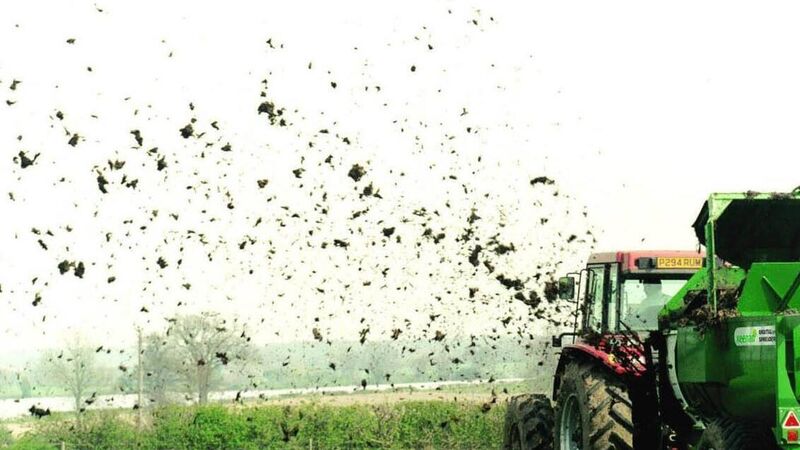
An extension to the slurry spreading deadline must be granted, according to Independent TD Michael Fitzmaurice.
As input prices continue to rise, with the cost of keeping a dairy cow now expected to reach as much as €1,560 in 2022, getting full value from the resources you already have will be pertinent to running a profitable farm business.
At the start of this year, Teagasc produced a useful document on the value of slurry.
Whilst the document’s financial data has been overtaken by events in the fertiliser market, the document is useful in providing a template for the breakdown of slurry constituents and the availability of nutrients.
Typical cattle slurry is per the document estimated to have an actual nitrogen availability of about 9 units per 1,000 gls of slurry at a 40% availability rate coinciding with spring application, with 5 units of P and 32 units of K for the same volume.
With nitrogen expected to cost in the region of €650 per tonne for CAN and €850 per tonne for urea, the unit value of nitrogen within these fertilisers is at these prices €1.20 per unit (€2.41 per kg) for CAN and €0.95 for a unit of urea (€1.80 per kg).
At 2,500 gallons to the acre, the value of the N content alone is €27 when replacing CAN fertiliser. Current indications are that the P and K content of fertilisers won’t have increased by such a degree as the N content and compound fertilisers will represent relatively good value.
Based on P & K fertiliser prices last spring, the P & K value of 2,500 gls per acre amounts to a further €15.80 for P and €33 for K, giving a total value of upwards of €76 per 2,500 gls tanker of slurry.
Pig slurry has a comparatively higher percentage of N and a lower percentage of K, with a value based on the same metrics of €96 per similar-sized tanker.
Getting full value from the slurry involves number of strategies:
Applying slurry when growth rates are high, such that the plants can absorb the nutrients with minimal waste;
Applying slurry on dull calm days where ammonia losses are minimised;
Using low emission technology such as dribble bar or trailing shoe or ploughing down quickly in the case of tillage operations to get maximum value from the nitrogen content;
Applying to fields that will benefit most from the P and K content of the fertiliser; for example, those with lower indices and with ryegrass swards capable of responding to fertiliser, applying where ground conditions are good enough to prevent compaction.
Dilution of the slurry, for example, with dairy washings will increase the N efficiency.
Data produced by Teagasc suggests that trailing shoes offer the best nitrogen efficiency, followed by dribble bar, both methods being well ahead of the splash plate method.
Based on a common rate of application of 2,500gls per acre, the additional N efficiency for dribble bar versus splash plate results in an extra 2.2kg of nitrogen available to the plant.
Based on current prices of CAN nitrogen, each tanker of that size spread by dribble bar will result in an N saving translating to €5.5 compared to splash plate, or €11 if spread by trailing shoe.
Here, on my own farm, I have this week treated slurry tanks with a new brand of slurry inoculant.
This is my first year using this product; however, I have in previous years used other enzyme products. The product is promoted by the partnership between Gouldings and Devenish Nutrition and claims a 11:1 return on investment and an average 20% increase in yield based on a five-year trial comparing untreated versus treated slurry.
The bacteria within the product break down the solid fraction of the slurry making it easier to agitate and converts the ammonia into microbial nitrogen meaning the nutrients are better available to the plant.
Even if the product delivers just a fraction of the benefits claimed, it makes sense for me to give a product like this a go especially given the current crazy prices of fertiliser.
However, on-farm it’s hard to determine whether products such as this work well as each season is different and each slurry tank is different.
A variety of different products are available and it would be useful if relevant agencies could independently assess their efficiency. Farmers should consult with their advisers for the coming season as fertiliser prices settle.