Economically sustainable Irish farms do not tally on the environment scale, report finds
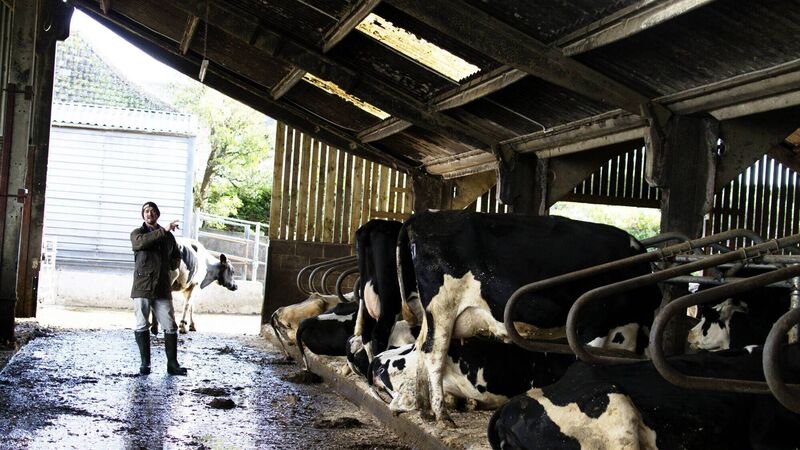
The number of farmers over 60 years old, with no household members aged under 45 reached the highest over the period at 37% - nearly double the 21% reported in 2015.
A new report compiled by Ireland's agricultural research body has claimed the most socially and economically sustainable farm types in Ireland are the least sustainable environmentally.
Teagasc National Farm Survey 2020 Sustainability Report highlights the stark inequality between sectors.
Across the board, 79% of farms were 'viable'.
However, when analysts drilled down into each of the sub-sectors just one in six (17%) farms with beef cattle and just over one in four (26%) of those with sheep passed the study's economic test.
The economic viability of a farm business was measured by calculating whether the income it generated was greater to or equal to the minimum wage when compared with the number of hours worked by the family, while also providing an additional five per cent return on non-land based assets employed on the farm.
The report uses the Teagasc National Farm Survey to track the performance of dairy, cattle, sheep and tillage farms across Ireland in improving their economic, environmental and social sustainability.
It includes data for 2020 along with comparable figures stretching back through the last decade, allowing for a temporal assessment of farm performance.
Lead author of the report, Dr Cathal Buckley, Teagasc Rural Economy and Development Programme, said: “There is a sustainability paradox when results are examined by farm system.
"Dairy farms have a higher level of economic and social sustainability compared to most other farm systems, but also have higher levels of environmental emissions.
"By contrast, drystock farms have lower levels of economic and social sustainability, but also have much lower levels of environmental emissions.
"Tillage farms lie in between dairy and drystock farms in terms of economic sustainability, but also have low levels of environmental emissions.”
The report also looked into the social sustainability of farms.
Interestingly, despite covering the year of the pandemic, isolation among farmers was also reported to be at its lowest level since 2015.
However, the number of farmers over 60 years old, with no household members aged under 45 reached the highest over the period at 37% - nearly double the 21% reported in 2015.
The figure rose from just 15% in 2015 to 38% last year on tillage farms. In 2015, the same figure was just 6% on dairy farms, but rose to 17% last year, however, the sector remained the least affected.
The financial return per farm worker was best for dairy farmers averaging €55,271 - that's almost four times the €13,888 made per worker on suckler and beef enterprises.
Trevor Donnellan, head of the Agricultural Economics & Farm Surveys Department in Teagasc, and co-author of the report explained: “Dairying continues to be the powerhouse when it comes to economic sustainability compared to other farm systems.
"Average dairy farm incomes far exceed drystock systems and are also ahead of tillage farm incomes. On the flip side, dairy farmers typically have a less favourable work-life balance, typically working longer hours than farmers in other systems.”
However, a different picture of farm sustainability was painted when the environmental aspects were examined.
Across the industry, total Green House Gas emissions remained fairly stable.
Marginal gains were also made compared to last year on N and P use efficiency, which measures the proportion of nutrients retained in the farm compared to what was put in.
Dairy farmers in particular were found to have made significant gains in environmental efficiency, with a fall in the Green House Gas emissions intensity of milk production (CO2 produced for every kilogramme of Fat and Protein Corrected Milk).
Effectively, it means that the average kilogramme of milk was produced with a lower carbon footprint.
However, this improvement in emissions intensity was offset by a higher volume of milk produced on the back of increase to the average herd size. Hence, farm-level emissions increased on dairy farms in 2020.
Therefore, despite improved emissions efficiency, total dairy farm emissions continue to increase although emissions per hectare remained constant on the back of increased area farmed.
Across other sectors, Green House Gas emissions from sheep and tillage farms remained stable, while average emissions on beef and suckler farms declined slightly.
Overall, the decline in beef and suckler emissions offset the increases from dairy farm emissions.
One of the most positive developments was the reduction in ammonia emissions, which was attributed to the increased adoption of low emissions slurry spreading.
Ammonia emissions have been a challenging area for farming.
However, despite increases in productivity, on average, ammonia emissions showed some decline in 2020 compared to the preceding years, across all systems on both a farm and per hectare basis.
Dairy was the main culprit, with the average dairy farm producing approximately 2.84 tonnes of ammonia emissions in 2020.
The figure is around twice as much as the average beef or suckler farm, which produced 0.84 tonnes of ammonia last year.
Dr Buckley said: “It is notable that ammonia emissions declined in 2020 relative to the preceding years across all farm systems.
"Data which track farm management decisions indicate a significant movement towards low emissions slurry spreading methods and this is helping to reduce ammonia emissions.”
In aggregate terms, 36% of all slurry applied used a LESS (low emission slurry spreading) approach in 2020, compared to just 16% in 2019.