The mighty ash tree, a feature of the Irish landscape for centuries, is also part of the country’s social, economic, and sporting life.
A strong and flexible wood that does not break easily, it has been used to produce furniture, walking sticks, hurleys, snooker cues and hockey sticks.
An acre and a half of these majestic trees can produce about 3,800 hurleys, giving birth to the rousing phrase — the clash of the ash — to describe the ancient game.
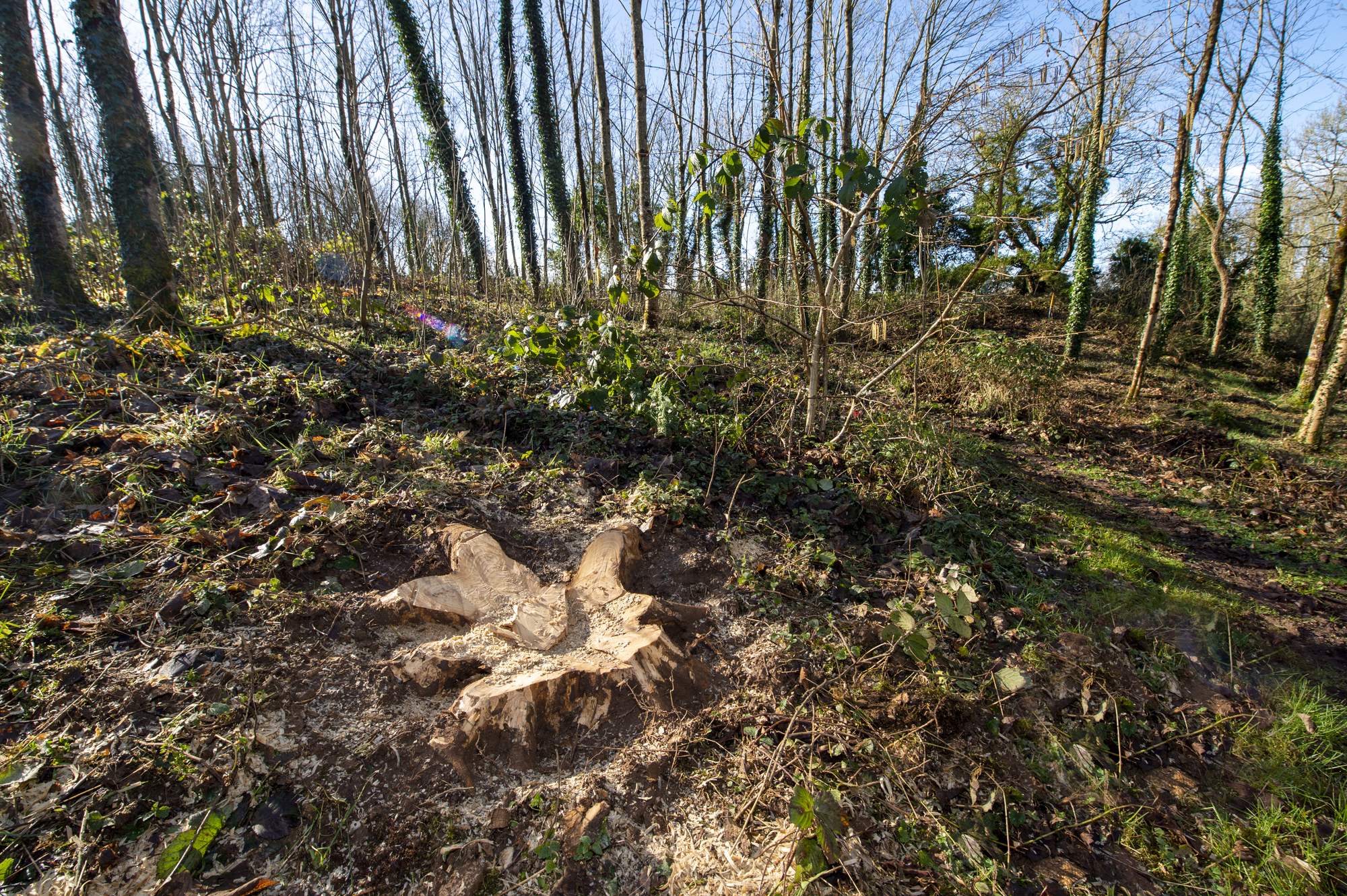
But now serious concern is being expressed about the survival of the species because of the devastating impact of ash dieback.
An invasive fungus, it was first detected here in October 2012 on plants imported from continental Europe.
The disease is now prevalent countrywide and is likely to cause the death of most ash trees over the next two decades.
Teagasc is currently carrying out research to establish a gene bank composed of genotypes of ash tolerant to the disease, aimed at producing planting stock for forests and hedgerows.
In March 2013, the Department of Agriculture, Food, and the Marine introduced a Reconstitution Scheme to restore plantations established under the afforestation scheme.
Responding to Tipperary independent TD Michael Lowry, Agriculture, Food and Marine Minister Charlie McConalogue said the existing Reconstitution and Underplanting Scheme for ash dieback, announced in June 2020, will be extended to take in all plantations regardless of age, where the level of disease present satisfies the criteria.
Mr McConalogue said the department has so far received 410 applications for 1,608 hectares and has decided on 128 of those for 434 hectares.
Of the outstanding applications, while all have not yet been assessed, some 100 are currently delayed because of the requirement for planning permission for the replacement of broadleaf high forest, in this case ash, with conifer species.
“I know this poses difficulties for landowners wishing to replace their diseased ash plantation and my officials have been in contact with their counterparts in the Department of Housing, Local Government and Heritage on the issue,” he said.
Ash dieback was also one of the issues raised during a Dáil debate on the report of the joint committee on agriculture and the marine regarding issues impacting the overall forestry sector.
Committee chairman, Tipperary Fianna Fáil TD Jackie Cahill, said the ash dieback issue must be adequately addressed.
“In 2012, we had 20,000 acres of privately planted ash trees. Unfortunately, at least 95% of those ash trees are now diseased,” he said.
“Grants must be provided to allow sites to be cleared of diseased trees. A scheme exists, but it must be enhanced.
“If these people were livestock farmers — and we have seen this with pig farmers who were unfortunate enough to encounter a disease that was entirely outside their control — they would be compensated.
“I see no reason farmers who planted forestry should be treated any differently. The advent of this ash dieback disease was completely outside their control,” he said.
Mr Cahill said ash was a valuable cash crop for farmers who planted it, and they have now been left with nothing but diseased trees.
“If people choose to replant the area containing diseased ash trees, then it would only be fair that they would have access to premiums in this regard.
“It would be a significant gesture to show that this Government is serious about forestry and about helping forestry owners,” he said.
Mr Cahill said access to the premium over several years would not place a significant immediate burden on the exchequer.
But it would be reasonable and fair for those plantation owners if that were to happen. It would be a recognition of the great financial loss they have suffered.
Labour Party spokesman on agriculture, Seán Sherlock, said he would also support any measures put in place to address the issue of ash dieback.
“Those farmers, foresters and landowners are doing everything they can. Again, they are also tearing their hair out because of the inaction of the department on this matter.
“We again have a situation where the facts speak for themselves. We are importing timber for our sawmills.
“On one hand, we have ash dieback, but, on the other, we do not know what kind of policing there is of pests, such as the spruce beetle.
“The controls in place do not allow us to know what is coming into the country and, therefore, we do not know what is coming down the line in the context of what is being imported,” he said.
Minister of state Pippa Hackett said she had visited many sites of ash dieback and understood the devastation it has caused. Some owners have availed of the reconstitution and underplanting scheme, while others have not.
Her department is currently preparing a report on the origins of ash dieback in Ireland to assess the lessons learned.
“The question of liability that would arise from restarting premium payments on the affected sites was considered by the Department of Agriculture, Food and the Marine but found not to be feasible,” she said. “Additional payments have instead been made for site clearance and for the establishment of a replacement crop.”
However, Mr Cahill said he could not accept this.

Looking for a thoughtful gift?
Irish Examiner Gift subscriptions are now available.
Already a subscriber? Sign in