Bird flu confirmed on Irish farm
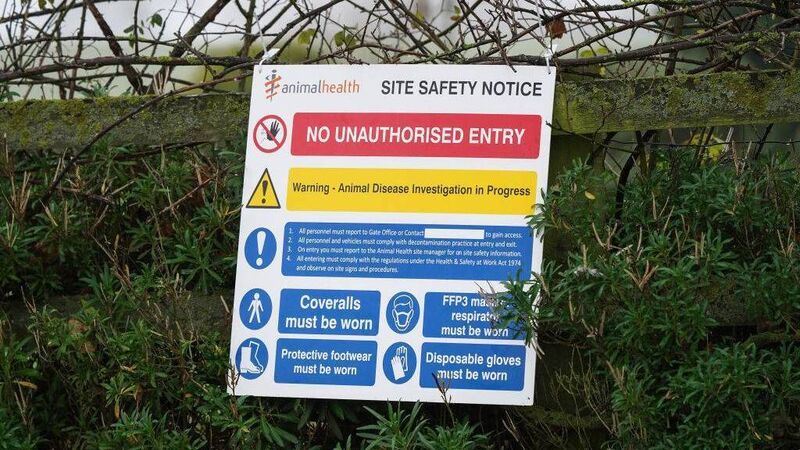
Picture: Ian Forsyth/Getty Images.
The first case of Avian influenza on an Irish farm this season has been confirmed on a farm in Monaghan by Department of Agriculture, Food and the Marine officials.
The H5N1 was detected in samples from a turkey flock in Co Monaghan.
Restriction zones are being set up around the area where additional movement control and surveillance measures will be put in place.
Over the last 12 months, thousands of poultry were culled across the island to limit the spread after cases were detected in farm flocks - including 110,000 chickens on a farm in Northern Ireland in January and turkeys on a farm in Wicklow in December.
Once the virus gets on to farms it is very difficult to control as it can be carried on clothing or even on the feed lorries which move between farms.
The finding comes just three days after stringent biosecurity measures for birds and poultry, including a ban on the assembly of birds, came into effect across the island. Further measures, including a housing order, will be introduced from Monday, November 22, meaning all domesticated birds and poultry will need to be kept indoors.
The virus, which is known colloquially as 'bird flu', has the potential to wipe out whole flocks within 48 hours and circulates naturally in wild birds in continental Europe.
Backyard and free-range flocks are particularly vulnerable to bird flu as they spend time outdoors, with October to April considered the high-risk period for the virus as it can be carried to the island during migration.
Clinical signs poultry keepers should look for in their birds include a swollen head, discolouration of neck and throat, loss of appetite, respiratory distress, diarrhoea and fewer eggs laid, although these vary between species of bird.
Avian influenza is a notifiable disease, which means anyone who suspects an animal to be affected must, by law, report it to the Department of Agriculture.
However, while the virus can cause serious disease in poultry and other birds, the Health Protection Surveillance Centre has confirmed that human infection is extremely rare, and properly cooked poultry and poultry products, including eggs, remain safe to eat.
A spokesperson for the department said: "Poultry flock owners should remain vigilant for any signs of disease in their flocks, maintain strict biosecurity measures and report any disease suspicion to their nearest department regional veterinary office.
"The department reinforces the need for vigilance and biosecurity and advises strict adherence to the precautionary measures against avian influenza (bird flu) recently introduced in regulations under the Animal Health and Welfare Act 2013.
"These Regulations require specific biosecurity measures to be implemented by the keepers of all poultry (and other captive bird) flocks, irrespective of size, to help mitigate the risk of the virus and additional enhanced biosecurity measures that must be implemented in flocks of 500 birds or more.
In the last fortnight, at least eight outbreaks of the highly-pathogenic strain H5N1 have been confirmed in wild birds across Ireland. Over the last few days, cases have also been confirmed in Limerick, Wexford and Waterford. However, cases have also been discovered in Galway, Roscommon, Offaly, Donegal, and Tipperary.
The term 'highly pathogenic', is used to denote a version of the virus that spreads very quickly, causing serious disease with the potential to wipe out whole flocks of most poultry species.
There have been no cases of avian influenza confirmed in Northern Ireland during the 2021 to 2022 season, where an Avian Influenza Prevention Zone is currently in place.
However, the situation is further advanced in England, where so far eight cases of the highly pathogenic strain have been detected on poultry farms and other domesticated birds. Further testing is underway on a ninth potential case.
3km and 10km Temporary Control Zones have been put in place around each of the affected premises.
One case has been confirmed on farms in both Scotland and Wales.