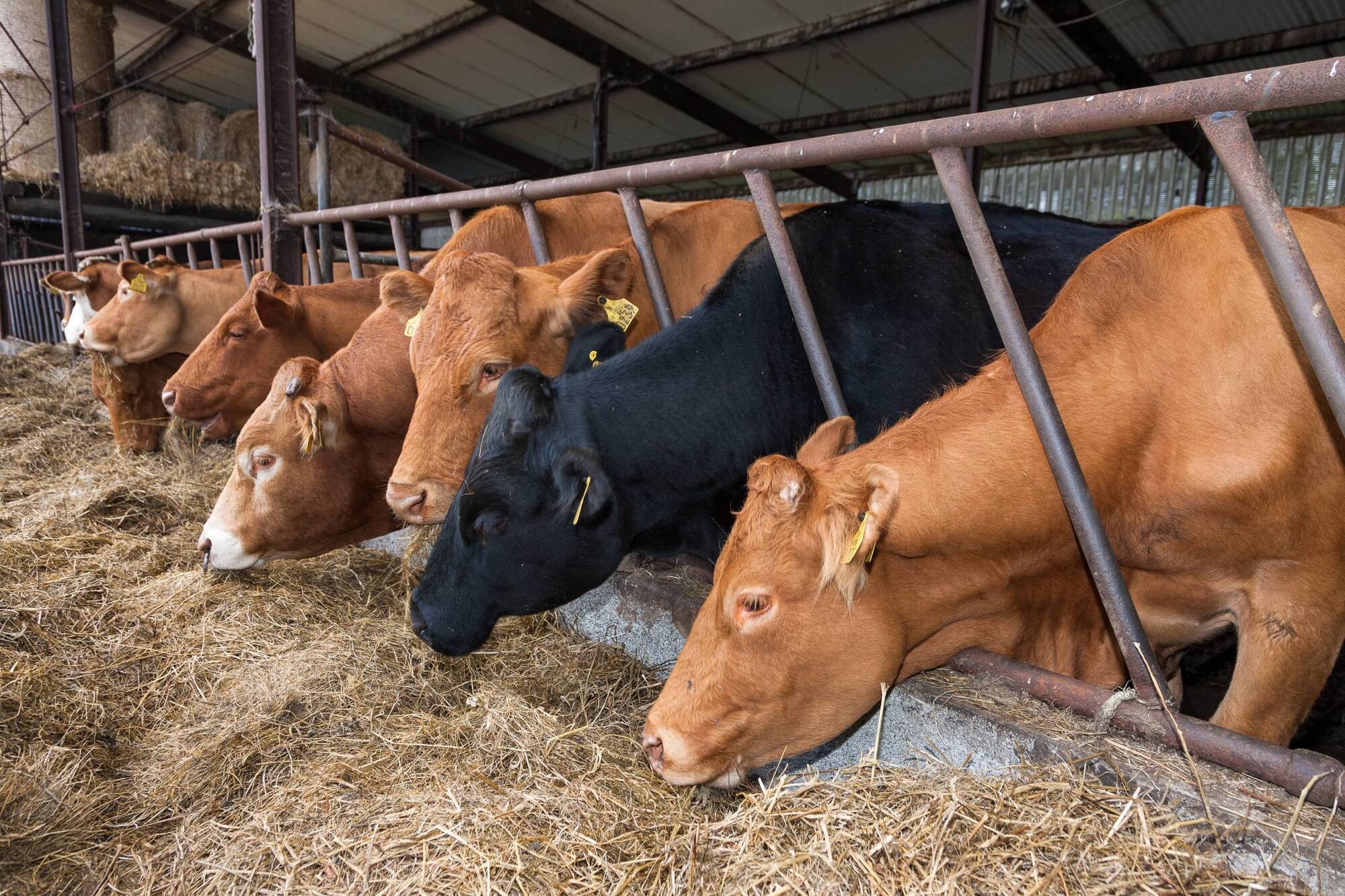
Teagasc survey results indicate that few livestock farmers will have worries about feeding their herds this winter.
Planning and budgeting for both the quantity and quality of winter fodder available on farms is becoming an increasingly important activity as part of managing the impact of changing weather patterns and mitigating the impacts of climate change on farms.
In the summer, Teagasc advisers completed almost 650 winter fodder budgets for drystock and dairy farmer clients, as part of an initiative to promote better winter feed planning.
The national result shows drystock farms reporting a projected surplus of approximately 29% (total feed stocks minus total requirements for the farms), while dairy farms are similarly well placed with an approximate 18% overall surplus.
Survey results indicate that dairy farms in the Midland North East region (Cavan, Dublin, Kildare, Laois, Longford, Louth, Meath, Monaghan, Offaly, Westmeath) have the smallest surplus, equivalent to five to seven days feeding in the winter. However, their 106% coverage of fodder needs represents an improvement on the 2020 survey results.
Dairy farms in other regions seem to have improved feed reserves, and drystock farms in all regions have reported strong feed surpluses.
Dairy farms in the South West (Clare, Cork, Kerry, and Limerick) seem best prepared with 122% of winter feed requirements covered.
Drystock fodder provision ranges from 127% in the South West to 134% in the South East (Carlow, Kilkenny, Tipperary, Waterford, Wexford, and Wicklow).
Despite the secure overall national fodder picture presented by the Teagasc survey, it also revealed that 8% of farms have significant fodder deficits.
The survey indicated that 7% of dairy farms had a deficit greater than 20% of winter requirements, and 12% of drystock farms.
Previous experience of fodder shortages has shown that farms with deficits of greater than 20% at the onset of the winter face significant practical and financial difficulties feeding their stock.
There was no clear pattern of scale, location, or enterprise, to characterise the farms with greater than 20% feed deficits. Individual farm management decisions rather than weather or land type issues may be the primary factor determining feed budget balances.
Commenting on the results of the fodder survey, Joe Patton, Teagasc survey co-ordinator said: “The survey shows all regions are in a quite good position for feed stocks. There were some regional issues with growth rate at certain times of the year, but overall, farmers have managed winter feed stocks very well. Teagasc recommends carrying a rolling winter feed surplus of 25-30% to insulate against weather shocks, and many farms are near that level.”
Michael O'Leary
Micheál O’Leary, Teagasc PastureBase said; “The fodder budgeting function in PastureBase Ireland is proving very useful for managing winter feed stocks. Autumn grass growth and grazing conditions have been excellent for most regions. Farmers should plan now to extend the grazing season while making sure to meet closing grass cover targets. This will help to reduce overall winter feed demand.”
Dermot McCarthy, head of advisory services in Teagasc said: “This year’s survey indicates that nationally our client farms are secure for winter feed.
“There is always variation around the average, however. We would encourage more farmers to complete their own fodder budgets before winter starts. Teagasc advisers are available to help. Finally, Teagasc would like to thank the farmers who participated in the survey.”
Meanwhile, the country’s top livestock farmers have been invited to enter the Grassland Farmer of the Year competition.
The closing date is Monday, October 18, 2021.
Co-ordinator of the Teagasc Grass10 campaign, John Maher said: “We encourage all farmers across enterprises to make the best use of grass on the farms. We urge livestock farmers to enter the Grassland Farmer of the Year competition, to test their grass growing skills against the best in the country.” The competition has an overall prize fund of €20,000.Â
The eight prizes include an overall award and awards for category winners, for drystock, dairy, clover/sustainable farming, heavy soils/disadvantaged land, innovation and young farmer (under 30 years, farm managers or farming in a collaborative arrangement).
Each category winner will receive €3,000, there will be awards also for the main category runners-up. The Innovation award prize is €1,000.
The overall winner will be selected from the category winners and will receive an additional €2,000.
The competition is part of the Teagasc Grass10 grassland campaign which encourages farmers to grow and utilise more grass in the animal’s diet. The targets are to utilise 10 tonnes grass dry matter per hectare per annum, with 10 grazings per paddock per year.
Speaking at the launch, Minister Charlie McConalogue said: “My Department are delighted to once again support this competition, because of the role that grass plays in sustainable livestock-based food production systems. Grass is the cornerstone of Irish livestock production systems providing an environmentally sustainable feed source.”
The Grassland Farmer of the Year competition is supported by the Department of Agriculture, Food and the Marine; Teagasc; Allied Irish Bank; FBD Insurance; Grassland Agro and the Irish Farmers Journal.
The online application form is available on the teagasc.ie website.

Continue reading for €5
Unlock unlimited access and exclusive benefits
Already a subscriber? Sign in
Cancel anytime