Budget is an underwhelming one for farmers - Farm Groups
'The reduction in the farmer flat rate VAT refund from 5.6% to 5.5% was a sting in the tail that and would cost farmers €7m a year'
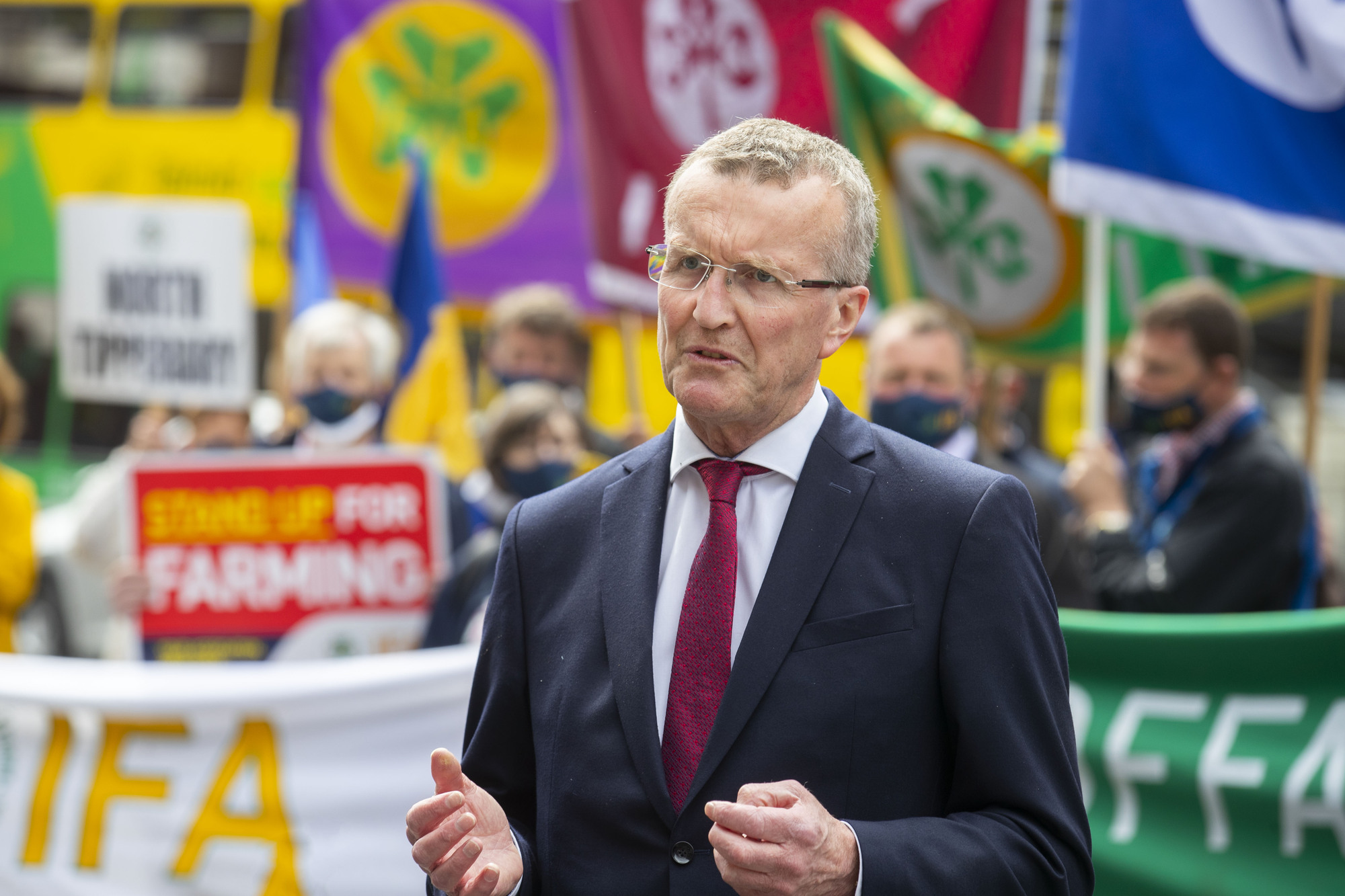
IFA President Tim Cullinan there were other aspects of the Budget that needed further examination. Picture: Finbarr O'Rourke

IFA President Tim Cullinan there were other aspects of the Budget that needed further examination. Picture: Finbarr O'Rourke

Farm groups say the budget announced this week falls short of what is needed to meet the challenge facing agriculture hitting out at reductions in Vat refunds that will costs farmers millions and a lack of measures that will support actions on climate change.

The Budget 2022 measures include €1.858bn for the Department of Agriculture. Some of the key provisions include €872m in funding for rural development and forestry supports, including more than €100m in targeted supports for the beef and sheep sectors, and €80m for on-farm investments through TAMS including specific supports for solar energy installation.

Minister for Agriculture Charlie McConalogue defended the budget, saying the combination of direct financial supports and taxation reliefs will provide “a good, balanced package of measures for farmers, fishers, coastal communities and the food sector in 2022”.

However, the president of ICMSA, Pat McCormack, said farmers would look in vain to Budget 2022 for any signal that the Government understood the scale of the challenge farmers face and said there was a gross mismatch between the ambitions that ministers had repeatedly proclaimed for the farming and agri-food sector — both in terms of economic impetus and climate change measures — and the funds and changes that they were prepared to allocate to that challenge.

“We keep hearing that we’re a critical sector in terms of emissions lowering and we keep saying that we can and will get on board with the project so long as rural Ireland’s economic sustainability is given the same consideration as environmental sustainability. Everybody keeps agreeing with that — certainly the Government do — but only until it comes time to actually do something meaningful and invest towards that end. Then, suddenly, it all goes quiet,” he said.

As an example, Mr McCormack said the budget introduced accelerated capital allowances for gas vehicles. “ICMSA has been calling for accelerated capital allowances for lower emissions farm equipment like slurry spreaders for at least five years. It would have cost practically nothing to do that, relatively speaking. But yet again a budget has come and gone and a measure that would have cost practically nothing while having a real impact on lowering emissions has not been introduced,” he said.

IFA president Tim Cullinan said the Government has reneged on its commitment to allocate a portion of the €1.5bn carbon tax money to agriculture in the budget.

“It’s extraordinary that the Government has told us that €49m in funding that the Department of Agriculture, Food and the Marine would otherwise expect to receive in 2022 from carbon tax receipts has been allocated to the Department of Social Protection,” he said.

“It’s stated in the Programme for Government that this funding would be used for environmental and climate measures for farming. This has not happened and it will further rock farmer confidence in the Programme for Government commitment on the allocation of the carbon tax, which is also costing farmers a lot of money,” he said.

Tim Cullinan said the rollover funding for farm schemes and the extension of tax reliefs are important for farmers as is the new low-cost finance initiative.

“Overall, the budget is an underwhelming one for farmers,” he said.

The chair of IFA’s farm business committee Rose Mary McDonagh said: “It’s important to see stamp duty and stock relief measures extended. These will encourage farm transfer and generational renewal.”

However, she said the reduction in the farmer flat rate Vat refund from 5.6% to 5.5% was a sting in the tail that and would cost farmers €7m a year.

Rose Mary McDonagh welcomed the low-cost finance scheme for the sector, which she said would be very important given the scale of investment needed on farms.

IFA rural development vice chairman Denis Tuohy said: “It’s positive to see an allocation for the rollover of farm schemes, including GLAS, ANC, TAMS, suckler cow (BDGP & BEEP-S), sheep welfare, and organics”.

“While the renewal of these schemes is important for 2022, the schemes and the level of co-financing will need to be significantly enhanced in the CAP National Strategic Plans for 2023-2027. This must be separate from, and in addition to, Govt funding of €1.5bn from carbon tax receipts for environmental measures,” Denis Tuohy said.

Concluding, IFA president Tim Cullinan says there were other aspects of the budget that needed further examination.

“The new zoned land tax must exclude farmed land and the support for multi-species swards needed to be fleshed out,” he said.

Minister of state with responsibility for farm safety Martin Heydon TD said that for the first time, t a dedicated budget has been provided for specific farm safety initiatives aimed at reducing the rate of serious and fatal incidents on farms.

“I am determined to drive change of culture on our farms to make them safer places and this fund will be a huge role in these efforts. I also welcome the strong allocations of €153m for Teagasc and €53m for Bord Bia,” he said.

Mr McConalogue said he hoped to finalise a financial package for the new CAP that will support the agri-food sector shortly.

x

More in this section

Farming

Newsletter

Stay ahead of the season. Sign up for insights, expert advice and stories shaping Irish agriculture.

Cookie Policy Privacy Policy Brand Safety FAQ Help Contact Us Terms and Conditions

© Examiner Echo Group Limited