Summer management and Autumn preparation
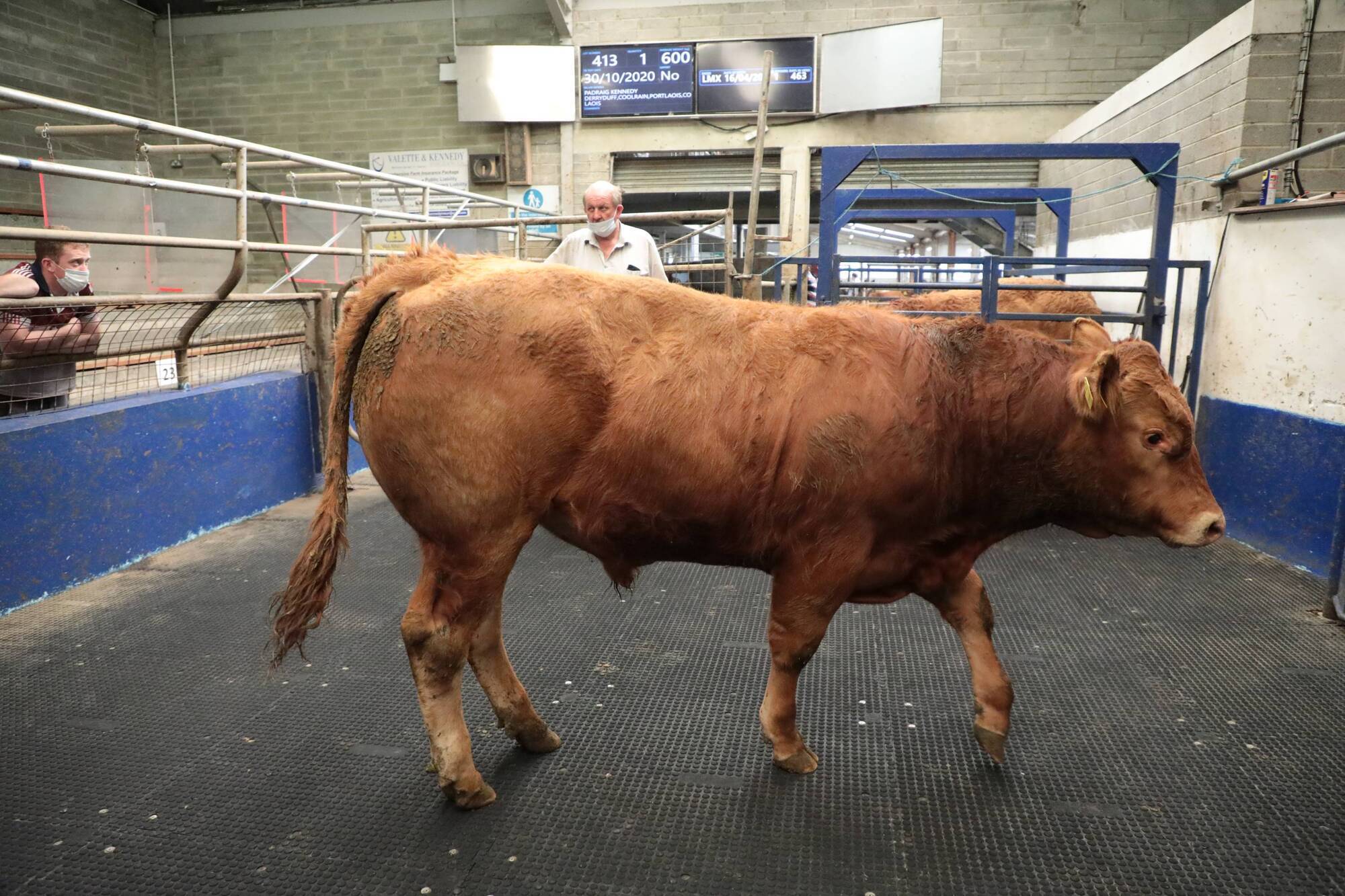
An LMX bullock born in April 2020 and weighing 600kg sold for €1,500 at Roscrea Mart last Friday. Picture: James Treacy.
Thankfully most of the country got some badly needed rain, hopefully, we might get a little more as last Monday's downpours are still insufficient.
With soil temperatures well above normal, if we get more moisture we can expect a supercharging of grass growth.
A large proportion of the second cut silage has now been made or will soon be saved. As well as getting sufficient feed for the winter, time must be spent getting the yard and sheds ready for winter housing.
Start a list of repairs that need to be carried out and get started.
Most of the 2021 grass silage has now been pitted or baled with only third cut and some more surplus bales still to be made.
The winter cereal harvest has progressed nicely and thankfully the weather has been kind for both combining and baling straw.
The grain quality seems to be excellent. The price of grain off the combine looks to be strong relative to last year but still represents the best value for livestock farmers and if at all possible it should be taken advantage of.
Native Barley, Wheat, Oats, Rye and Triticale are exceptionally high in starch and energy and when stored on farm correctly and balanced well will help to improve animal performance and reduce costs greatly.
If you have the facility to store grain for the winter now is the time to do it.
The Maize Silage crops look excellent all over the country, particularly if they were sown under film.
The recent heatwave really drove maize growth, with crops bulking up massively recently.
Many crops are now well advanced and once tassels are fully out harvest is eight to 10 weeks away. The crops have huge dry matter and starch yield potentials.
Beet crops also look excellent and have great yield potential and will also provide excellent energy to finish stock this winter.
Any whole crops being made this year from winter crops are now undercover and spring ones are not far off harvest.
With so much hay made this summer, perhaps the demand for straw will not be as strong.
All the talk of chopping straw and the impending increase in price still continue at pace, however.
I would certainly prefer straw as a roughage source for cattle as it promotes better rumen function than hay.
Calves will perform significantly better when fed straw as it doesn’t give them “pot bellies”.
Wheat, Barley, Oat and Rye straw are all excellent sources of fibre. Obviously Barley straw is the best for bedding.
Before you buy straw get an approximate weight per bale to see what you are getting for your money.
Compare the options available to you and make your purchasing decision based on the lowest cost per tonne of straw according to bale weight.
If you have the capacity to store straw it is best value straight from the field.
Grass quality over the last few weeks has been difficult to manage and growth has slowed down considerably due to the very warm weather and a significant moisture deficit.
As we all know dry stock always tends to perform really well in warm and sunny weather as long as they have plenty of water, sufficient grass intakes, and some shelter.
Animals intended for finishing off grass over the coming weeks should be supplemented with a low protein concentrate to get the required weight gain and fat cover at slaughter.
Late-born bucket-reared calves should also continue to be supplemented at this stage in order to maintain growth rates before housing.