Positive trends emerging, but more to be done when it comes to water quality

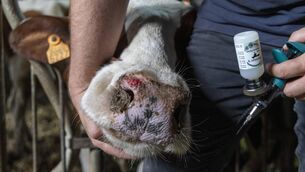
High nitrates are predominantly found in rivers, groundwater and estuaries in the south and southeast of the country. Picture: EPA report.
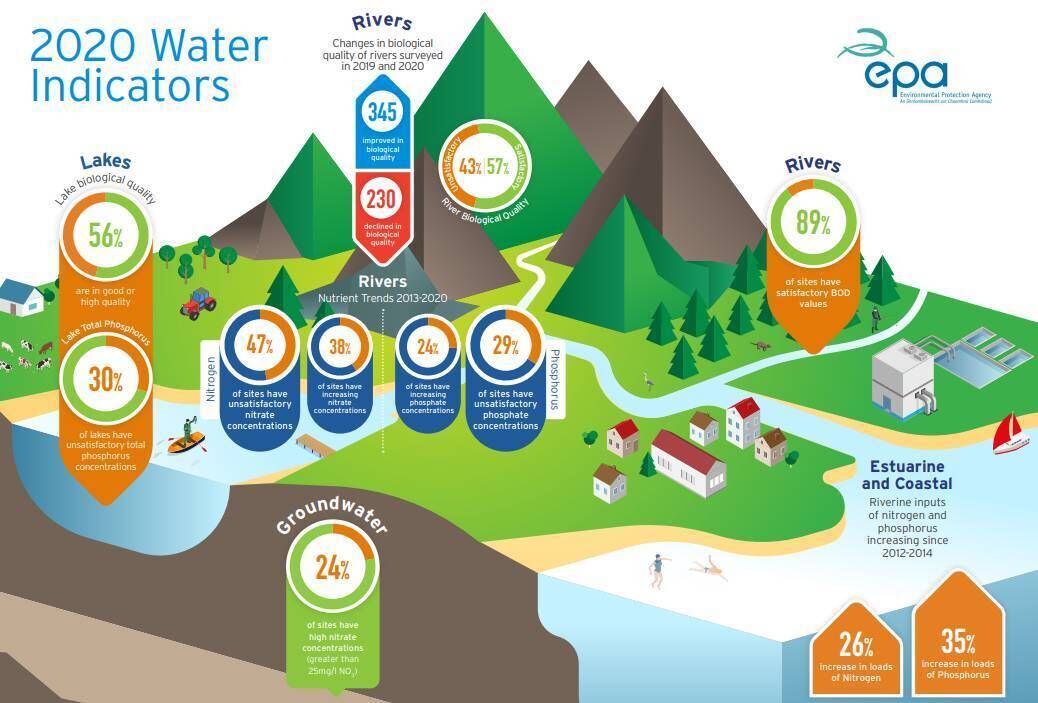
A new report on water quality by the Environmental Protection Agency (EPA) - ‘Water Quality in 2020 - An Indicators Report’ shows positive trends are emerging with just over half of the country’s rivers and lakes classed as being in good or high biological quality.
However, according to the EPA this also indicates that there is still a substantial amount of work to be done to bring the remaining waters back to a satisfactory standard.
The report found that nutrient levels are too high in many of Ireland’s waters with trends still going in the wrong direction in some areas.
High nitrates are predominantly found in rivers, groundwater and estuaries in the south and southeast of the country - areas with intensive agriculture over freely draining soils.
These areas are also exhibiting rising nitrate concentrations and this is leading to an increase in the amount of nitrate reaching Ireland’s coastal waters with inputs of nitrogen increasing by 26% since 2012-2014.
There are also strong indicators that these nitrate inputs are increasing the level of pollution in the marine environment.
Over one-fifth of the country’s estuarine and coastal waters have too much nitrogen in them and areas of highest concentration are in the south and southeast which is triggering nuisance algal blooms in many estuaries.
Agriculture and wastewater are the predominant sources of nutrients in the country’s waters and analysis by the EPA shows that up to 85% of nitrogen found in rivers in predominantly rural catchments in the south and southeast comes from agriculture.
“It is essential for the protection of rivers, groundwaters and estuaries that urgent and focused action is taken to reduce the nitrate losses to our waters or we are in danger of losing our excellent coastal water quality,” an EPA spokesperson added.
“Ireland’s Nitrates Action Programme is designed to prevent pollution of surface waters and groundwaters from agricultural sources and to protect and improve water quality.
“The review currently underway of the programme must deliver reductions in nitrate losses in our waters.”
Meanwhile, Irish Farmers’ Association (IFA) President, Tim Cullinan said the latest EPA report indicated a net improvement in the quality of Ireland's rivers, and no change or an improvement in N and P concentrations for 63% and 76% of catchments, respectively.
“Farmers want to see all our rivers in the high-status categories and they are working hard to achieve just that,” he added.
“Within the priority areas of action, 57 water bodies showed a net improvement and farmers are working directly with their advisors in these areas to improve water quality.
“This is delivering tangible results.
“The Agricultural Sustainability Support and Advice Programme (ASSAP) that assists farmers in their own catchments must be expanded so we can support more farmers to improve water quality.”
Within a European context, Ireland is highly rated when it comes to water quality because of the fact that only 98% of our groundwater bodies are below 50mg/L for Nitrates.
This is in contrast to Germany and Spain at 72% and 78.5% respectively.
Ireland’s surface waters also have the lowest concentrations of nitrate - against a backdrop of greater testing frequency in Ireland compared to other EU member states.
“The monitoring period reported by the EPA includes the summer drought of 2018,” Mr Cullinan continued.
“This is significant, given that this prolonged period of dry weather changed the characteristics of the soil which resulted in a high mobilisation of Nitrogen from the soils to water when it did rain.
“As farmers, we know we need to keep working hard, but this report shows real signs of progress and is something all stakeholders can build upon.”