Competitiveness, level playing fields, market share, fair prices, and the ability to enter new markets are just some of the mounting concerns that farmers, fishermen and food producers in Ireland have this week as the deadline for a deal between the EU and the UK enters its final days.
Both parties reached an agreement on Tuesday night around one the most contentious issues — the Northern Ireland protocol while the Minister for Agriculture, Food and the Marine, Charlie McConalogue met with his Northern Ireland counterpart yesterday to discuss matters further.
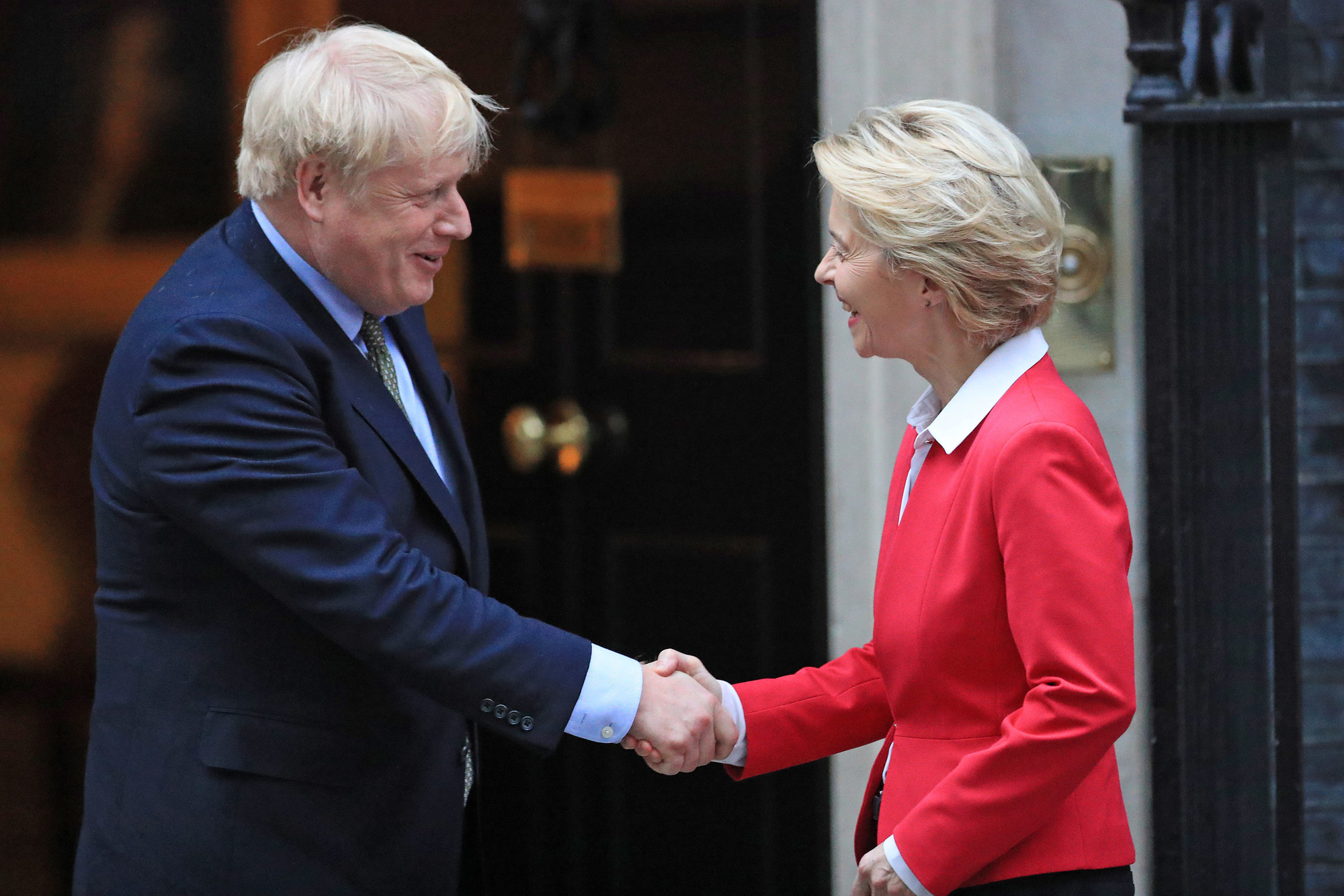
However, despite progress on Northern Ireland, there have been pessimistic briefings from both sides ahead in advance of further face-to-face talks this week. UK sources have acknowledged “an agreement may not be possible” and the EU’s negotiator, Michel Barnier, has warned the bloc’s foreign ministers that a no-deal scenario is more likely than an agreement.
Also, it emerged that close to 70% of Irish agrifood businesses that export to the UK haven’t registered with Revenue.
If they fail to do so they will be unable to trade with the UK after January 1.
There are more than 4,500 Irish businesses involved in agriculture, fishing and forestry and the department indicated that 1,392 businesses have registered thus far with Revenue.
According to Dairy Industry Ireland (DII) Irish cheddar cheese has become vulnerable because of the fact the UK is its main market with little or no diversification in other markets for the product.
Yet, despite efforts by the Government and its agencies at market diversification, the UK is the current destination for 38% of Ireland’s overall agri-food exports including 44% of beef exports, 41% of cheese exports, almost 100% of mushroom exports, 60% of poultry exports, 33% of pigmeat exports and 20% of lamb exports.
And, as time runs out on reaching any kind of trade deal between the EU and the UK Ireland is facing €1.6bn in tariffs, 90% of which will be agri-food related.
Speaking during a meeting this week of the Oireachtas joint committee on agriculture, food and the marine on Brexit and its impact on the Agri-Food Industry, Dairy Industry Ireland (DII) pointed to how 95% of the country’s dairy — on an all-island basis — is exported, and the subsequent need for export credit insurance for Ireland, which currently does not exist because of a derogation state aid law in the EU.
“Ireland is the only major exporter within the EU without a state aid export credit insurance,” said DDI director Conor Mulvihill.
“This is the one big gap from our perspective that hasn’t been adequately addressed.
“It all comes down to competitiveness; if we are expected to diversify from the British market and expected to go hand to hand combat with our colleagues across the EU into markets and other countries that have the insurance, we have a problem.”
Oireachtas members heard that 6.7bn/L of milk is produced in Ireland annually; 700,000/L of milk is consumed domestically while the rest is exported.
Some 2bn/L of milk finds its way into cheddar cheese production and 60% of that goes to the UK.
“A hard Brexit will lead to tariffs in the region of €1,670/t; from a Dairygod perspective that equates to 30,000/t of cheddar going into the UK which is worth about €50m to producers here,” said John O’Gorman, chairman of the Irish Co-operative Organisation Society’s dairy committee.
Meat Industry Ireland (MII), meanwhile, said Brexit will cause a manipulation in price for Irish producers.
Its chairman Philip Carroll highlighted how the meat sector is by far the most exposed sector in a no-deal Brexit and the fundamental problem Ireland faced in a no-deal scenario is tariffs, which, he added “is absolutely massive”.
“The UK is our biggest market by far to any other single market, because it is close, pays the best price in the market and it has a significant demand at retail and foodservice level.
“The largest of our products are going into the continental market — about 44% — France, Germany, Italy and the Nordic countries also take a significant slice of that. Really, the market we are looking at now is the Chinese market which is closed at the moment and that is a problem.”
Referring to the difficulties between the EU and the UK in reaching an agreement, Irish Farmers’ Association president, Tim Cullinan said the exit of the UK from the EU without a deal “will undoubtedly lead to significant trade disruption and a lose-lose situation for the entire agrifood chain”.
“Burdensome and unavoidable procedures, such as official controls of goods, SPS inspections, veterinary certificates and import tariffs will lead to increased delays for checks at borders and raise the costs for both sides,” he added.
“We want the EU and the UK to maintain the closest possible trading relationship, but the EU Single Market must be protected.
“It is essential to maintain a level playing field with corresponding standards on food safety, animal health and welfare and the environment.
“We need access to the UK market which must be tariff-free and quota-free and there must be no return by the UK to a cheap food policy.
“The European agri sector is a priority for support from the €5bn Brexit Adjustment Reserve.”
John O’Gorman of ICOS said the erosion of consumer spending power in the UK would also pose problems for Irish food in a post-Brexit future.
“That alone says to me that there are going to be very, very negative consequences for Ireland, the EU and the UK in a hard Brexit scenario,” he added.
“The ability of the UK consumer to purchase at a premium will be reduced and food produced under different standards from outside of the EU will enter the UK market and make things a lot more competitive.”